Reports 1-1 of 1 Clear search Modify search
Environmental Monitoring (Environmental Monitoring)
fiori, tringali, ruggi - 18:23 Wednesday 18 March 2026 (68903) Print this report
sea and ocean microseism monitoring for DMS

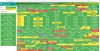
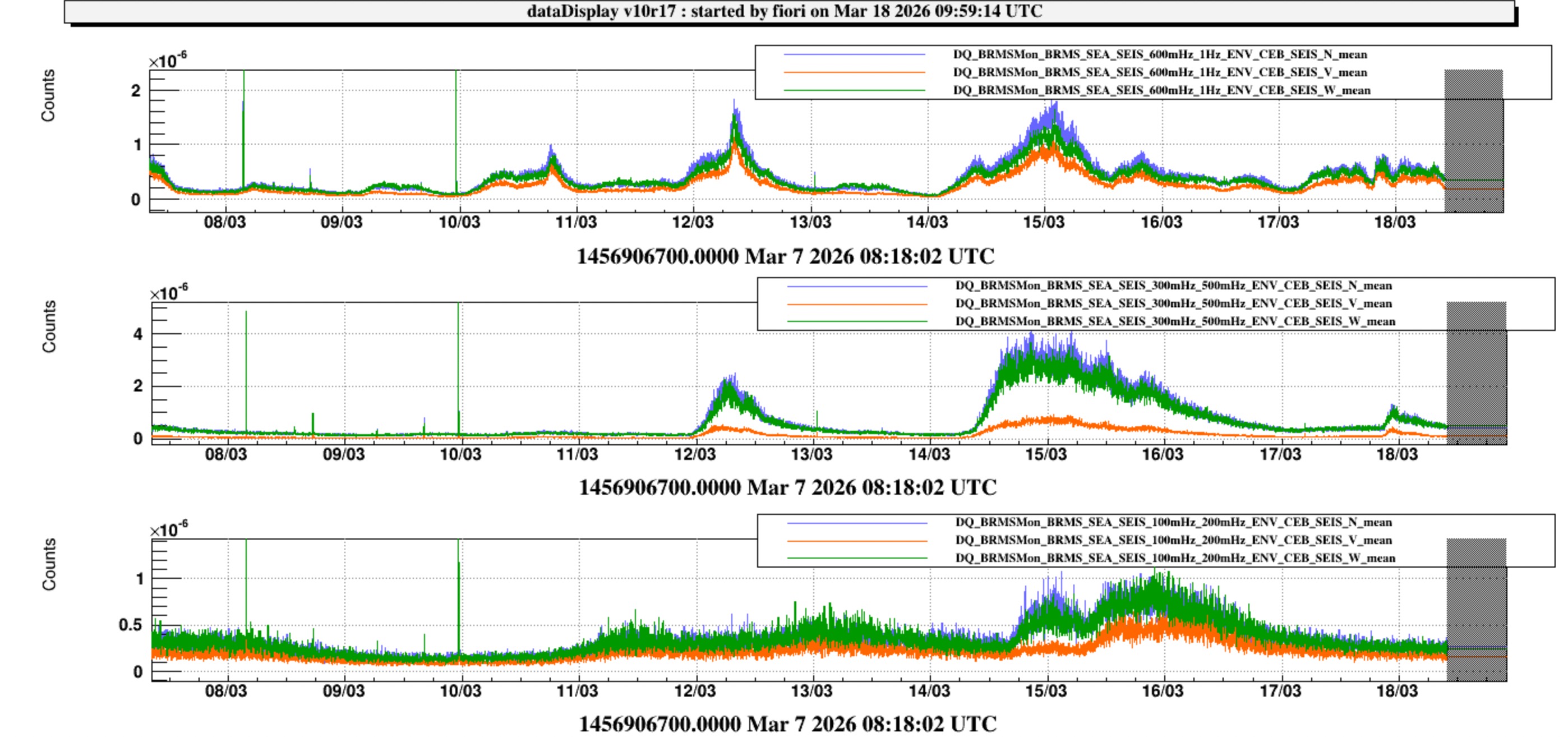
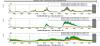
Figure 1 shows the monitors of sea activity that we have in trend data since several year now. The BRMSMon process computes the rms of each Guralp seismometer signal (three buildings: CEB, NEB, WEB and three directions: N,V,W) in three bands, tailored around main microseismic peaks, which are from time to time observed and associated to sea activity (we refer also to this old study VIR-NOT-FIR-1390-261):

  • 100 - 200 mHz  > Atlatic ocean, usually observed in winter time (https://logbook.virgo-gw.eu/virgo/?r=65609)
  • 300 - 500 mHz > Mediterranean sea, seen most of the time growing during a swell
  • 600 - 800 mHz > separate peak often present during evolution of long swells

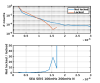
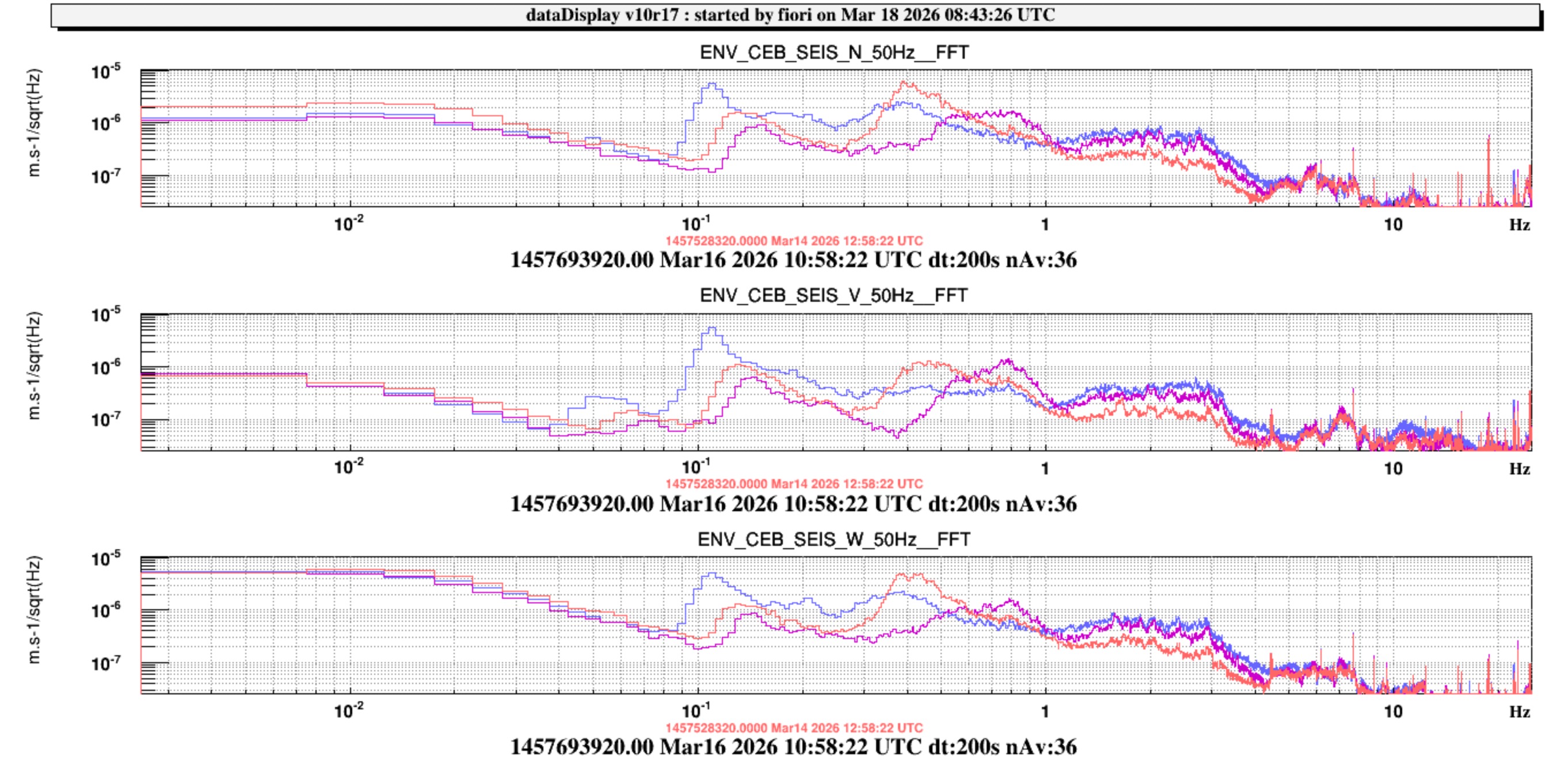
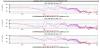
Figure 2 shows seimic spectra at selected times during the last 10 days when each peak was dominant. In particular, the oceninc peak has been more or less always present during that week, and the strongest on March 15 and 16  (Figure 1).

 The current SeaActivity monitor of the DMS is based on the RMS of the CEB sensor computed in the range 0.1 to 1Hz (https://logbook.virgo-gw.eu/virgo/?r=38879) and the yellow and red thresholds corresponds to the 75-percentile and the 90-percentile,  respectively.

Following the requirement from Paolo and Michal of having a more detailed monitor of the various contributions, we propose to add in the DMS  "SeaActivity" these channels:

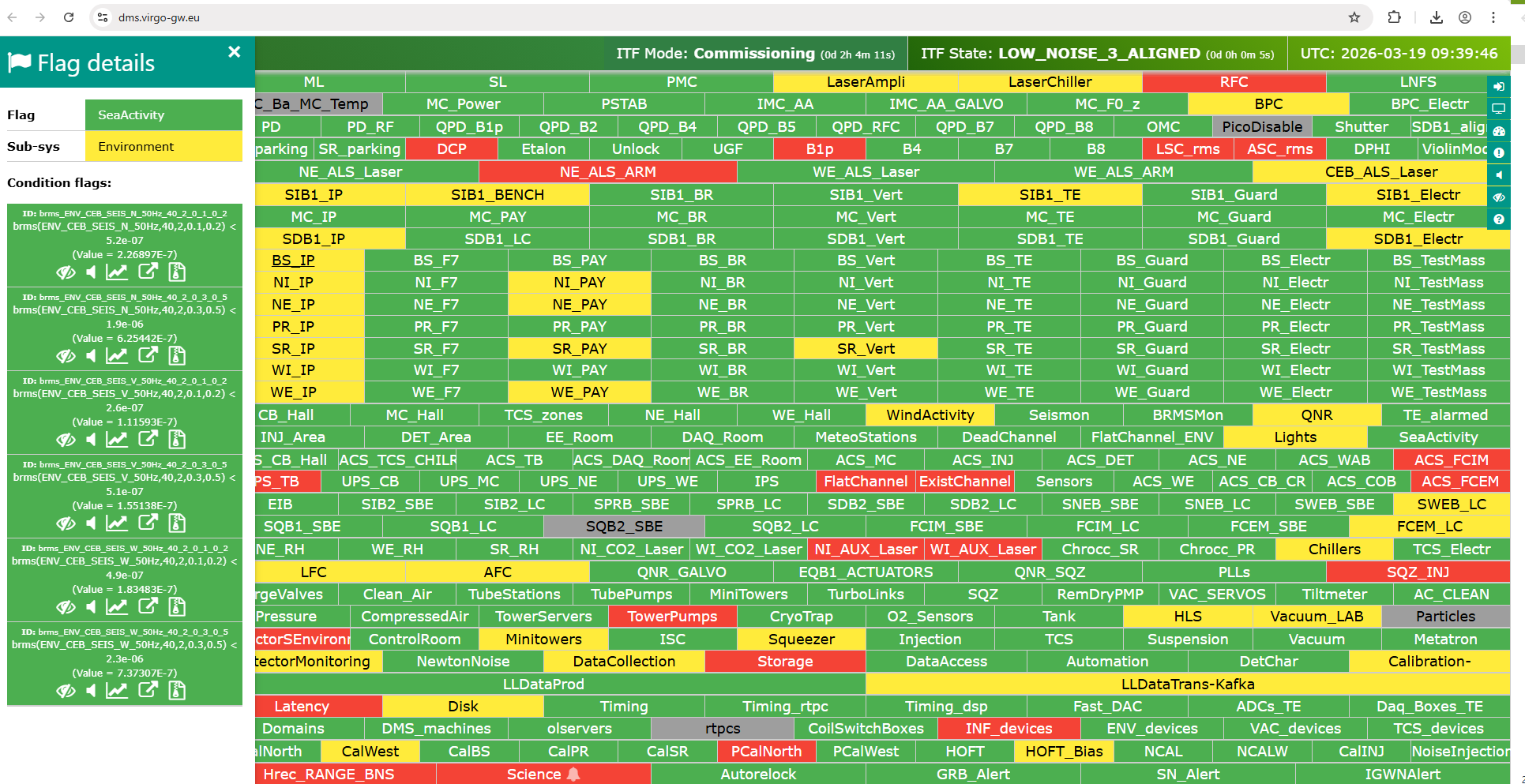
  • brms(ENV_CEB_SEIS_N_50Hz,40,2,0.1,0.2)  yellow threshold = 3.0e-7; red threshold = 5.2e-7 
  • brms(ENV_CEB_SEIS_V_50Hz,40,2,0.1,0.2)   yellow threshold = 1.7e-7; red threshold = 2.6e-7
  • brms(ENV_CEB_SEIS_W_50Hz,40,2,0.1,0.2)   yellow threshold = 2.8e-7; red threshold = 4.9e-7
  • brms(ENV_CEB_SEIS_N_50Hz,40,2,0.3,0.5)   yellow threshold = 1.2e-6; red threshold = 1.9e-6
  • brms(ENV_CEB_SEIS_V_50Hz,40,2,0.3,0.5)   yellow threshold = 3.0e-7; red threshold = 5.1e-7
  • brms(ENV_CEB_SEIS_W_50Hz,40,2,0.3,0.5)   yellow threshold = 1.4e-6; red threshold = 2.3e-6

The threshold values correspond to the 75th percentile (yellow) and 90th (red) computed over the last 2 yrs statistics: See Figures from 3 to 8.
 

Images attached to this report
Comments to this report:
berni - 10:41 Thursday 19 March 2026 (68908) Print this report

The flag has been added/modified in the DMS.

Images attached to this comment
fiori, lunghini, berni - 11:15 Thursday 19 March 2026 (68909) Print this report

Typo fixing: the third microseismic peak's monitor is not 600-800mHz but 600mHz-1Hz

For this third peak the computed 75 PL (yellow flag) and 90 PL (red flag) thresholds for the DMS are:

  • brms(ENV_CEB_SEIS_N_50Hz,40,2,0.6,1.0)   yellow threshold = 6.0e-7; red threshold = 9.1e-7
  • brms(ENV_CEB_SEIS_V_50Hz,40,2,0.6,1.0)   yellow threshold = 4.4e-7; red threshold = 6.9e-7
  • brms(ENV_CEB_SEIS_W_50Hz,40,2,0.6,1.0)   yellow threshold = 6.9e-7; red threshold = 1.1e-6

We added also this third peak monitor in the DMS "SeaActivity"

mantovani - 10:53 Monday 23 March 2026 (68930) Print this report

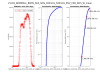
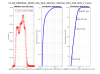
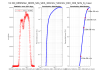
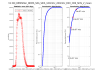
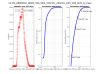
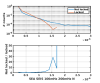
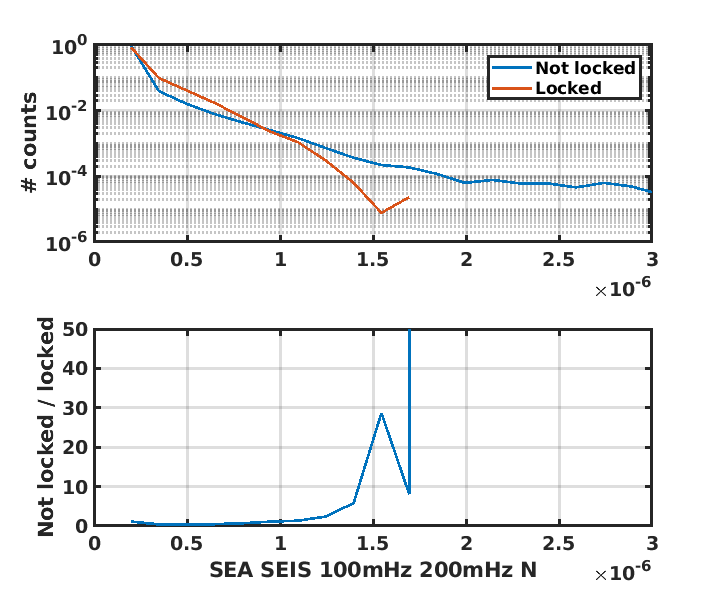
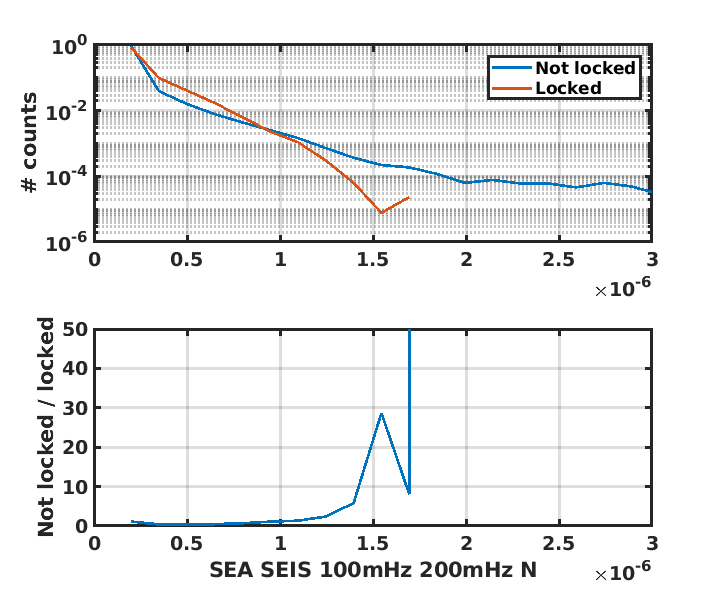
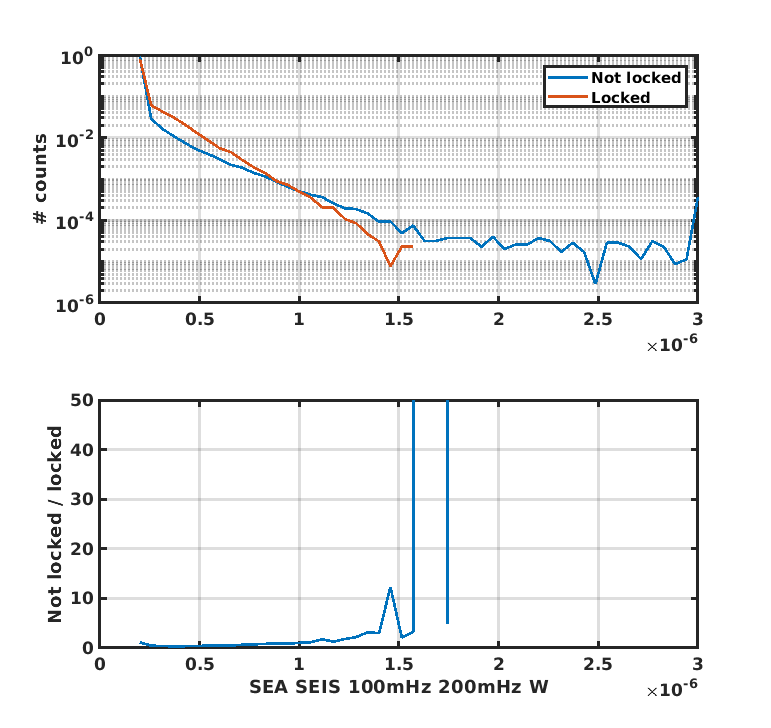
I ve runned the statistical analysis in 1 year of data understanding which are the ocean conditions that allows to lock the ITF.

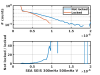
I ve used the DQ_BRMSMon_BRMS_SEA_SEIS_100mHz_200mHz_ENV_CEB_SEIS_N channel to evaluate the distribution of the weather condition and evaluate which is the number of succesfull locks (normalized on the total number) against the unsuccessful ones.

The ratio of these quantities gives an idea on the lock probability.

In figure 1 it is visible that for 1.4e-6 the probabilty to dont reach the lock (META =135) is 10 time bigger than the probability to lock.

A reasonable value should be then 1e-6. to be addressed on all the channels


Images attached to this comment
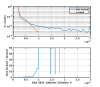
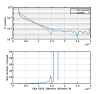
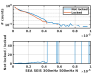
mantovani - 14:47 Monday 23 March 2026 (68931) Print this report

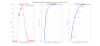
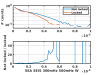
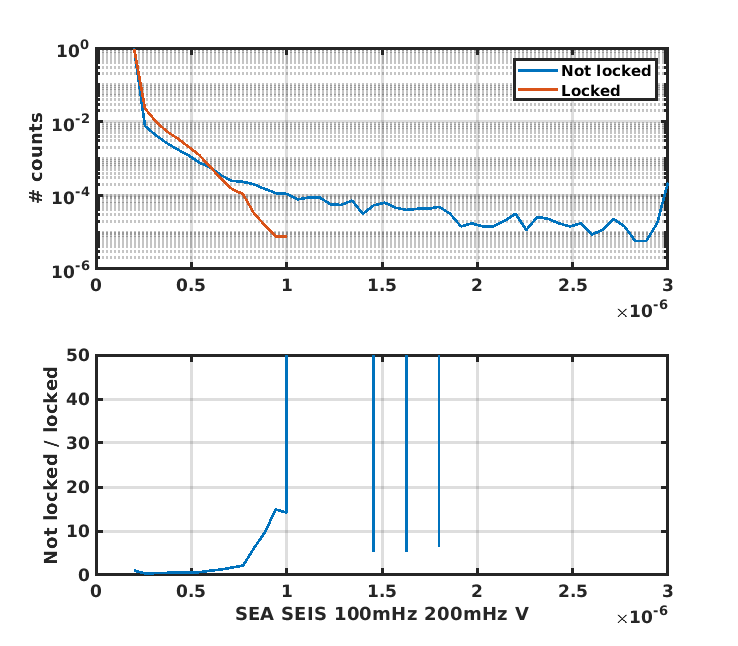
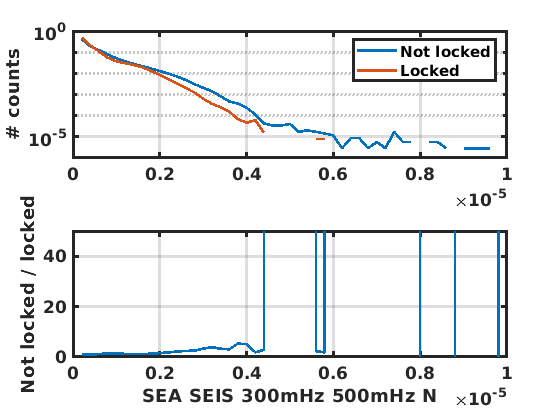
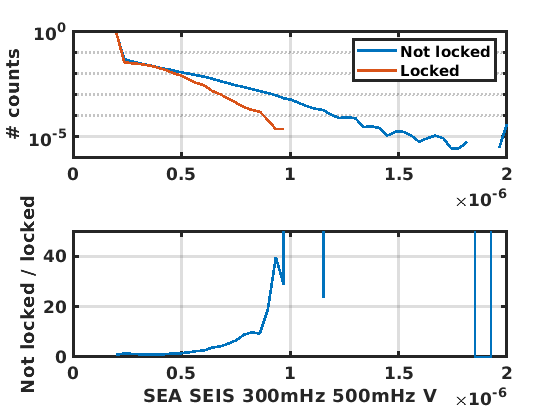
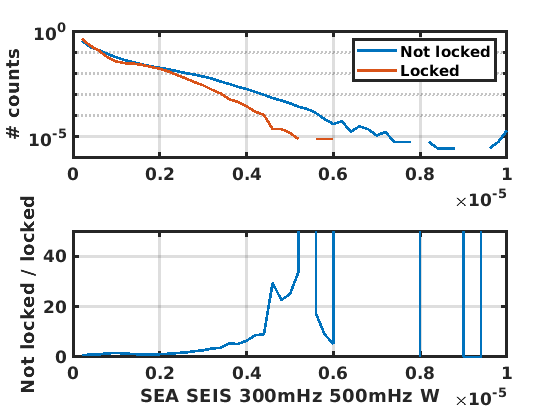
considering all the channels:

DQ_BRMSMon_BRMS_SEA_SEIS_100mHz_200mHz_ENV_CEB_SEIS_N_mean. 

DQ_BRMSMon_BRMS_SEA_SEIS_100mHz_200mHz_ENV_CEB_SEIS_V_mean

DQ_BRMSMon_BRMS_SEA_SEIS_100mHz_200mHz_ENV_CEB_SEIS_W_mean

DQ_BRMSMon_BRMS_SEA_SEIS_300mHz_500mHz_ENV_CEB_SEIS_N_mean

DQ_BRMSMon_BRMS_SEA_SEIS_300mHz_500mHz_ENV_CEB_SEIS_V_mean

DQ_BRMSMon_BRMS_SEA_SEIS_300mHz_500mHz_ENV_CEB_SEIS_W_mean

we can set the limits for which it is more probable to be not locked than locked

channel  
100mHz_200mHz_ENV_CEB_SEIS_N 0.8e-6
100mHz_200mHz_ENV_CEB_SEIS_V 0.6e-6
100mHz_200mHz_ENV_CEB_SEIS_W 1e-6
300mHz_500mHz_ENV_CEB_SEIS_N 1.8e-6
300mHz_500mHz_ENV_CEB_SEIS_V 0.8e-6
300mHz_500mHz_ENV_CEB_SEIS_W 2e-6


Images attached to this comment
Search Help
×

Warning

Error

The present report has been modified outside this window. Please check for its integrity in the main page.

Refreshing this page will move this report into drafts.

×