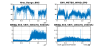
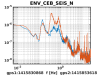
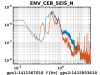
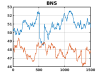
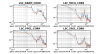
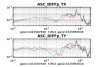
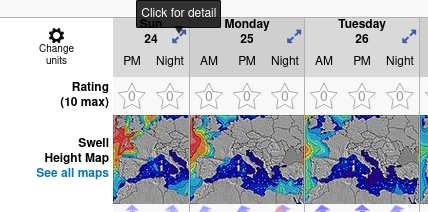
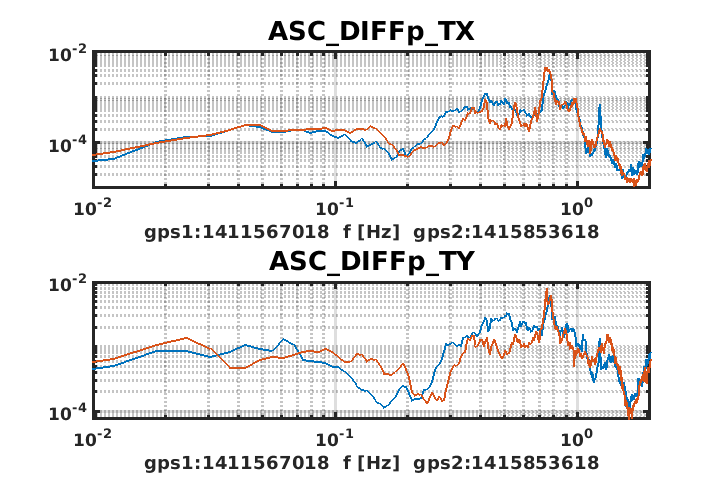
Figure 2. These might be due to the on-going storm on the atlantic coast of France and UK.
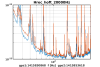
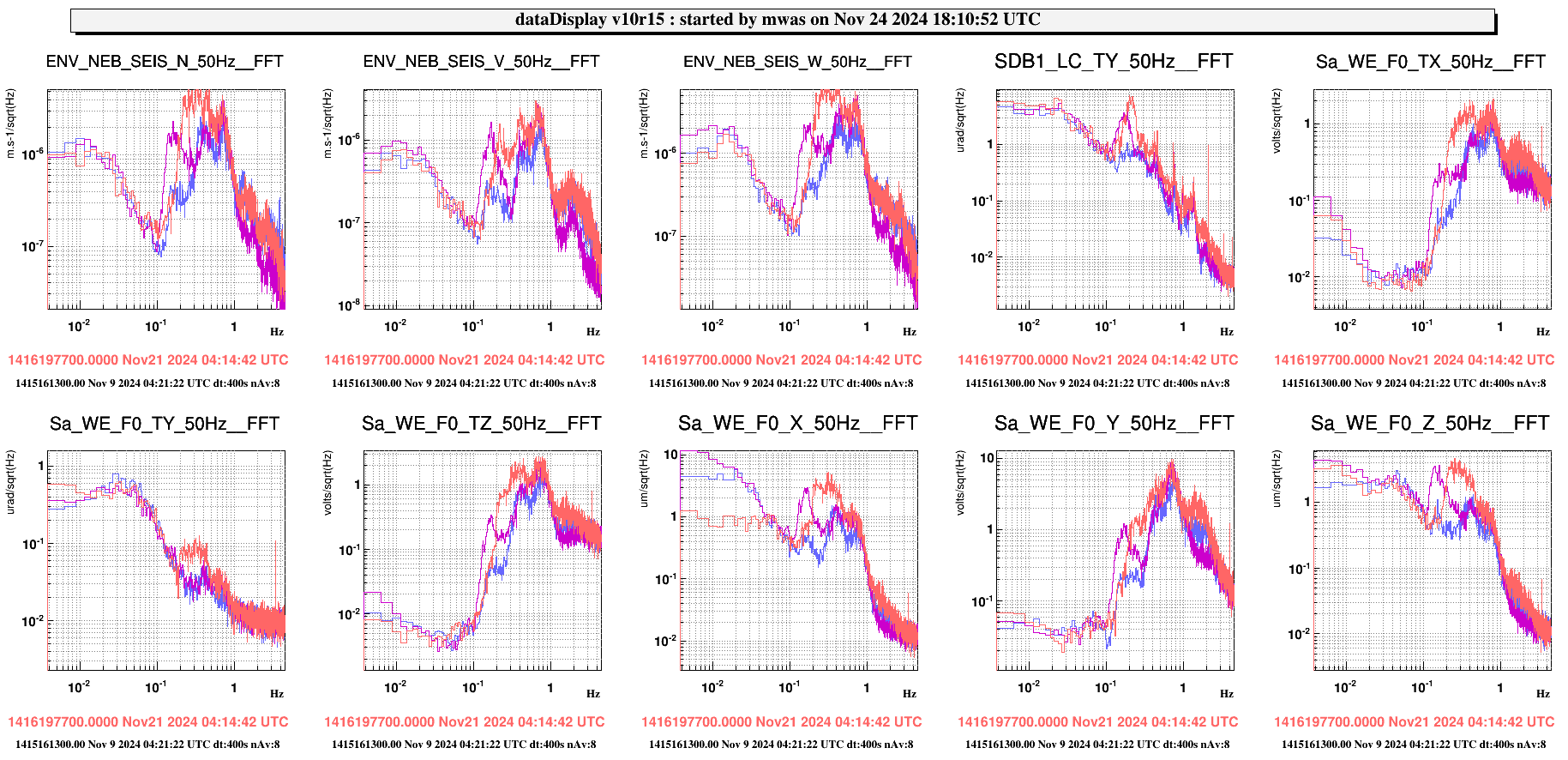
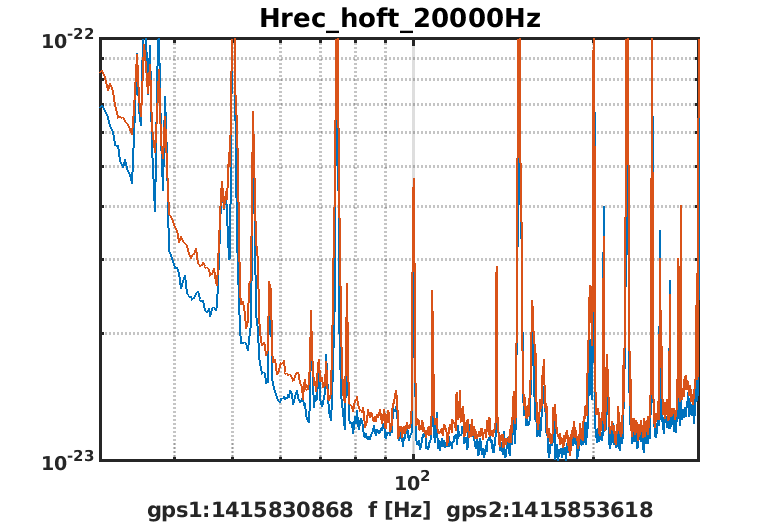
Figure 3. Current condition (purple line), show high ground motion and suspension F0 motion slightly below 200mHz. At that frequency it is higher than the high ground motion condition when we managed to lock a few days ago (red line), or nice data with 50+ Mpc range from a few weeks ago (blue line). That is the frequency of the pendulum mode of the superattenuator chain (pendulum frequency when considering the whole chain from F0 to mirror). I am not able to judge whether that could explain the current decrease in sensitivity or not.
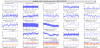
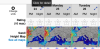
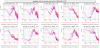
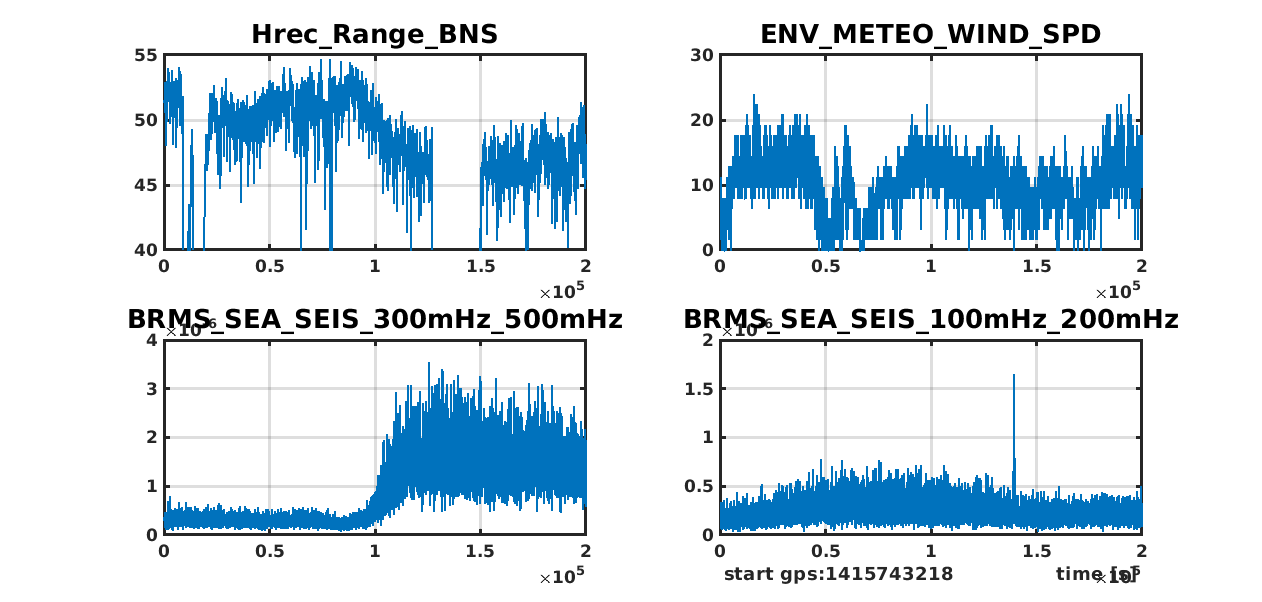
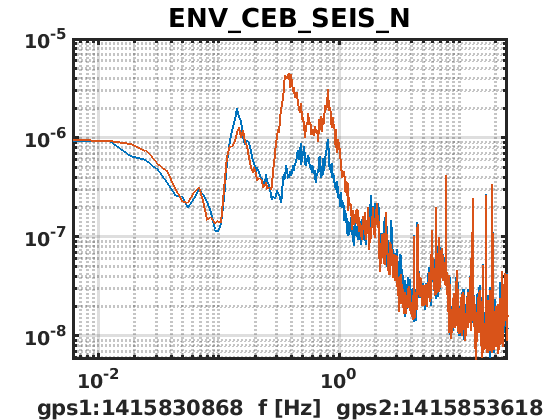
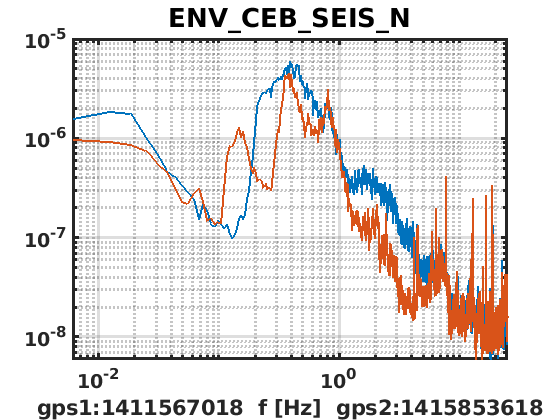
The sensitivity started to worsen on Saturday 16th in the night, when the seismic activity around 400 mHz increased (fig 1). The seismic motion at 150 mHz was already higher than usual when the sensitivity was still above 50 Mpc (fig 2). A new noise appeared later in the night, which seems the same currently spoiling the sensitivity (fig 3).
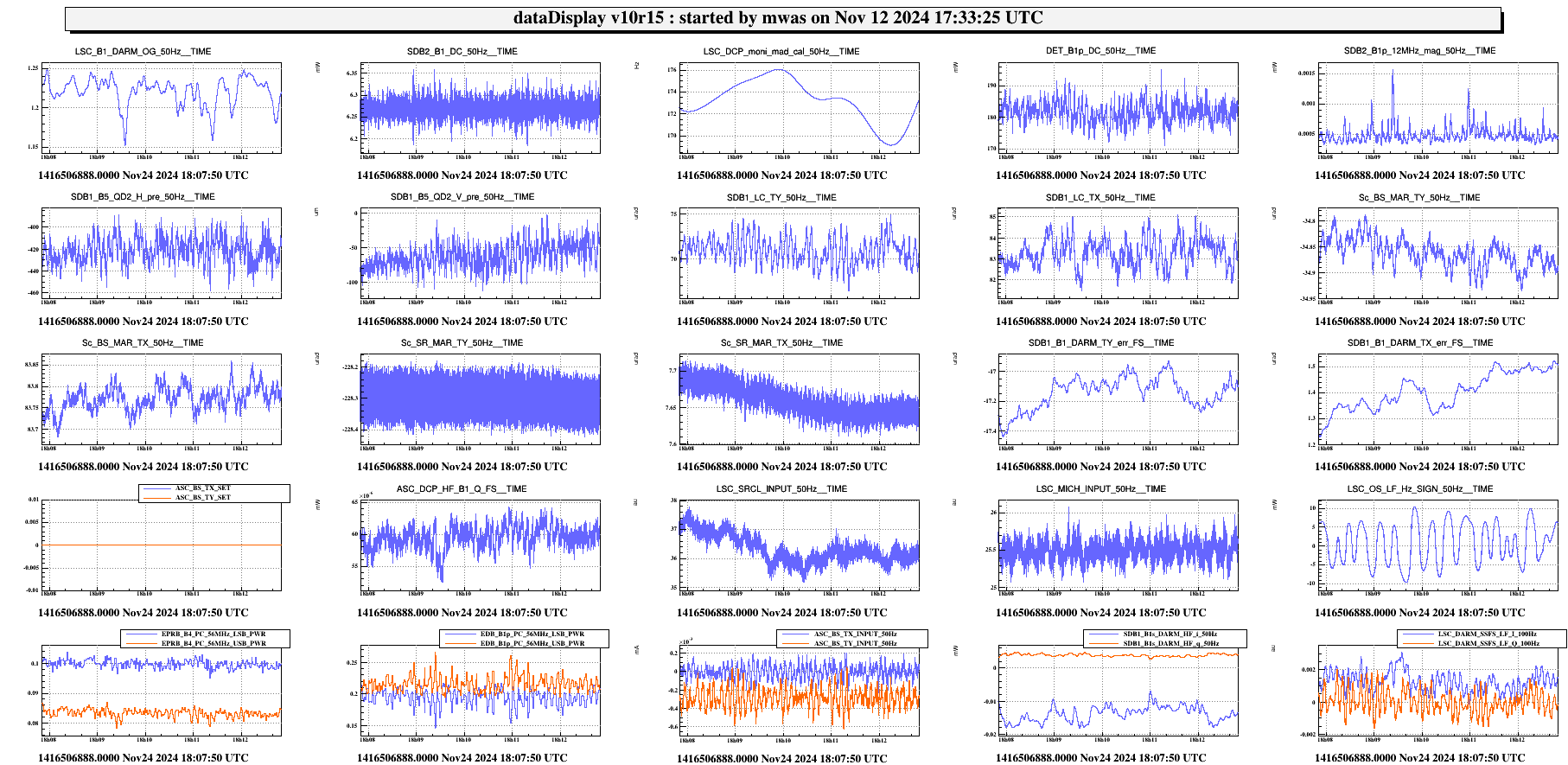
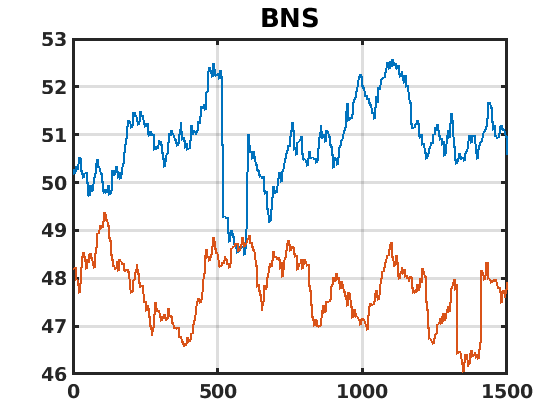
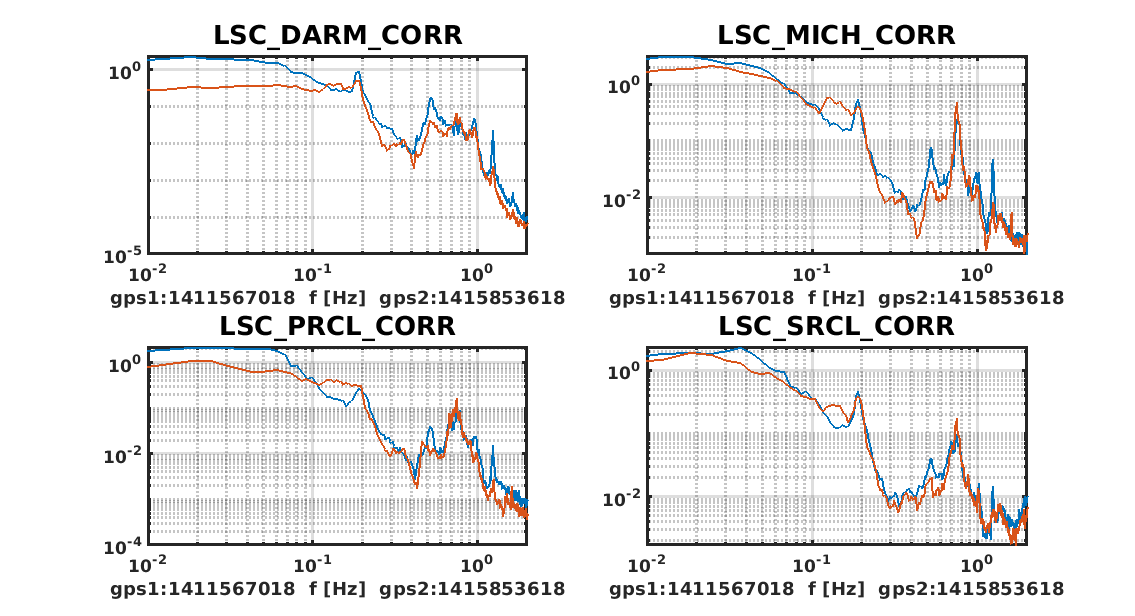
Going back in the data, one can easily find higher seism at 200-600 mHz (fig 4) corresponding to sensitivity above 50 Mpc (fig 5). Comparing the main longitudinal and angular signals (fig 6, fig 7), everything seems consistent with the difference in the ground motion: I should conclude that the suspension control works as usual in the recent period, but I didn't check all the possible signals and I cannot exclude that some dof has gone out of control. Talking about dofs, also suspended benches needs to be included, as possible sources of noise in case of high seismic motion.
My provisional conclusion is that the excess noise in the sensitivity is more likely due to an increased coupling to seismic motion at 400 mHz, than a normal coupling to some larger motion at 150-200 mHz, but the analysis is incomplete and will be continued, hopefully by more than a couple of persons.