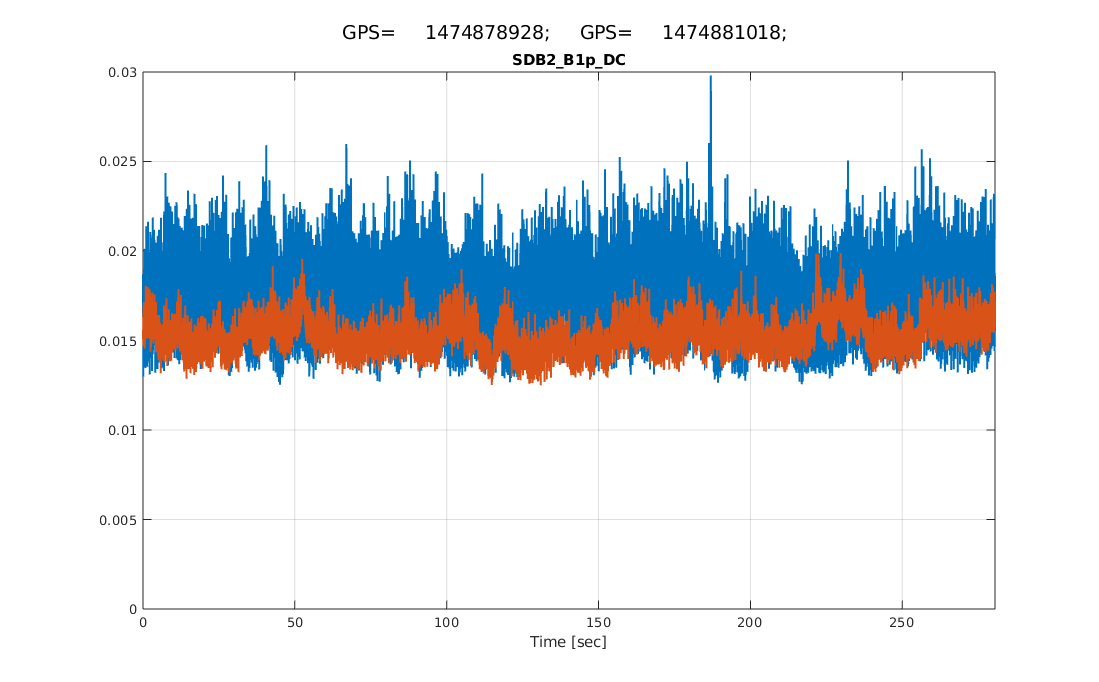
These modulation are caused by the high amplitude of the DIFFp tx and ty lines used for the UGF servos. The choice of these amplitudes is due to the 'necessity' seen in the past of surviving the initial transient of CARM null in which diffp gains change a lot. Reducing of a factor 2 the amplitudes improves the fluctations on the fringe, keeping enough coherence for the servos, fig.1.
We can simply decide to reduce the amplitude in the automation once we reach the steady state (or checking if we still need such high values of the lines amplitude in the initial transient).