Reports 1-1 of 1 Clear search Modify search
AdV-COM (AdV commissioning (1st part) )
mwas - 20:55 Wednesday 30 September 2026 (69830) Print this report
B1p fluctuations spectrum

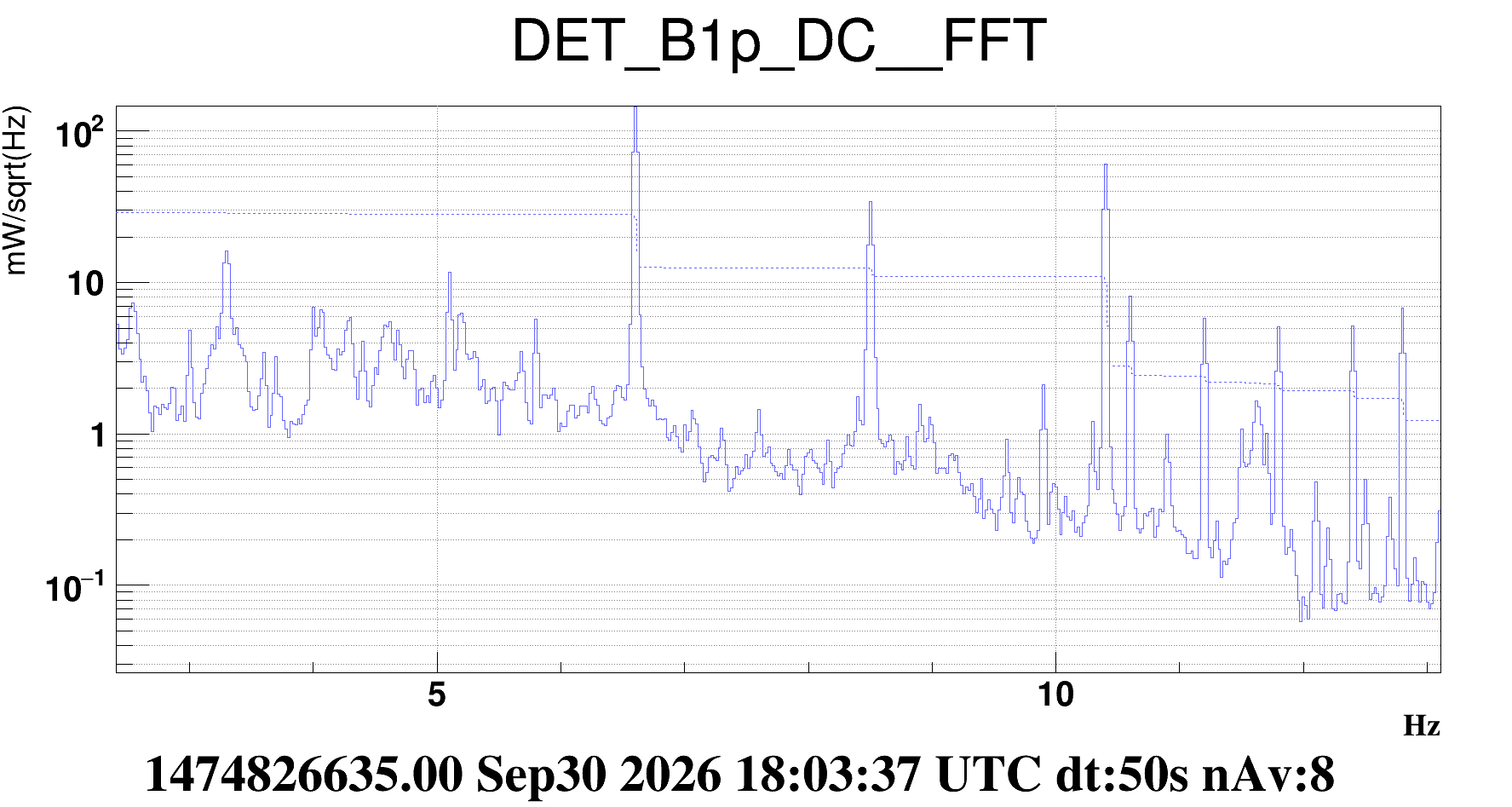
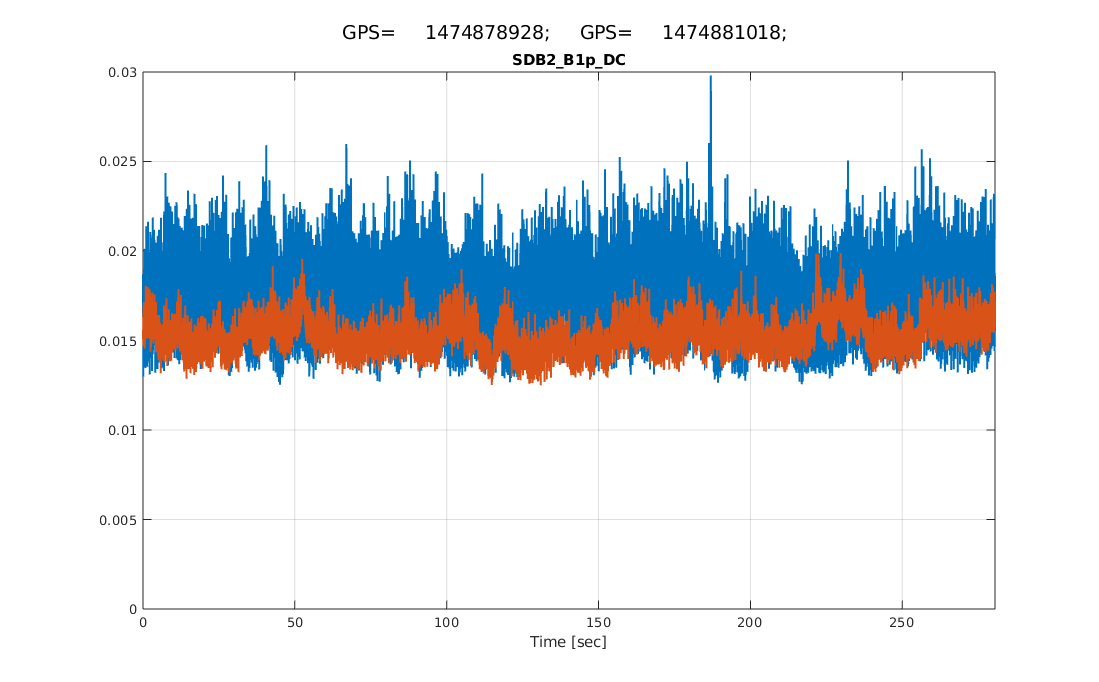
B1p is currently flucutation between 200mW and 300mW with fast fluctuations (timescales much shorter than 1 second).

Figure 1. Looking at the spectrum there are 3 lines which are dominating it: at 6.6Hz, 8.5Hz and 10.4Hz. The high line at 8.5Hz makes sense, it is the NI TX line, and we are using the NI vertical drift control to mis-center the beam on the input mirrors. However for the other two I have no explanation.  The lines look quite narrow, so could be some kind of dither lines, or some resonances.

These lines are close to limiting to reach safety threshold that prevent opening the OMC slow shutter.
Images attached to this report
Comments to this report:
mwas - 9:53 Thursday 01 October 2026 (69834) Print this report

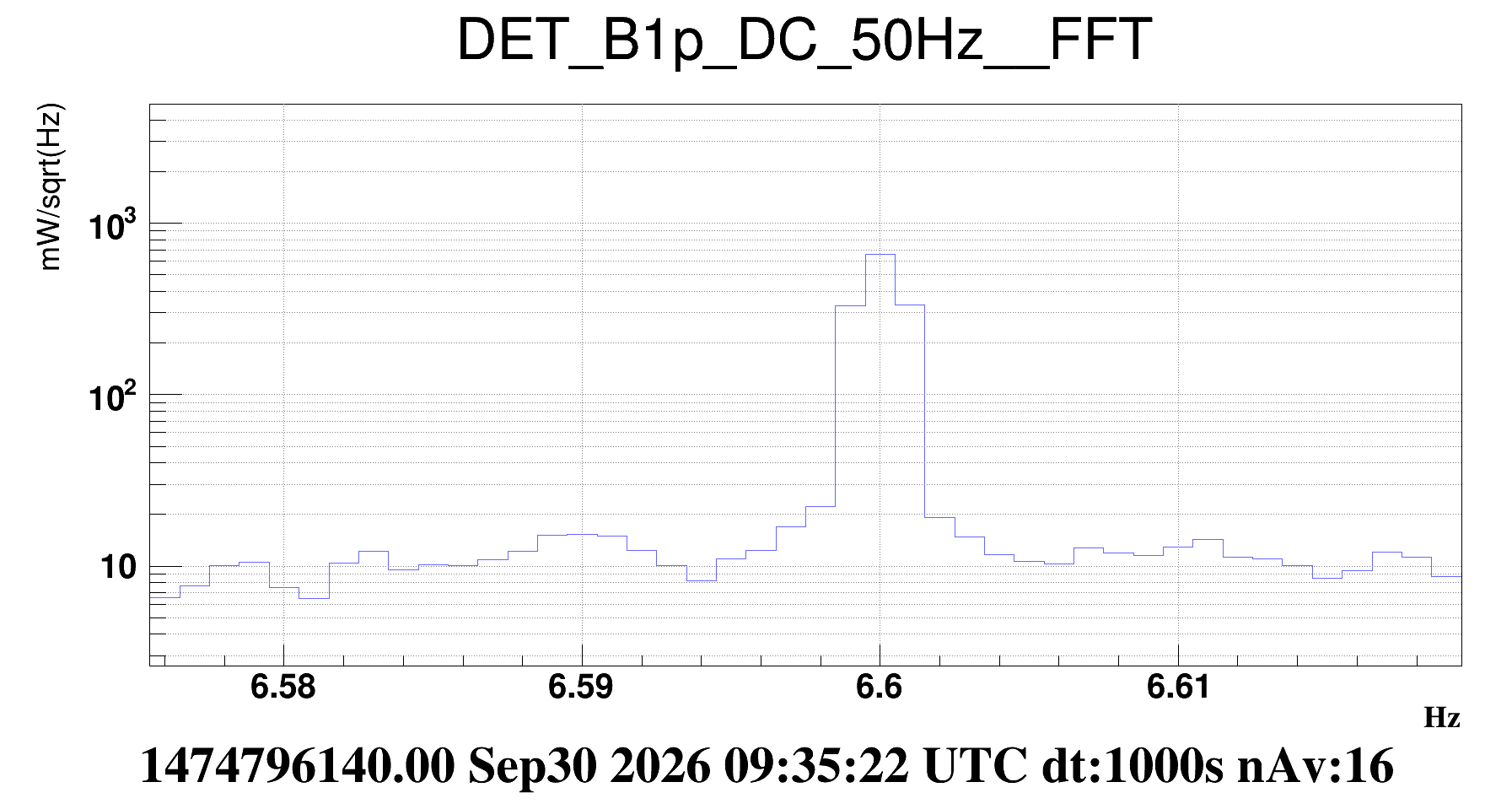
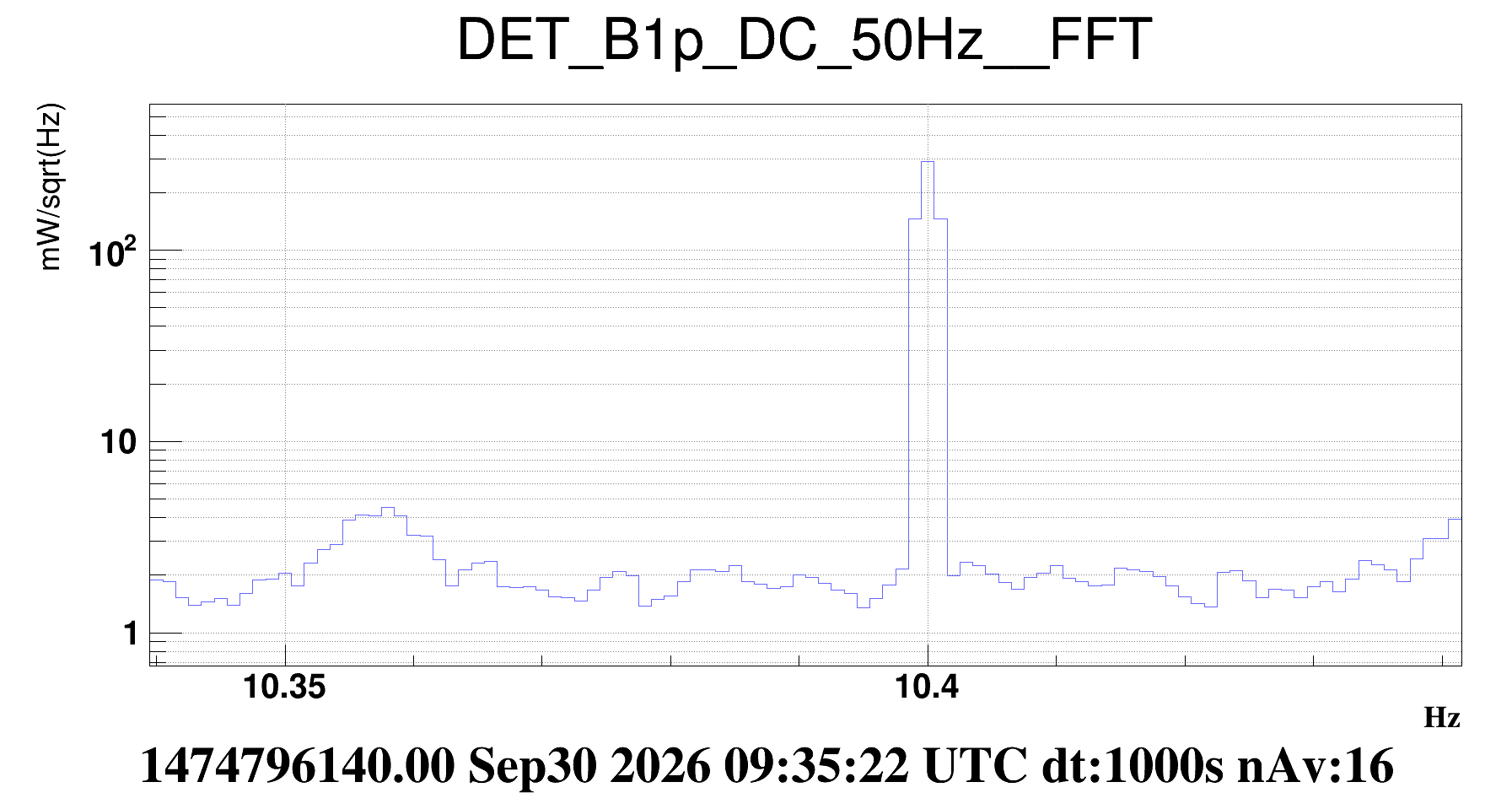
Figure 1 and 2 zoom on the lines at 6.6Hz and 10.4Hz. They are extremely narrow (less than 1mHz), and at a round number of decihertz, so I don't believe to be a mechanical resonance, and they must be some kind of intentional dither or modulation.

Images attached to this comment
pinto - 11:21 Thursday 01 October 2026 (69835) Print this report

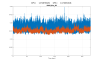
These modulation are caused by the high amplitude of the DIFFp tx and ty lines used for the UGF servos. The choice of these amplitudes is due to the 'necessity' seen in the past of surviving the initial transient of CARM null in which diffp gains change a lot. Reducing of a factor 2 the amplitudes improves the fluctations on the fringe, keeping enough coherence for the servos, fig.1.

We can simply decide to reduce the amplitude in the automation once we reach the steady state (or checking if we still need such high values of the lines amplitude in the initial transient).

Images attached to this comment
Search Help
×

Warning

Error

The present report has been modified outside this window. Please check for its integrity in the main page.

Refreshing this page will move this report into drafts.

×