Reports 1-1 of 1 Clear search Modify search
AdV-PSL (Commissioning of SS)
mwas, masserot, ruggi - 15:45 Thursday 16 July 2026 (69373) Print this report
PSTAB 50Hz harmanics feed-forward preparation

A comb of line spaced by 50Hz is present in the PSTAB spectrum, and the projection of those lines in the sensitivity show that the 250Hz line, and maybe some other are dominating the contribution of 50Hz harmonics to the sensitivity. The real solution will be to have fully differential calbing from the PSTAB photodiodes, instead of single ended calbing inside the vacuum as is currently the case. In the mean time, a feed forward of the 50Hz and its harmonics could be tried to reduce those lines. 

https://git.ligo.org/virgo/commissioning/commissioning-tasks/-/work_items/8

Paola has kindly explained how the 50Hz feed-forward into DARM is implemented in the DSP and I have replicated the method in Acl. The environmental channel is bandpassed around 50Hz and then a variable delay+gain filter is applied to the environmental channel with two continuously updated parameters. The filter gain is a simple product by a parameter, and the dephasing is formed by implementing an (s-s0)/(s+s0) filter manually in Acl retaining in a separate channel the previous value of a channel.

To obtain error signals for those two parameters the PSTAB channel after after adding the  feed-forward correction  is band passed at 50Hz, and multiplied by the environmental channel band passed around 50Hz and filtered by the dephasing filter. After low passing the result this yields the error signal for the gain parameter of the feedforward. 

To obtain the delay parameter error signal, the environmental channel is first filtered by a pole at 1Hz, to dephase it by 90 degrees before multplying it with the PSTAB channel band passed at 50Hz and low-passing. In this way the other quadrature of the demodulation of the PSTAB by the environmental channel is obtained.

To test the Acl implementation Alain has setup a test process Acl17_INJ in the test instance of VPM: https://vpm.virgo.infn.it:40010/main.html?subsystem=Tests&process=Acl17_INJ

To access the data from it one needs to change the Cmdomain using the command "cmdomain CascinaTest" before starting dataDisplay, and then choosing the FbmMainTestUsers online server.

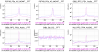
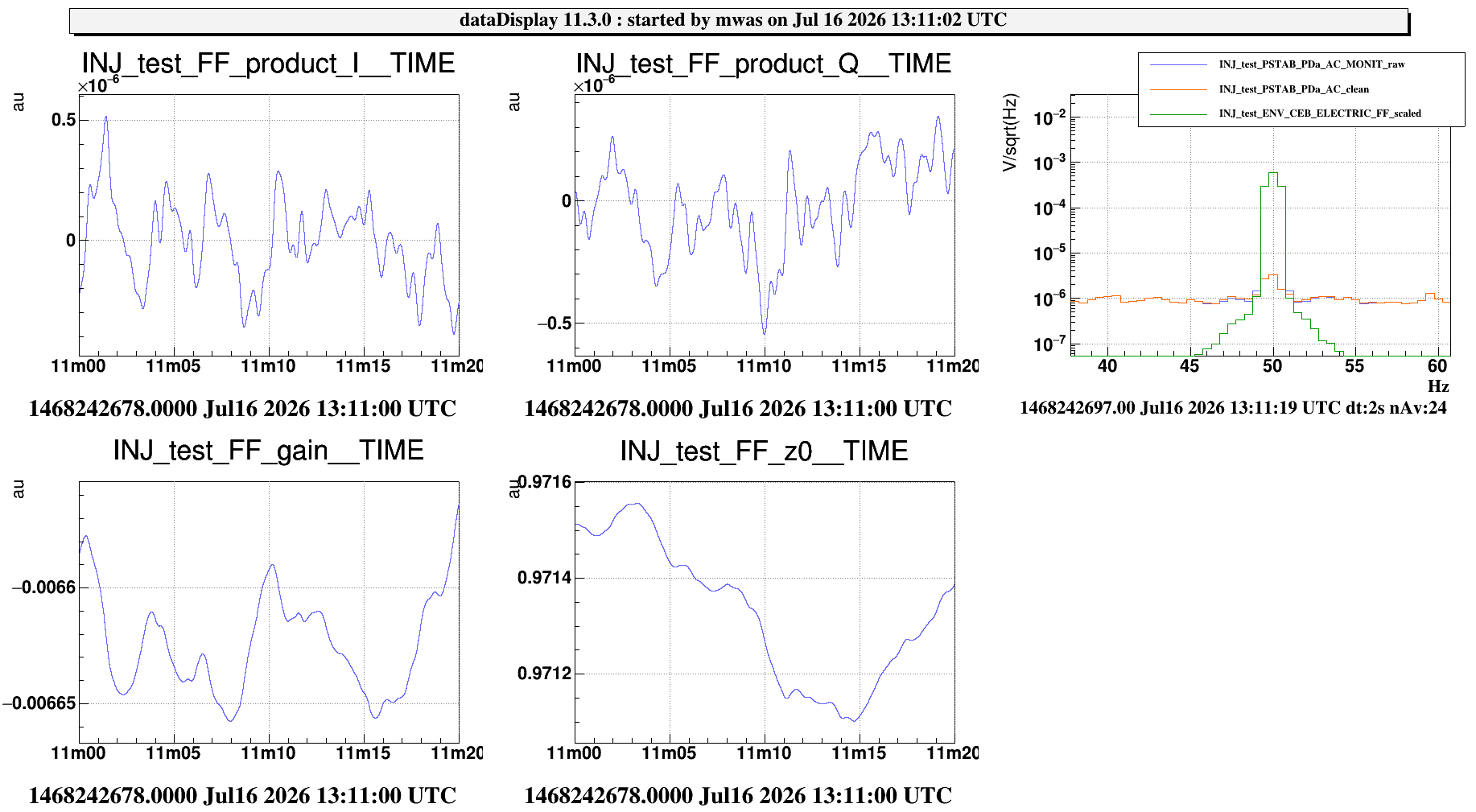
Figure 1 shows that after fixing many mistakes the 50Hz feed-back works in a test, reducing the 50Hz line in the target PSTAB channel by two orders of magnitude. FF_product_I/Q are the two error signals, while FF_gain and FF_z0 are the two variable parameters of the feed-forward filter. The adjustment of those filters is done using a simple pure integrator of the error signals, and the adjustment loop UGF is around 0.2Hz, I haven't tried to increase the UGF further.

One important aspect was to do the demodulation for calculating the FF_product_I/Q error signals after applying the dephasing signal to the environmental channel, so that the loop automatically tunes the demodulation phase. Initially the loop was not working at all, as the 50Hz line in the PSTAB channel was ~90 degree out of phase with the line in the environmental channel, which was swapping the two error signals.

This could be tested at some point on the actual PSTAB, starting from next week, to see if that idea works in practice. The code naming need to be first cleaned up, added into the ISYSnoise process to include it into the existing PSTAB_NOISE channel, and eventually replicated for all of the lines in the 50Hz harmanics comb.
Images attached to this report
Comments to this report:
mwas - 11:28 Friday 24 July 2026 (69435) Print this report

Implemented the 50Hz and 250Hz line feed forward into the PSTAB, it works but the target signal needs to be replaced by one which is not contaminated by the 50Hz harmonics.

7:38:40 UTC restarted ISYSnoise without changes in the configuration file,
other than putting PSTAB1 line amplitude to be the same as in the
External file. This unlocked the injection which then relocked after 1 minute.

After fixing some forgotten copy pastes, and adjusting the feedback
sampling frequency could restart the ISYSnoise process. Also added
buttons to turn the FF on and FF into the VPM interface.

08:23 UTC (3min) 50Hz feed-forward on with automatic tracking converged.

It is effective at removing 50Hz from PSTAB channels, both PDa and PDd
simultaneously, but 50Hz harmonic remains on RFC and B2 spectrum,
where they are reduced only by a factor 1.5-2. It is somewhat not
suprising as the 50Hz is polluting the PSTAB photodiodes sensor, so
minimizing the 50Hz in the PSTAB sensor does not improve the light
power stability. Need to use a sensor that is not contaminated by 50Hz
harmanics, the RFC reflection photodiodes can be good candidates as
they are in vacuum and with a differential read-out of the photodiode signal.

09:03 UTC (6min) 50Hz and 250Hz FF on with aumatic tracking

09:10 UTC (6min) 50Hz and 250Hz FF off

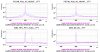
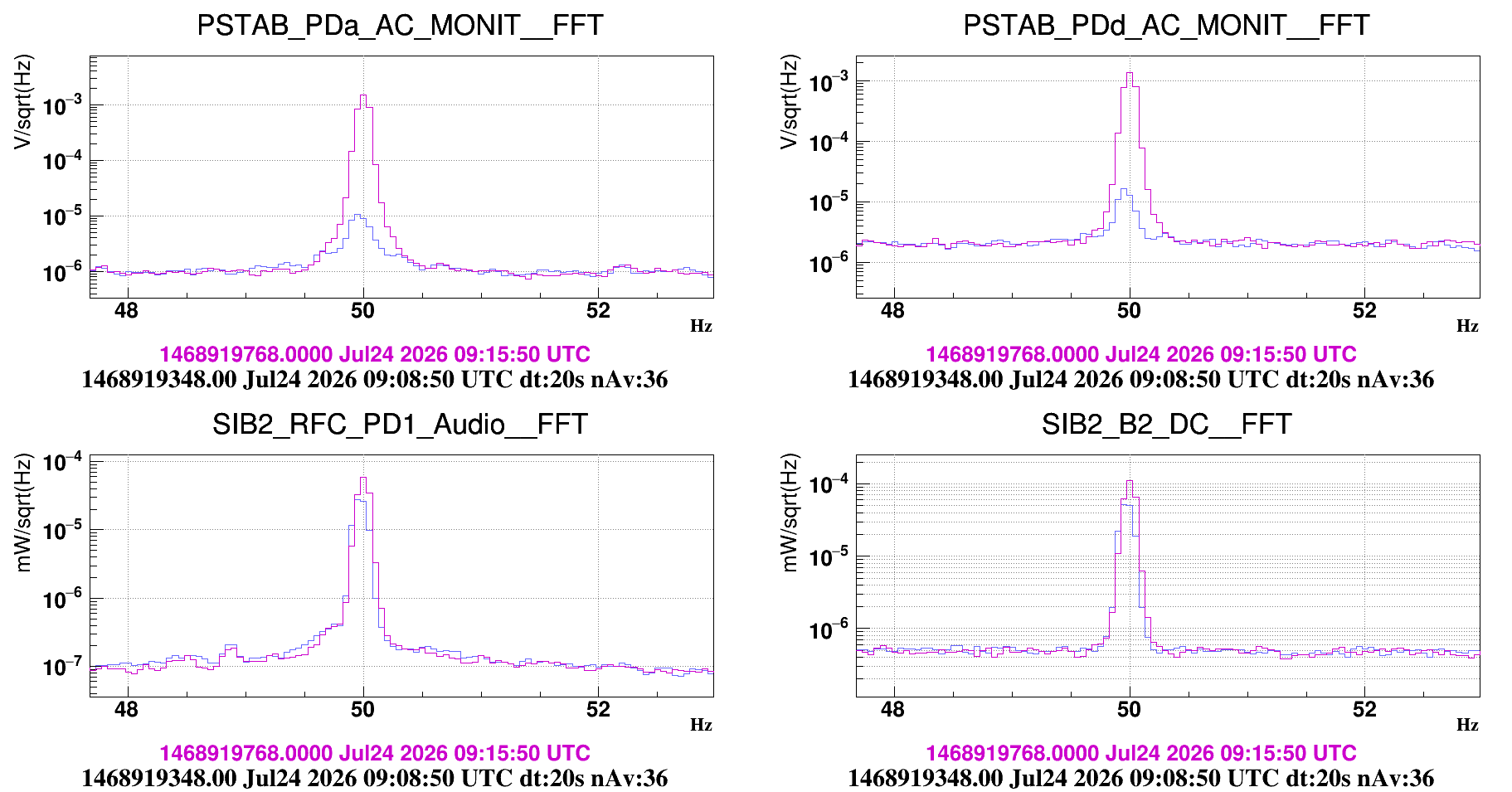
Figure 1 shows the result of the feed-forward on the 50Hz lines, it is
reduced by ~2 orders of magnitude on both PSTAB photodiodes (PDa is
the one which is in loop), but for signals without 50Hz contamination
(RFC, B2, the improvement is less than a factor 2). Blue shows data
with the FF enabled and purple with the FF disabled

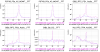
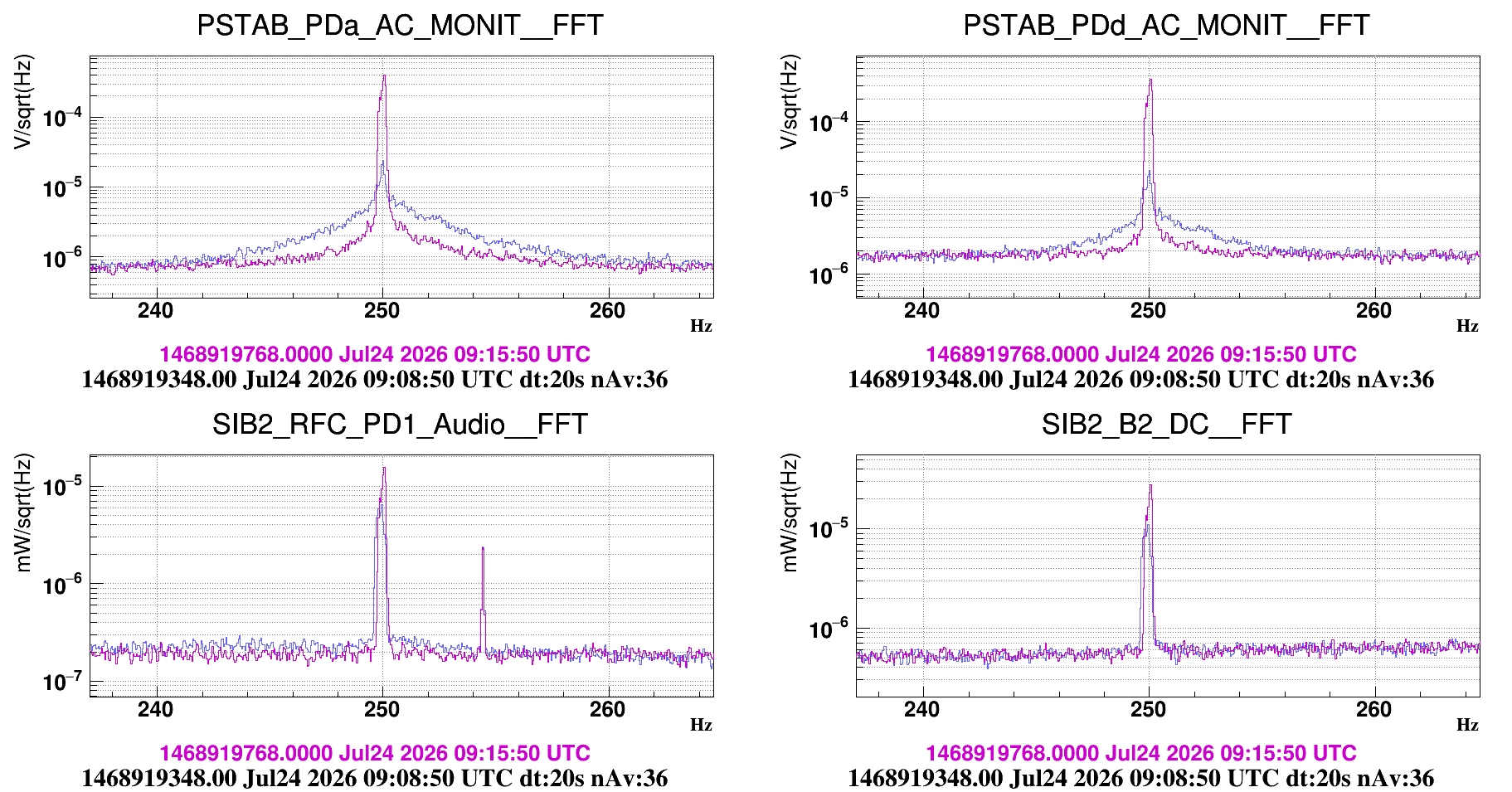
Figure 2 shows the result for the 250Hz line, where the environmental
channel has less clearance between the 250Hz line and the measurement
noise, so the FF is effective at removing the line but adds a wide
bump around the line.

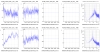
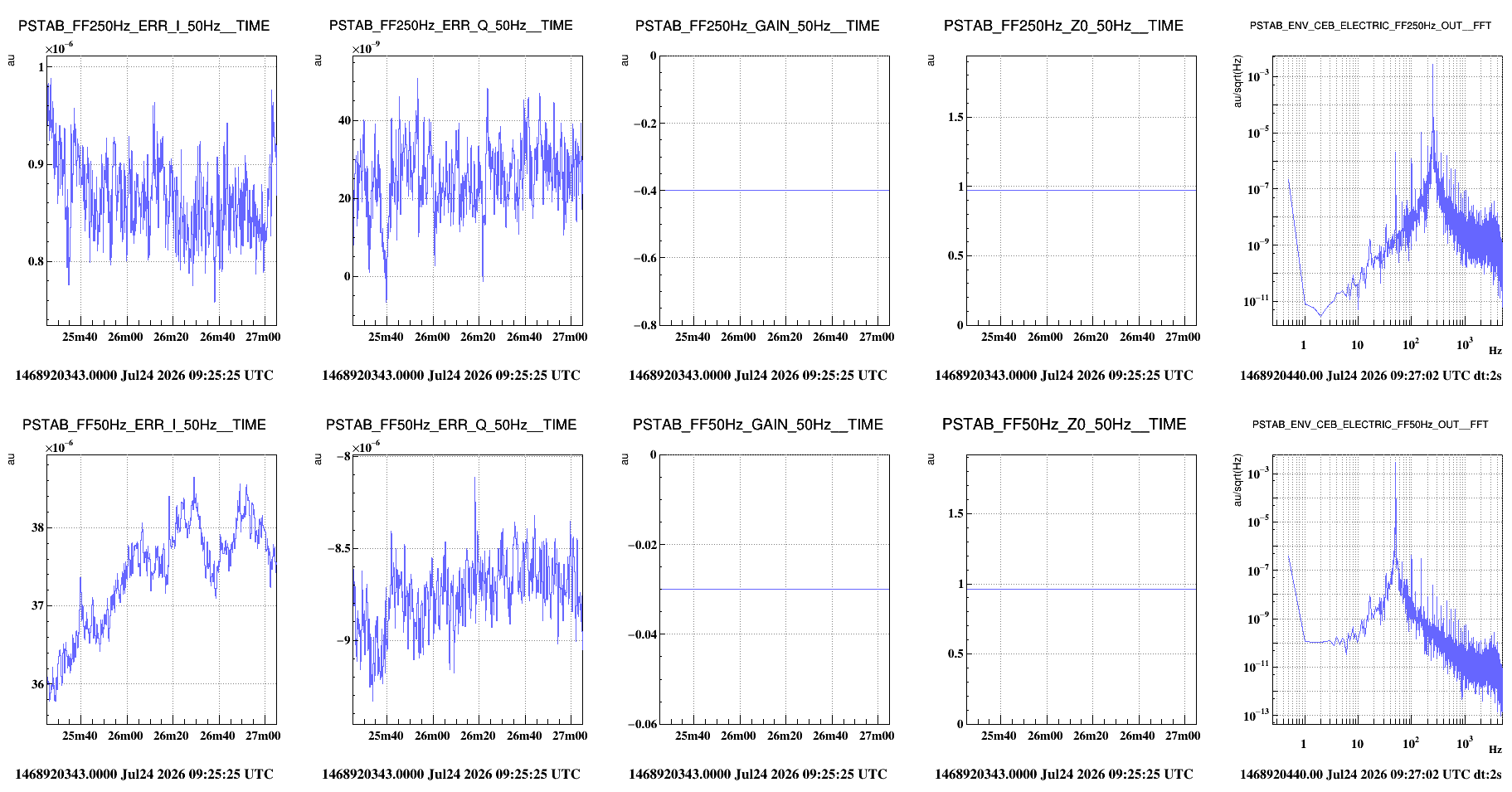
Figure 3 shows some of the FF channels when the loop is open.

Leaving the FF off as it doesn't have a protection to not misbehave
when the injection is unlocked. Next step is to add the RFC Audio
channel to RTPC19 so it can be used as a target channel for the
feed-forward.

Images attached to this comment
mwas - 18:55 Tuesday 25 August 2026 (69646) Print this report

Following the addition of the RFC Audio channels to rtpc19 ( https://logbook.virgo-gw.eu/virgo/?r=69642 ), I have replaced them as an error signal for the PSTAB 50Hz harmonics feedforward. After some tuning this has worked well at least as measured with the existing diagnostic channels.

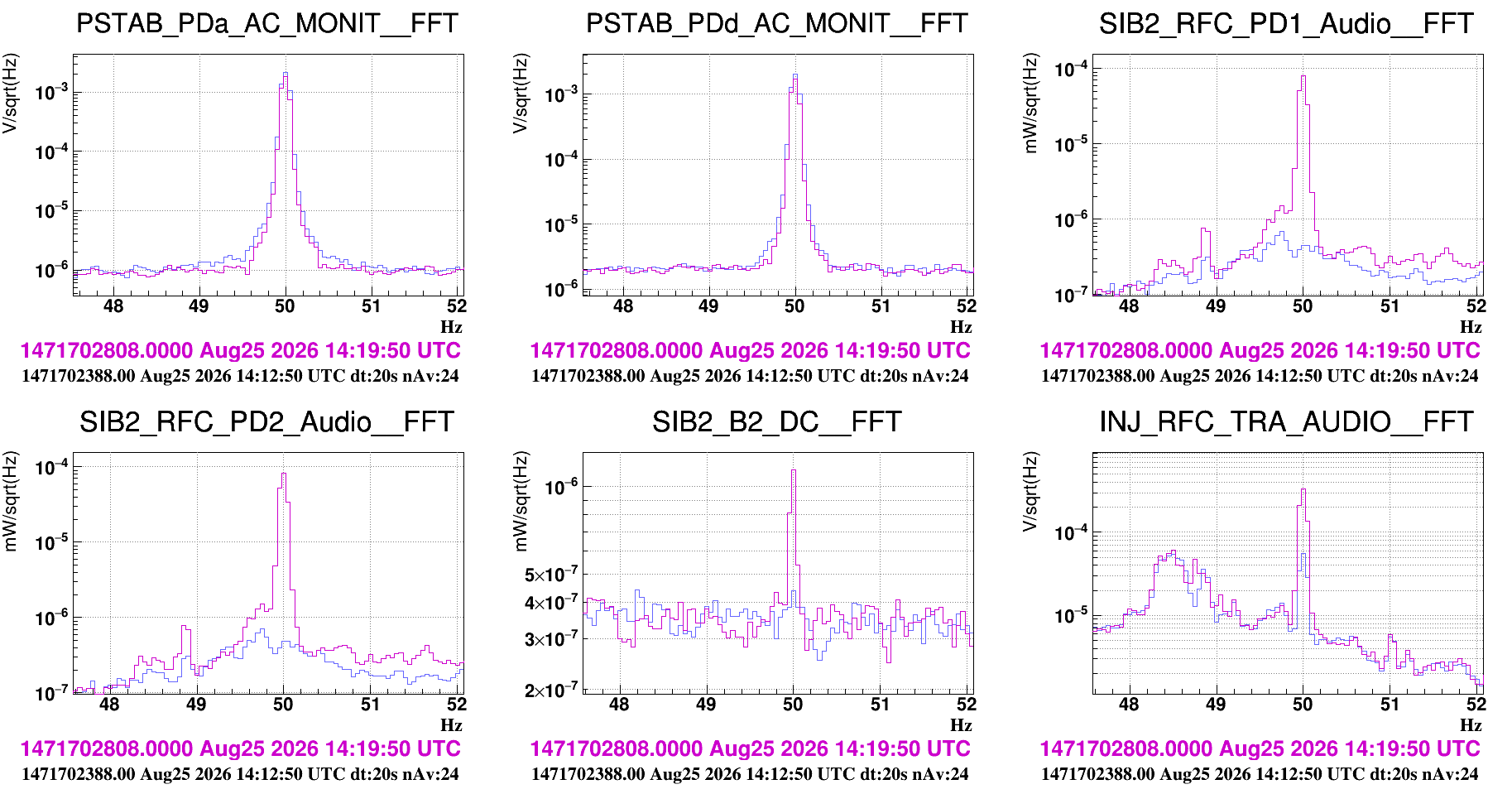
Figure 1 shows the performance around the 50Hz line, in purple are reference data with the FF off and in blue with the FF on. The line is removed from RFC PD1 Audio which is in loop, and also RFC PD2 Audio which is out of loop. The two PDs are connected to the same photodiode mezzanine, so one could argue that they just see a common sensing noise and not the power stability itself. The line disappears also from the B2 photodiode, where it is much more faintly visible than in July, because the power on the PD is 10 times smaller, the PR parking position must be slightly different. Most importantly it is reduced also from the RFC Tra photodiode, which is read out of vacuum by separate electronics, confirming a true improvement in the 50Hz, while not being able to quantify the improvement as it is affected by its own 50Hz contamination. On the PSTAB PDs there is no significant difference, as those are contaminated by additional sensing noise at 50Hz, both in loop, and most likely in the readout to the ADC. 

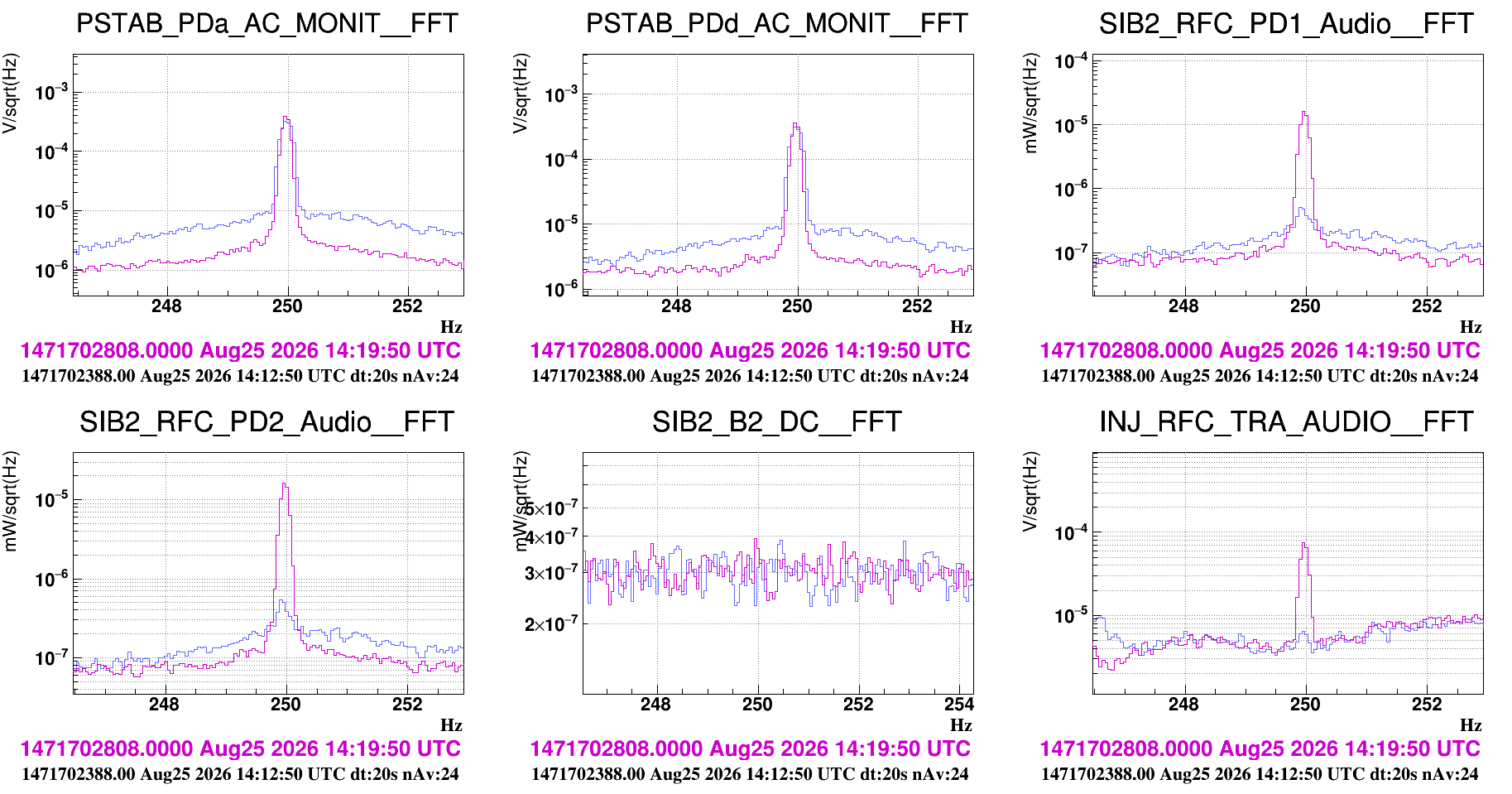
Figure 2 shows the performance for the 250Hz line. Again it is well removed from both RFC PDs, and the improvement on the RFC Tra photodiode is much clearer with a factor 10 decrease, while B2 does not have enough signal to give any information.

Leaving the FF off. The next step should be to automate switching of the FF loop when the RFC unlocks, as it may misbehave without the RFC locked, and then perform some longer duration tests of the FF and FF tracking loop stability.

-----------------------------------------------------

around 12:38 - restarting ISYSnoise process to add RFC as possible
inputs to PSTAB 50Hz harmonics cancellation
12:40 UTC (4min) reference time

spent a long time adjusting the starting parameters and the FF
tracking parameters. Especially for the 250Hz where a delay of 90
degrees was needed to make the I quadrature act on the gain, and the Q
quadrature on the phase.

14:09 UTC (4min) FF on with tracking enabled and in steady state

14:15:20 UTC disabling FF and FF tracking
 

Images attached to this comment
mwas - 11:23 Friday 28 August 2026 (69664) Print this report

Yesterday evening I have tried to add a safety to the feed-forward to automatically turn it off when RFC_TRA_DC goes below 2V (unlocks). 

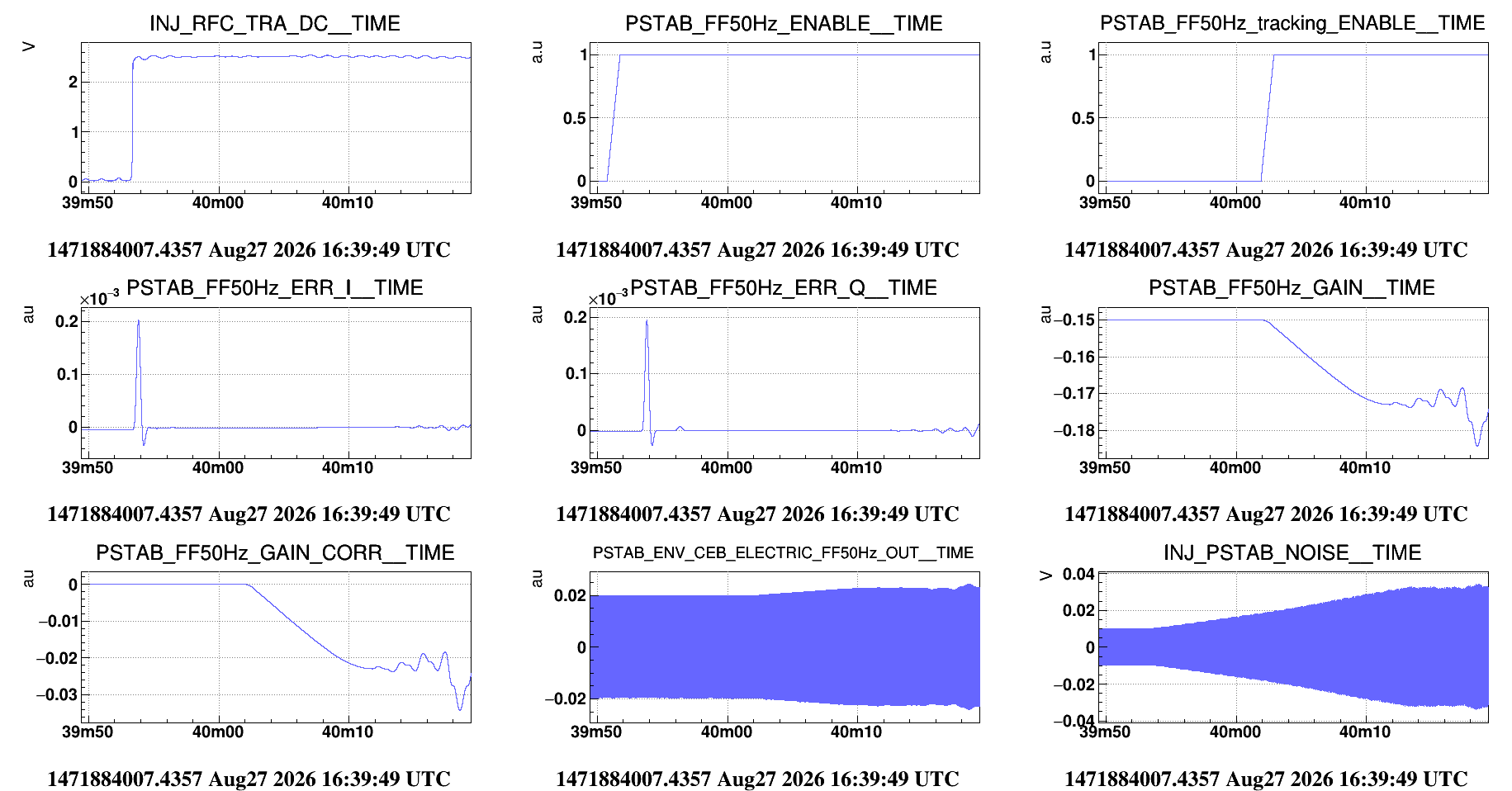
Figure 1 shows the result just after restarting the ISYSnoise process with the changes. The FF correction (eventually dominating the RMS of INJ_PSTAB_NOISE) starts immediately with a ramp of 20 seconds, instead of starting with a delay of 20 seconds after the RFC locks. I need to correct the logic of the safety.

---------

16:40 UTC restarted ISYSnoise to add a check that disables the 50Hz
harmonic FF when the RFC is not locked. Not fully certain if it works
as the timer is 20s while the 50Hz FF loop started acting only 10s
after the RFC locked.

17:01 UTC (5min) 250Hz FF enabled and stable

17:16 UTC disabling 50Hz and 250Hz FF
 

Images attached to this comment
mwas - 12:34 Friday 28 August 2026 (69666) Print this report

This morning I have corrected the logic error at 10:16 UTC.

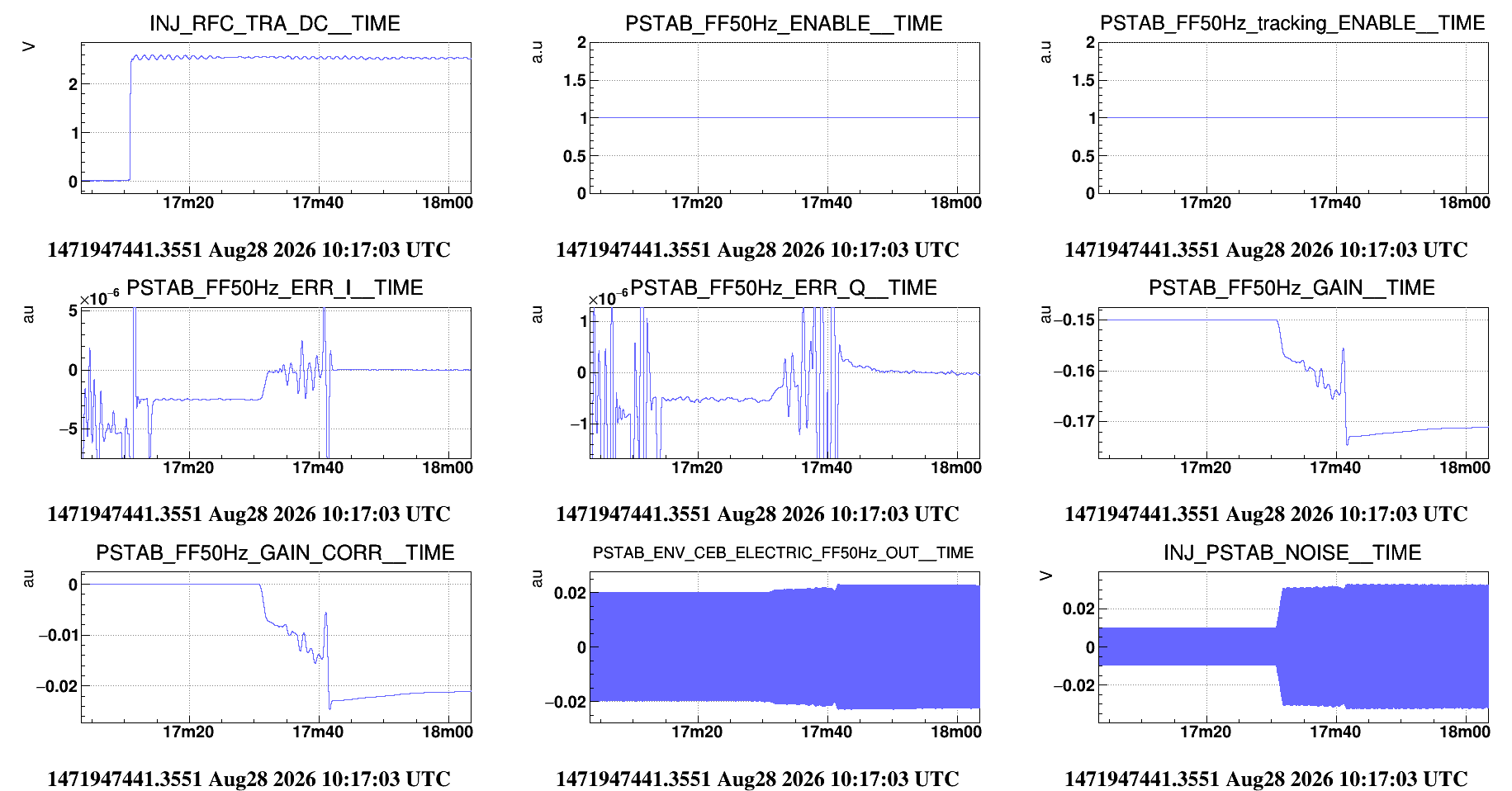
Figure 1. Shows the safety working properly, the FF corrections visible in INJ_PSTAB_NOISE and the FF tracking loop start at 10:17:30 UTC, 20 seconds after the RFC locks, despite the ENABLE flag being activated since at least 10:17 UTC.

Enabled also the 250Hz FF, and leaving it on for the day to see if any issues arises over several hours. I will disable the PSTAB FF loop at the end of the day as a precaution for the weekend.

Images attached to this comment
Search Help
×

Warning

Error

The present report has been modified outside this window. Please check for its integrity in the main page.

Refreshing this page will move this report into drafts.

×