Reports 1-1 of 1 Clear search Modify search
AdV-COM (1/√f noise)
mwas - 21:50 Tuesday 24 February 2026 (68748) Print this report
SRCL detuning in LN3

Attempting SRCL detuning directly in LN3, as there was not much
automatic adjustment during the last test in LN2, just a 10% gain
reduction for the MICH loop

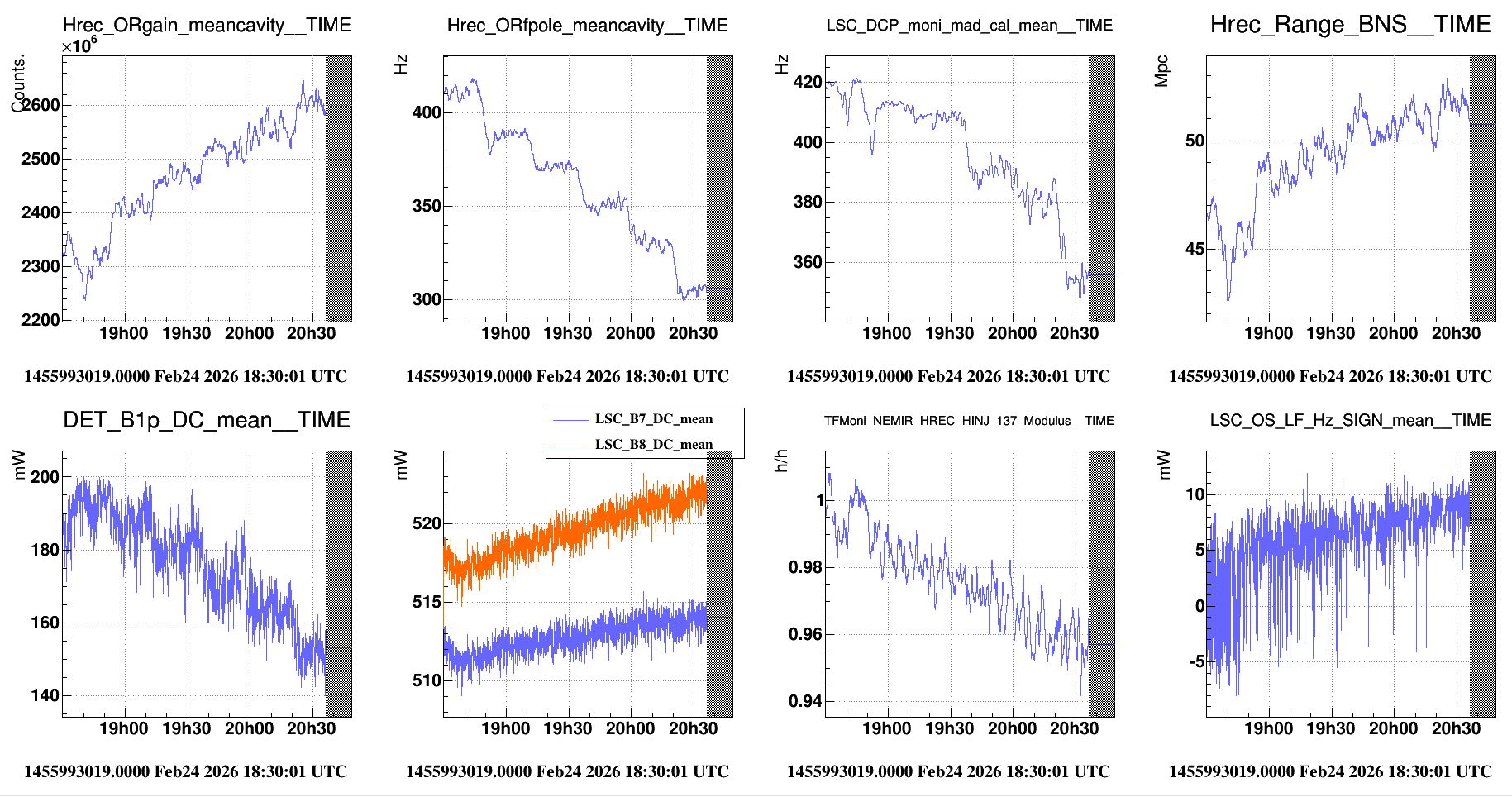
18:45 UTC turned off SRCL SET servo
18:46 UTC SRCL SET -10 with a 5min ramp
19:09 UTC SRCL SET -15 with a 5min ramp
19:32 UTC SRCL SET -20 with a 5min ramp, DCP at 350Hz
19:56 UTC SRCL SET -25 with a 5min ramp
20:16 UTC SRCL SET -30 with a 5min ramp, DCP at 300Hz

This time the SRCL steps correspond to larger reductions in the DCP
frequency as measured by Hrec, and larger phase changes in the 491Hz
line on B1.

In this configuration where the 1/f^{2/3} noise is reduced by the SRCL
detuning squeezing could have a major contribution to the BNS range,
by choosing the phase to squeeze the noise between 50Hz and 300Hz, and
give up on higher frequencies, where anti-squeezing will be added.

Leaving the inteferometer for the night in the last step, with SRCL detuned.

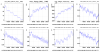
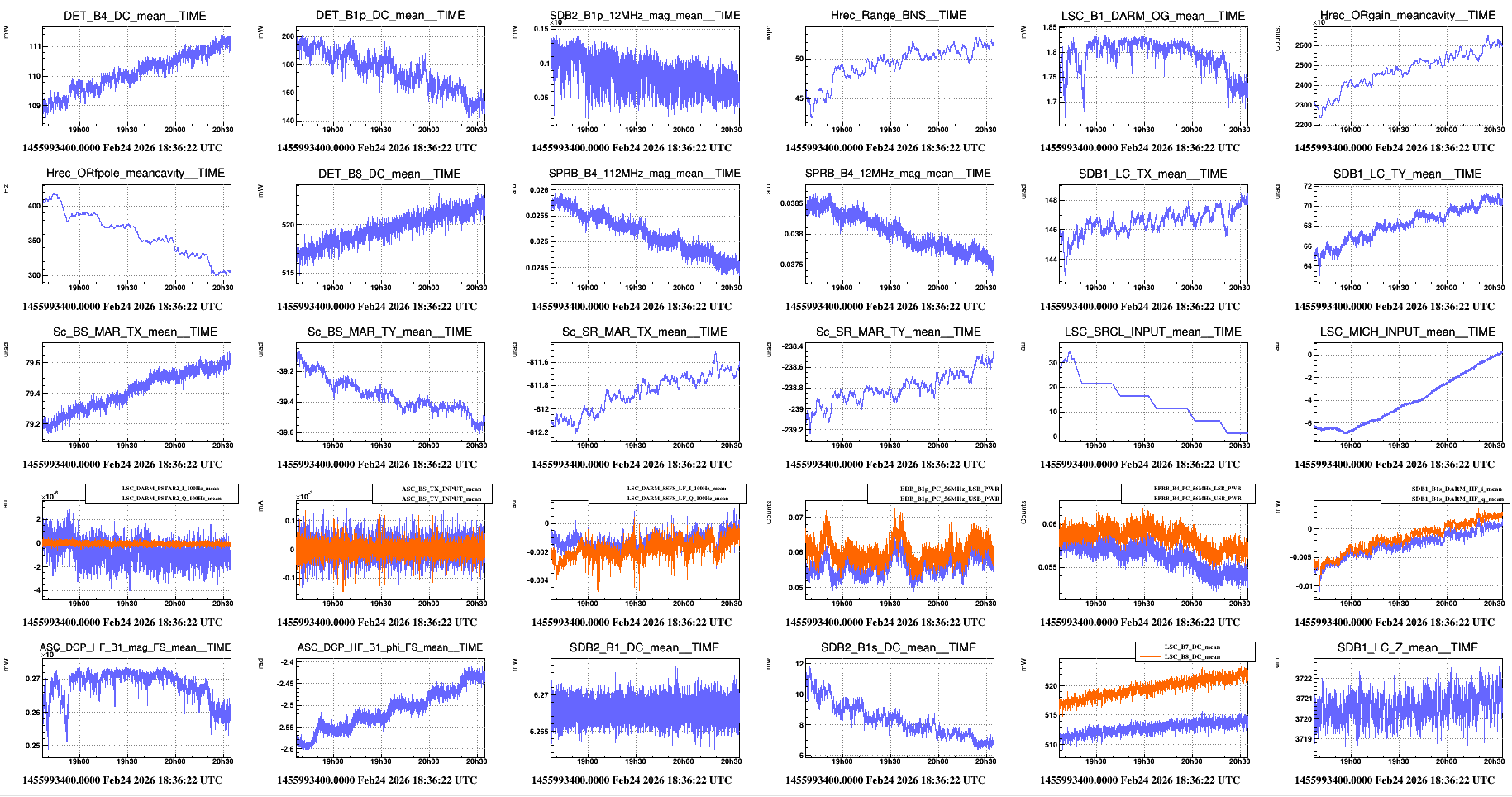
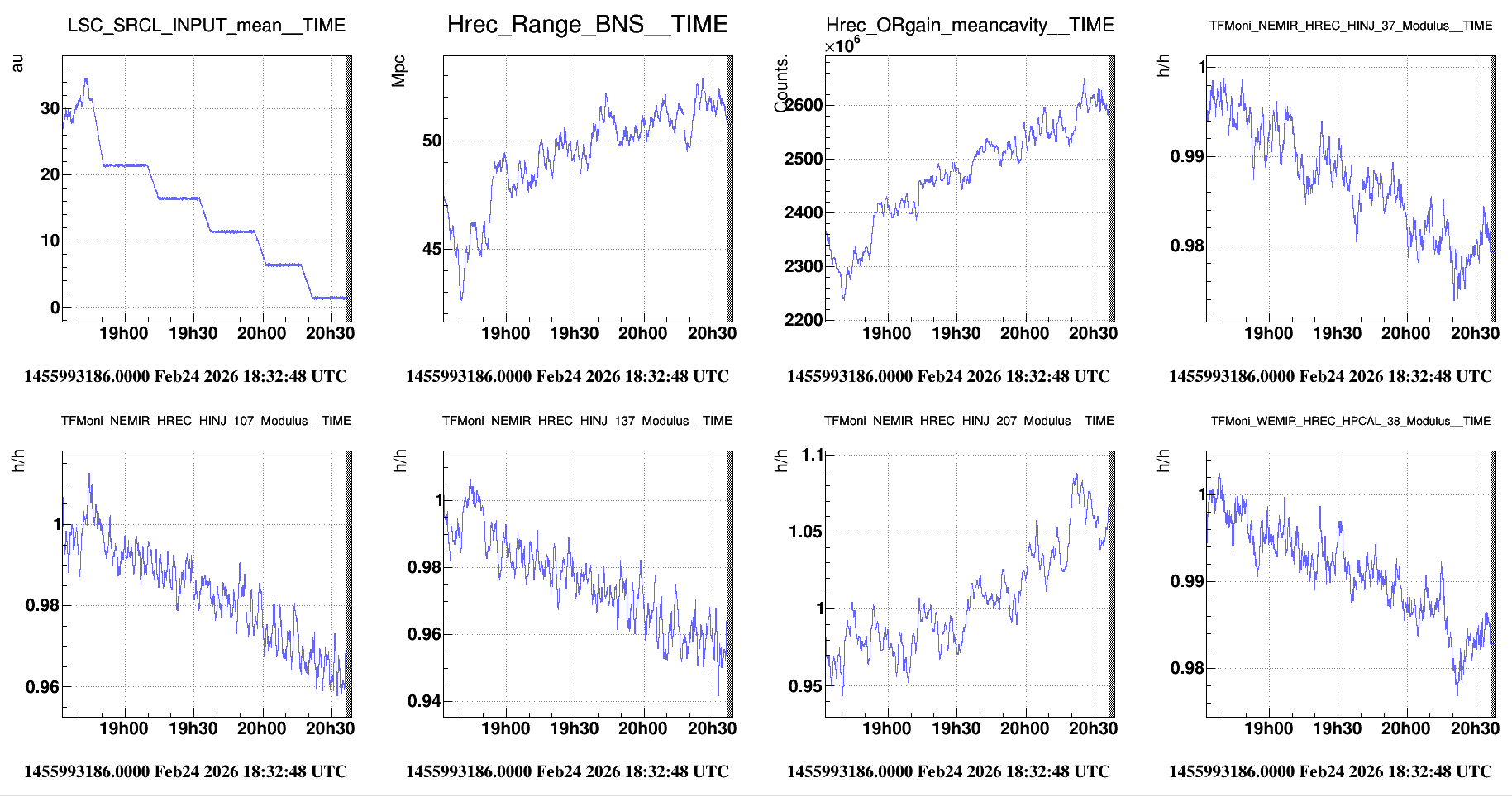
Figure 1. Shows the trend of many channels during the steps, 

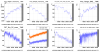
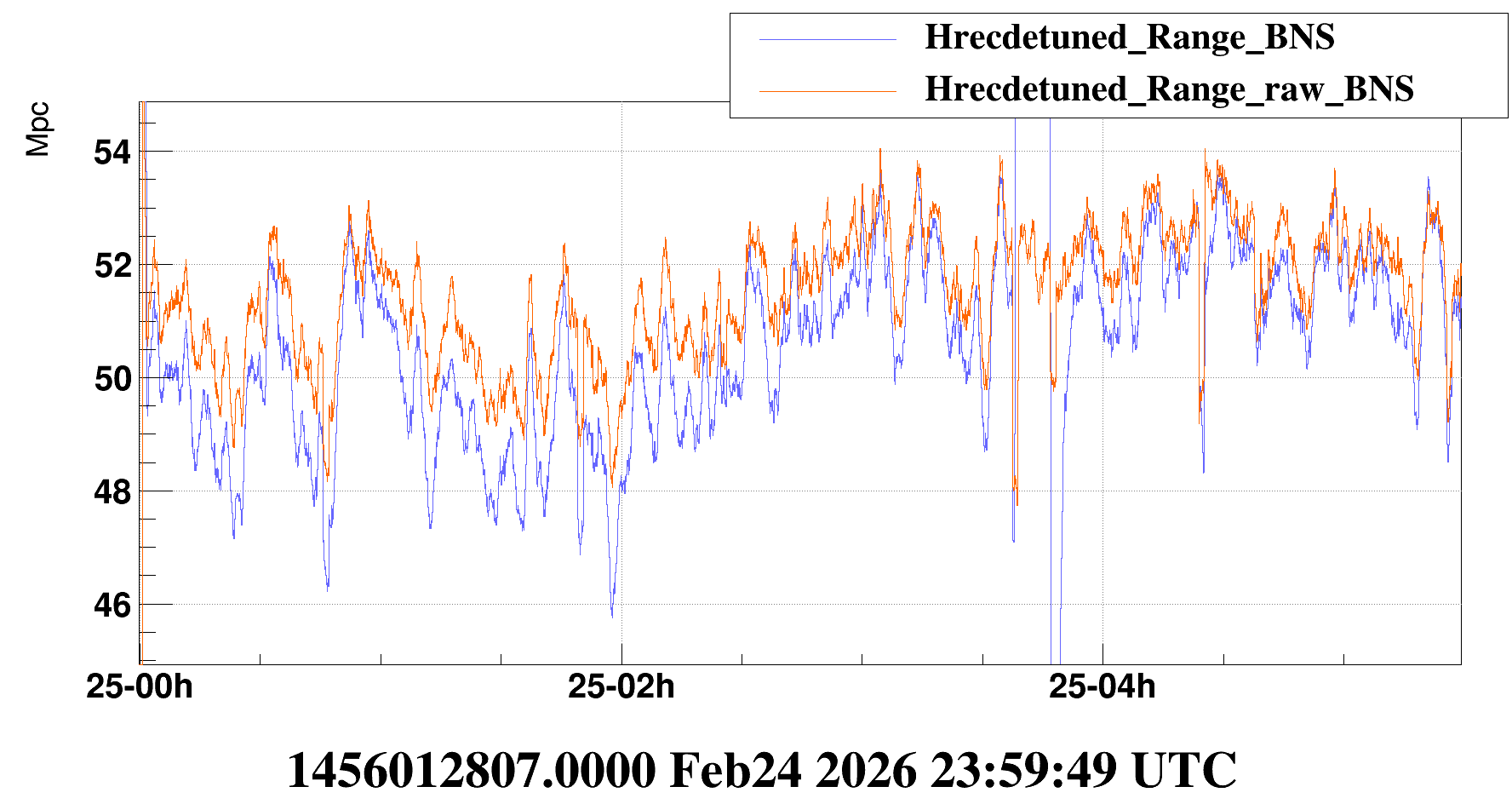
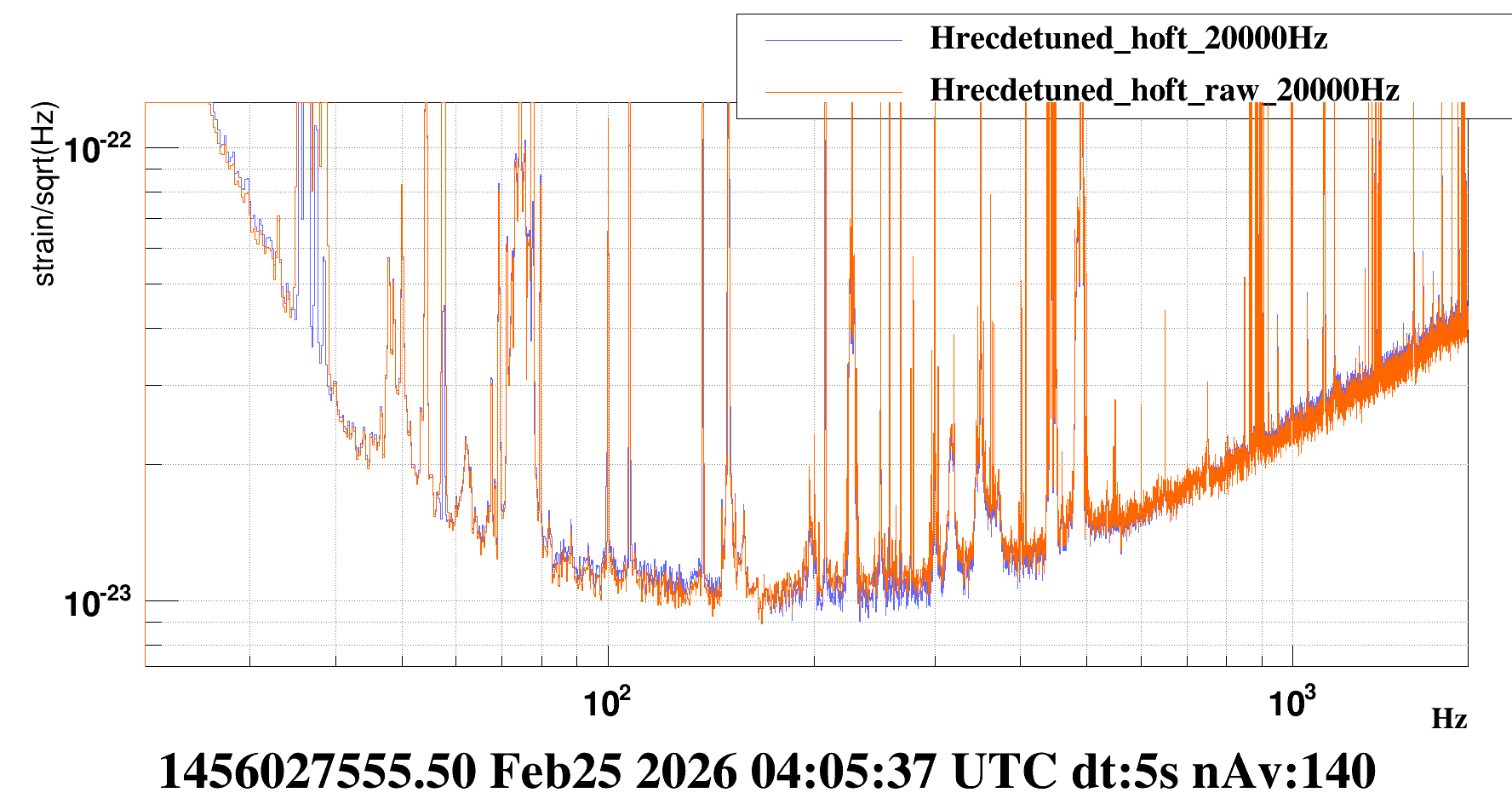
Figure 2. Calibration seems to be understimating the noise by up to 4% in the bucket between 100Hz and 150Hz. So the real BNS range may be lower by 2Mpc, at 50Mpc instead of the 52Mpc recorded in the data. 

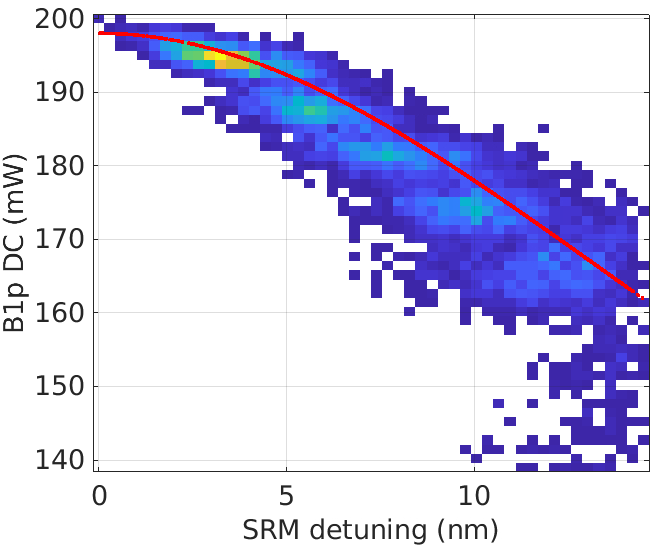
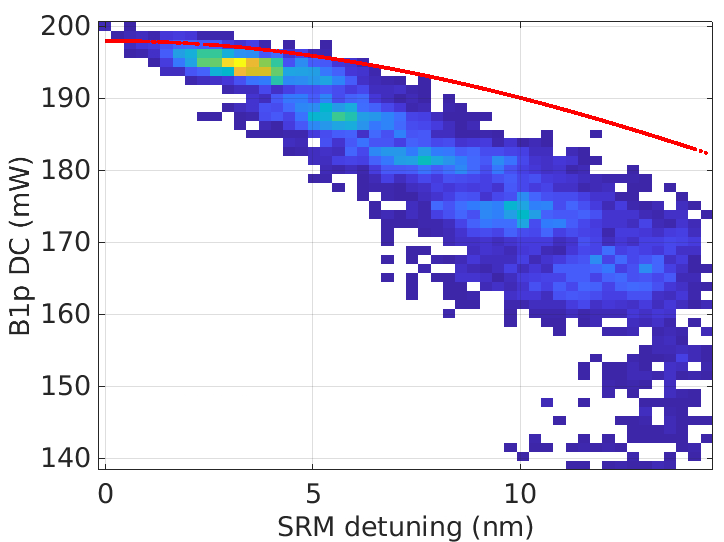
Figure 3. The optical spring seems to be around 9Hz. And the B1p power decreases from 190mW to 150mW.
 

Images attached to this report
Comments to this report:
mwas, verkindt - 11:23 Friday 27 February 2026 (68762) Print this report

Didier has recalibrated the data from the SRCL detuning in LN3 based on the measured bias. The result of the recalibration for that night is in 

/data/dev/hrec/hrectest/hrecdetuned_feb2026-1456012808-19800.gwf

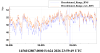
Figure 1 shows the BNS range, in red before the recalibration and in blue after. There is a BNS decreased with the correct calibration, but it is small, only 0.5 Mpc. Note that around 3:35 UTC there is a large glitch, which cause the recalibration procedure to give wrong results, with first the BNS range becoming much larger, then much smaller than it should be. This is a known issue with the bias correction procedure, that it is much more sensitive to glitches, and it is the reason why it is not used for normal h(t) production.

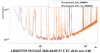
Figure 2 shows the spectrum in red before recalibration and in blue after. As expected the corrected calibration has higher noise between 80Hz and 150Hz, but lower noise between 200Hz and 300Hz, which changes the ASD shape between 80Hz and 300Hz, and explains why the BNS range decrease is not as large as one would expect by just looking at the bias around 110Hz-130Hz.

Images attached to this comment
mwas - 8:05 Friday 13 March 2026 (68871) Print this report

A question about the carrier HOM power decrease with SRCL detuning is if it follows expectations. To try to answer that I have simulated the DARM response in optickle for several SRM offsets between 0nm and 20nm compared to the anti-resonant position, and measured the phase change at 491.3Hz with regard to the tuned reponse. In this way the data on the phase of that line can be used to calibrated the SRCL detuning, in units that I can understand. Then that SRM offset can be used in a simple Airy peak calculation of the SRC, to see how the amplification of the HOM changes as the SRC is moved off-resonance for the HOM.

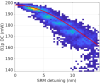
Figure 1 shows the result, during the steps of SRCL offset the B1p power decreases as expected, when assuming a 2% round trip loss for the SRC. For that figure I assume that 65mW of B1p power is due to the 56MHz sideband, and is not affected by the SRCL detuning. This is a number calculated in the past, and also in rough agreement with the ratio of carrier and sideband on the B1p phase camera.

However, that agreement is surprising, as HOM should be seeing a large round trip loss due to 150mm SR diaphragm. 

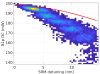
Figure 2 shows what happens if one assumes a 20% round trip loss for the HOM. 20% is a reasonable number, rather on the low side, of the expected losses from the SR diaphragm. With those assumption the B1p power decreases much more quickly than expected.

Note however than when trying to make that analysis, I have several times made mistakes of a factor 2 in the SRCL detuning (whether it is the distance between IM and SR, or if it is the round trip length). I think I have fixed them all, but there could still be an error of the order of a factor 2 somewhere. Also optickle predicts an optical spring at 14Hz for the optical spring, while the optical spring channel measures 9Hz, so the simulations used could just not be a good way of calibrating the SRCL detuning.

/users/mwas/detchar/toySensitivity_20260225/SRCLdetuning_B1p_optickle.m

Images attached to this comment
Search Help
×

Warning

Error

The present report has been modified outside this window. Please check for its integrity in the main page.

Refreshing this page will move this report into drafts.

×