The signals used in loop at low frequency for setting the alignment working point of the arms are supposed to put the optical axes in the center of the test masses, minimizing the coupling from rotation to length. They obtained demodulating the arm locking signals at the frequency the lines injected on all the angular dofs, in the frequency region between 7 and 9.5 Hz. The strategy works since the beginning of AdvVirgo, but the quality of the signals worsened in O4 commissioning: having also CARM SLOW locked, the arm locking signals started to contain some additional noise in the region of the angular lines. In order to have enough SNR on the dither signals, we used to keep the amplitude of the lines higher than in O3. This is one of the reasons of the big increase of DARM level below 10 Hz, but also a relevant worsening of Hrec between 10 and 20 Hz, because the second harmonic of the lines appeared above the other noises.
The problem has been fixed today, changing the signals to demodulate: instead of the locking signals of each arm, now we use only DARM correction. This can be done only at CARM NULL: at the beginning, when each arm is locked by its own signal, the old strategy needs to be used. A flag in the DSP has been implemented in order to recognize the status and switch the strategy as soon as it is possible.
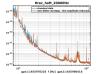
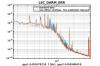
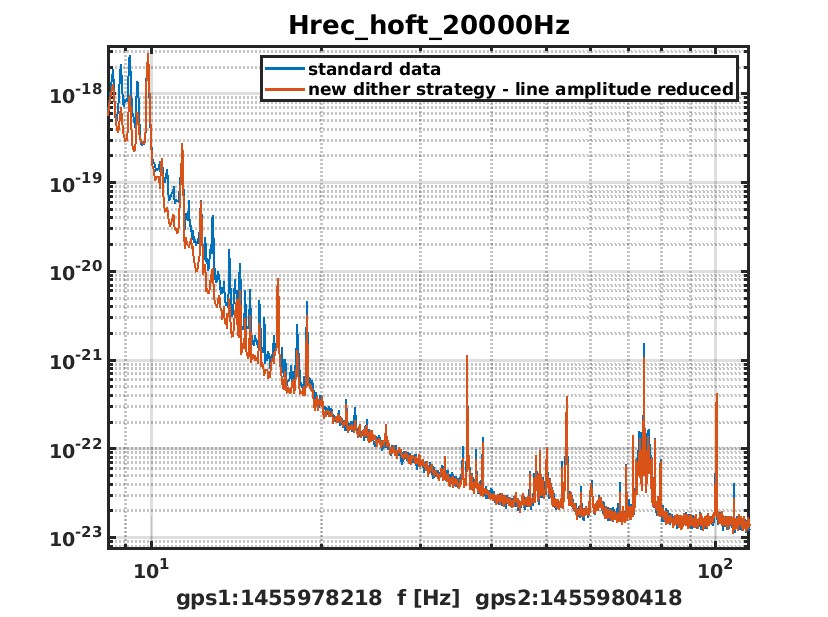
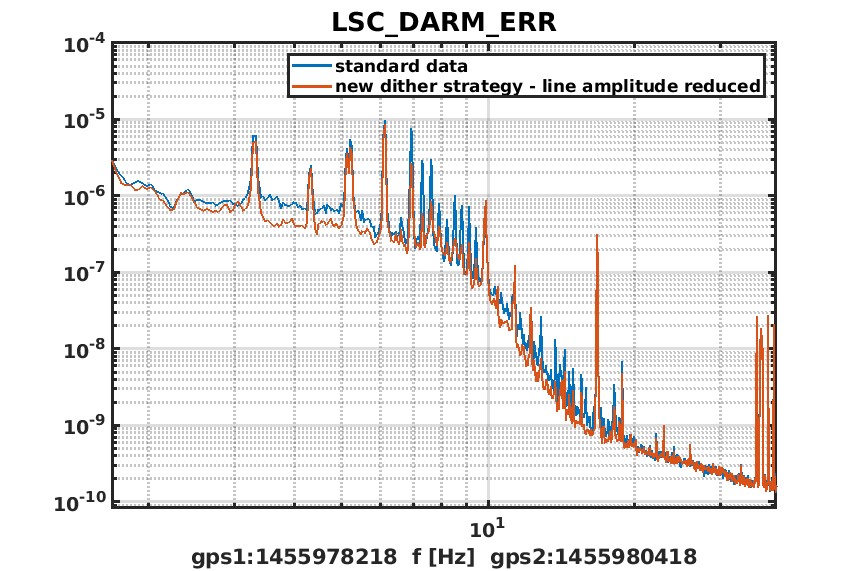
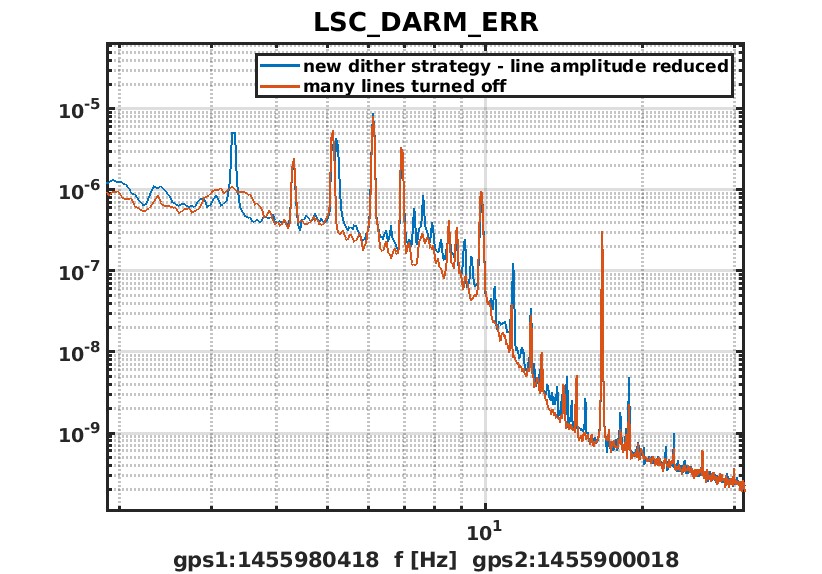
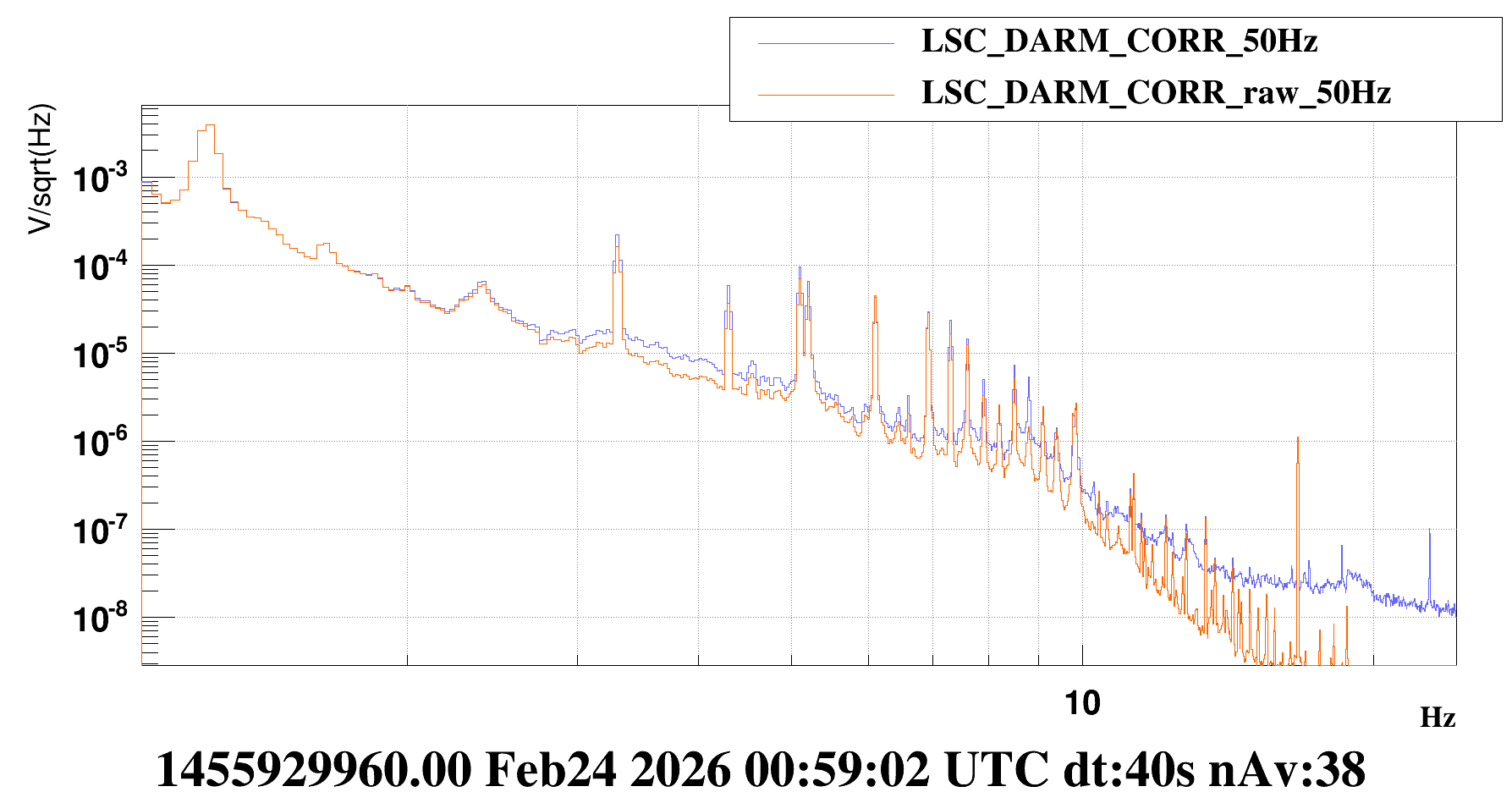
The noise of the demodulation has been reduced as expected, giving the possibility to reduce the amplitude line (0.005 -> 0.002). In fig 1 and fig 2 we see the effect on Hrec and DARM. The unlock reverted this setting: the amplitude needs to be updated in the automation.
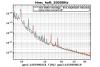
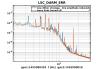
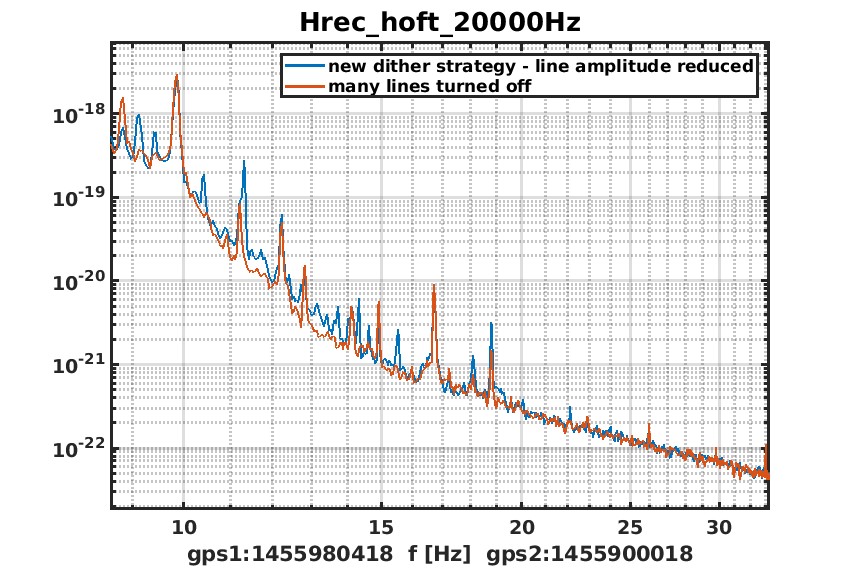
Yesterday a preliminary test has been performed: almost all the arm angular lines have been turned off. Only the dither used for COMMp have been left, otherwise there was a drift not compatible with the low noise operation. In fig 3 and fig 4 we can see that the level of Hrec and DARM at low frequency was a bit lower than the one obtained today: it means that there is still a margin of improvement. In order to reduce more the amplitude of the lines, we should try to remove from DARM some low frequency noise coming from the coupling of MICH and SRCL noise.
We also can notice that the level of noise above 20 Hz, dominated by a mystery 1/f^4, did not change at all reducing the noise coming from the lines.