After the maintenance we set the ITF in LN2 and allowed about 10 minutes for the state to stabilize, before proceeding with the exploration of the stability range of SRCL_SET.
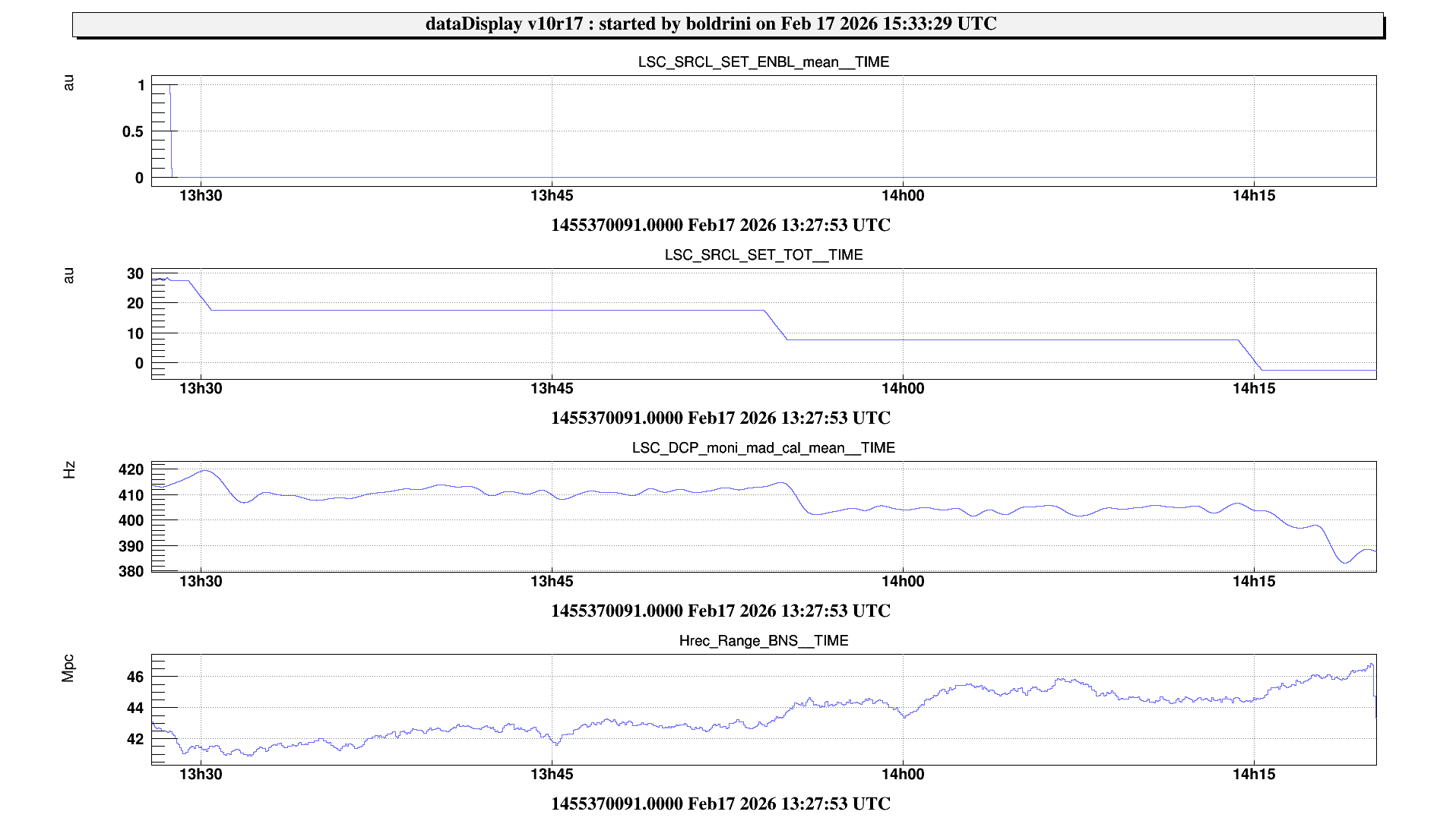
We closed BS_TX in full bandwidth and opened the SRCL_SET servo, then started changing SRCL_SET in steps of 10, one minute per ramp, allowing 20 minutes for each new state to stabilize and gather data. We managed to make a three points scan:
| name | final UTC | DCP | SRCL_SET | SRCL_SET_TOT |
| reference | 13:26:35 | 415 Hz | 0 | 25.6 |
| step 1 | 13:52:18 | 412 Hz | -10 | 17.5 |
| step 2 | 14:14:00 | 403 | -20 | 7.5 |
| step 3 | \ | 380 | -30 | -2.5 |
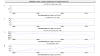
the ITF unlocked a few minutes after the last change of SRCL_SET (Fig.1).
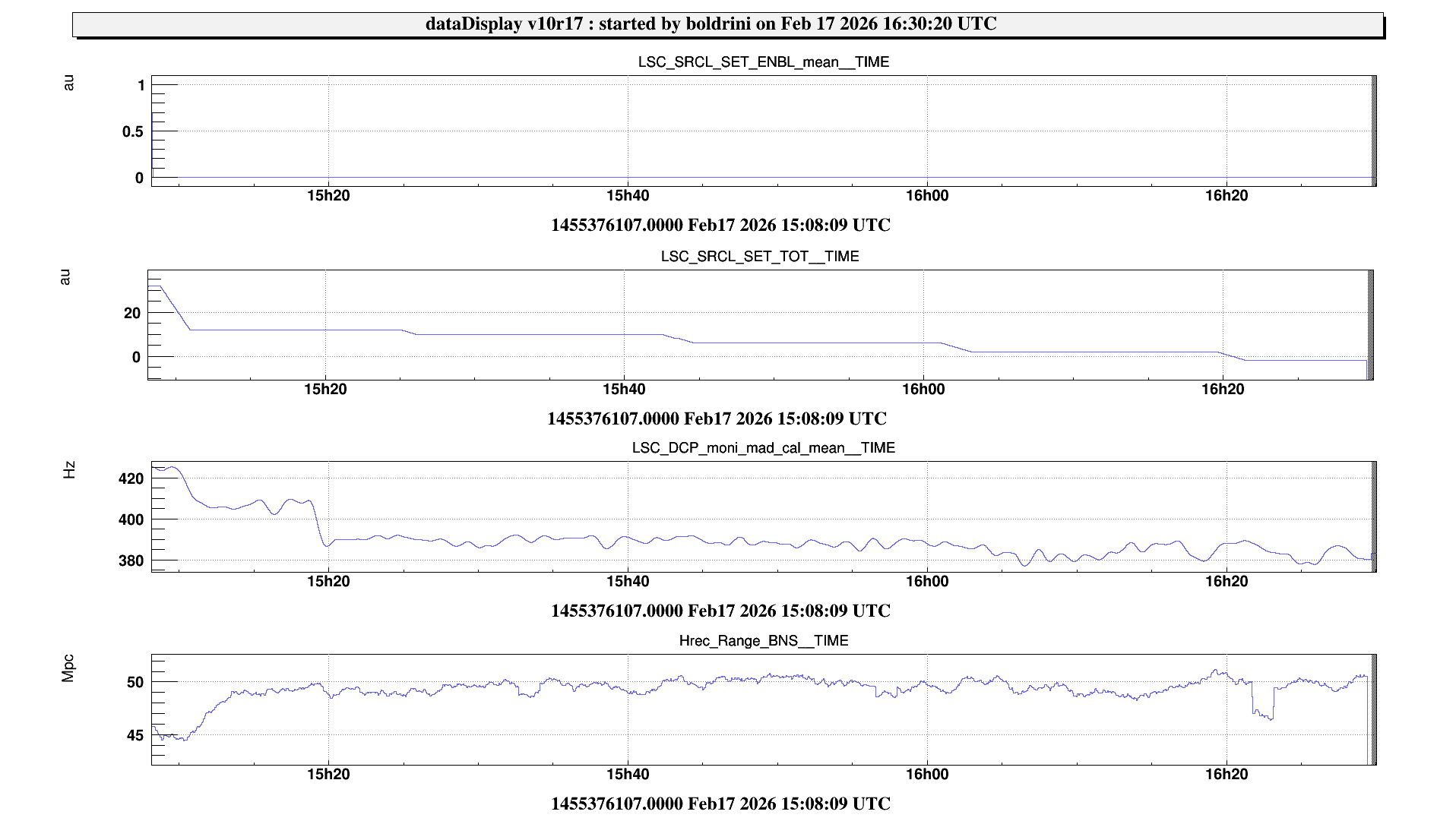
We relocked the interferometer and decided to explore the margin of the scan more granularly. After reaching LN2 we set BS_TX in fbw and disabled the SRCL_SET servo again, then we set SRCL_SET to -20 with a two minutes ramp, allowed about 15 minutes to stabilize. We started changing the SRCL_SET in steps of 2, with one minutes long ramps, but realized after the first step that very little changes with such a small step while the duration of the test becomes considerable. For the next steps, we changed SRCL_SET in by 4, with two minutes long ramps.
| name | final UTC | DCP | SRCL_SET | SRCL_SET_TOT |
| reference | 15:08:00 | 425 Hz | 0 | 32.0 |
| step 0 | 15:24:30 | 390 Hz | -20 | 12.0 |
| step 1 | 15:41:50 | 390 Hz | -22 | 10.0 |
| step 2 | 17:00:28 | 387 Hz | -26 | 6.0 |
| step 3 | 17:18:40 | 382 Hz | -30 | 2 |
| step 4 | \ | 380 Hz | -34 | -2 |
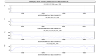
The ITF unlocked about 10 minutes after step 4 (Fig.2)
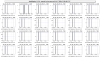
The sensitivity was unexpectdly high for LN2, but the correct reconstruction of Hrec needs to be checked.