Reports 1-1 of 1 Clear search Modify search
AdV-INJ (ITF Mode Matching Telescope)
melo, gosselin, mantovani, ruggi, spinicelli - 18:31 Monday 26 January 2026 (68575) Print this report
INJ input mode matching

Today we worked on the input beam mode matching by acting on the meniscus lens (L1) on SIB1. Before starting we powered the driver of L1 on the mini-rack of the central building.

The first thing, was to measure the current mode mismatch (14:16:10 UTC): we started with 4% on the North arm and 4.1% on the West arm.

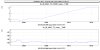
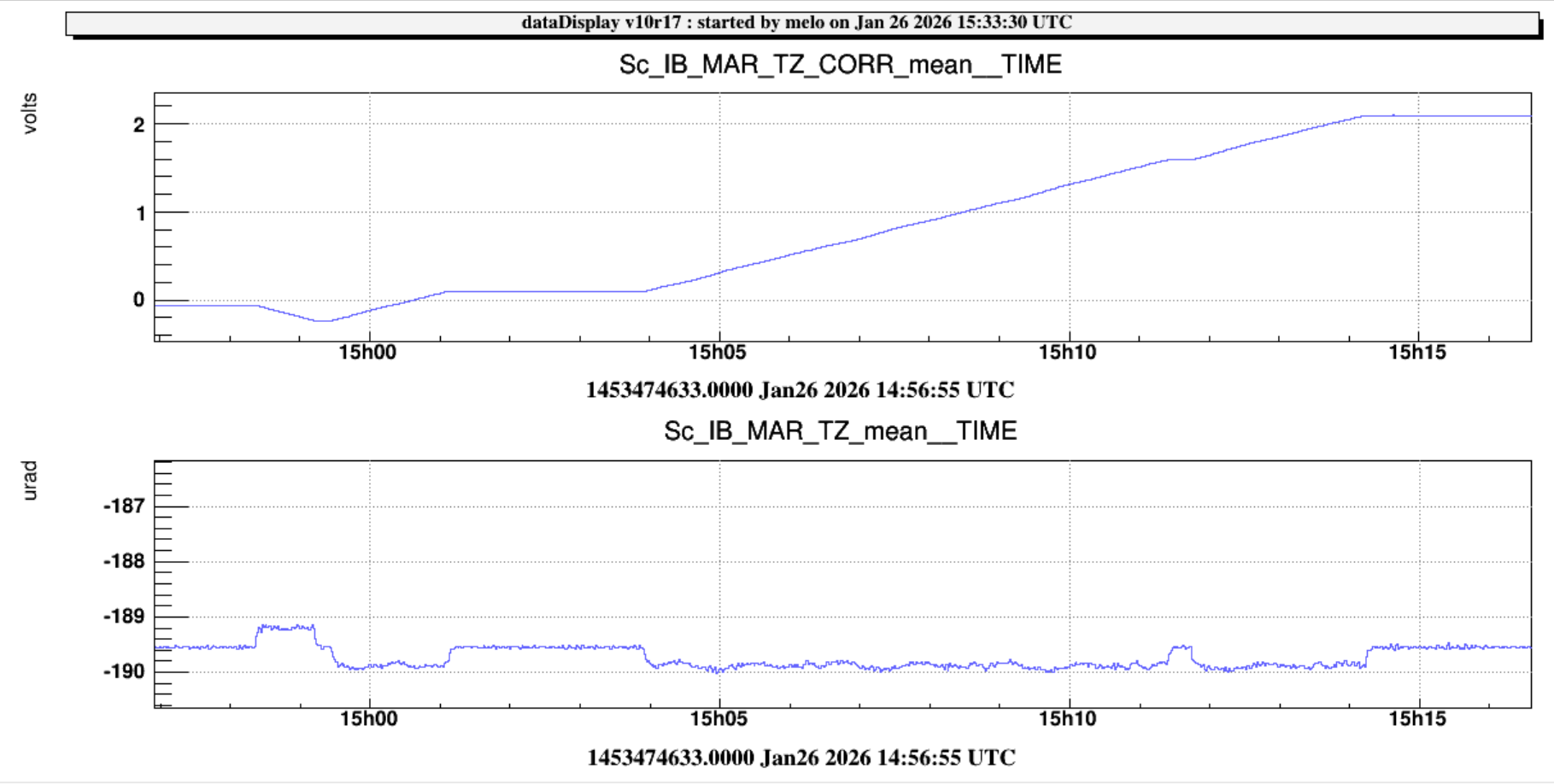
So, after an assessment of the current mode matching values, we moved the L1 lens of about 1 mm (we obtained a rough calibration that 2V on Sc_IB_Mar_Tz_CORR corresponds to 1 mm of L1z movement) as summarized in the table below (see Fig. 1):

Acuator Direction Steps
L1z forward 5k
L1z backward 10k
L1z backward 45k
L1z backward 15k

Afterwards, we remeasured the mode-matching of the two arms (16:58:20 UTC): it is now 5.2% on the North arm and 3.7% on the West arm.

Images attached to this report
Comments to this report:
mwas - 8:15 Tuesday 27 January 2026 (68577) Print this report

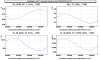
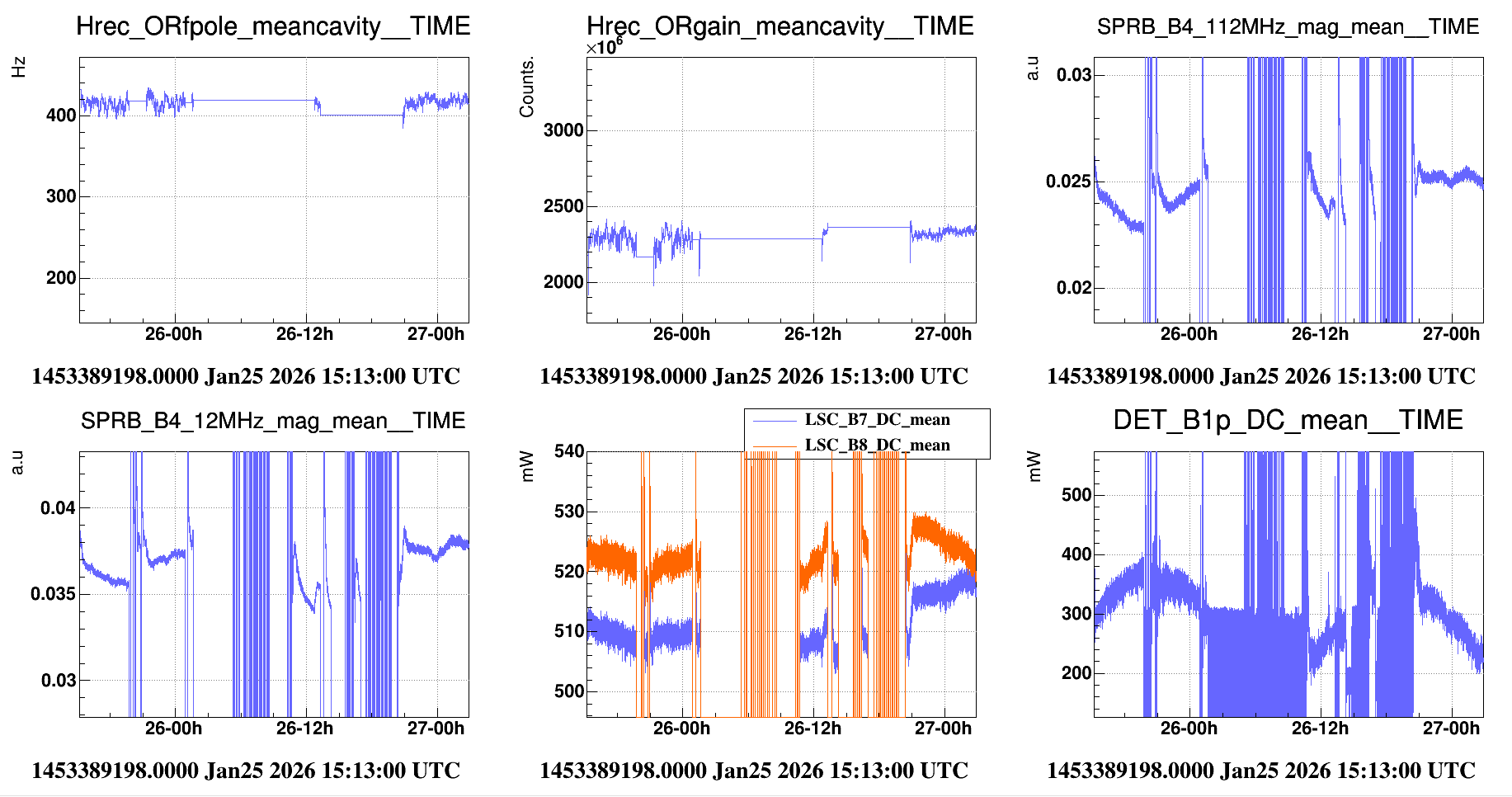
Figure 1. Looking at the power in the arms it seems to have increased by about 1% in both the north and west arms after the 1mm translation of the meniscus lens. Note that there are two other effects which make the comparison more difficult. In CARM NULL 1F the power in the arms is lower than in LN2/LN3 ALIGNED by about 1%, the three locks around the middle of the day on Jan 26 where in CARM NULL 1F, with the exception of a transition to LN2 after 2h of CARM NULL 1F around 12:30 UTC. The etalon fringes are still moving significantly, these is the main reason for the oscillation on the B1p power, seen with a cycle of 24 hours, and it affects the arm power too, for example the convergence in arm power after Jan 27 00:00 UTC is most likely due to the etalon.

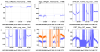
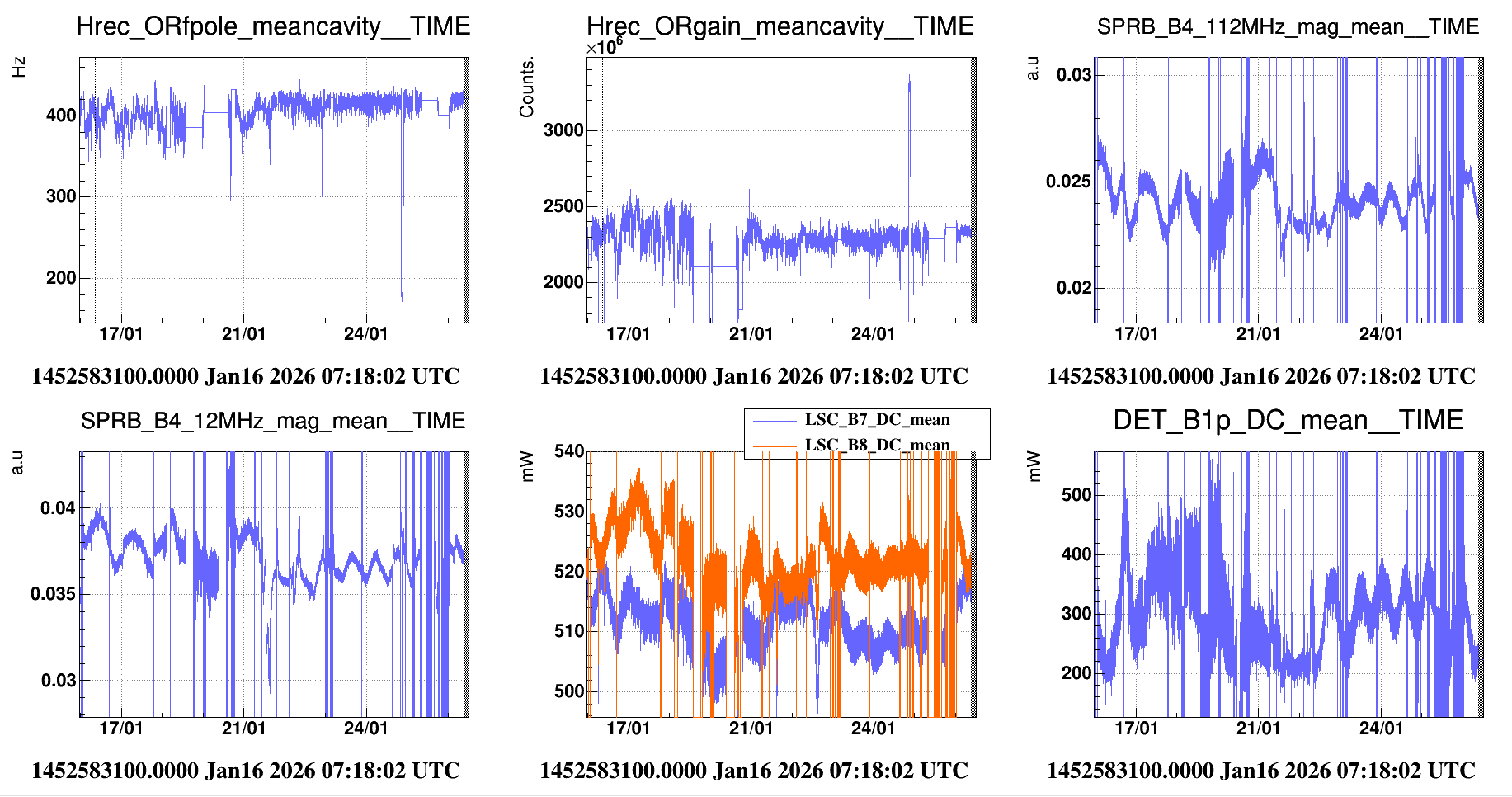
Figure 2. Looking back  over the past two weeks, powers like that in the arms have happened before, for example on Jan 16 comparable to situation on Jan 27 at 6:00 UTC; or on Jan 18 which is comparable to Jan 26 at 18:00 UTC. 

More translation of the SIB1 meniscus lens to improve the input beam mode matching, and make sure that this is not just a confusing effect of the etalon.

Images attached to this comment
gosselin, ruggi - 10:27 Tuesday 27 January 2026 (68581) Print this report

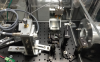
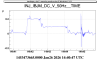
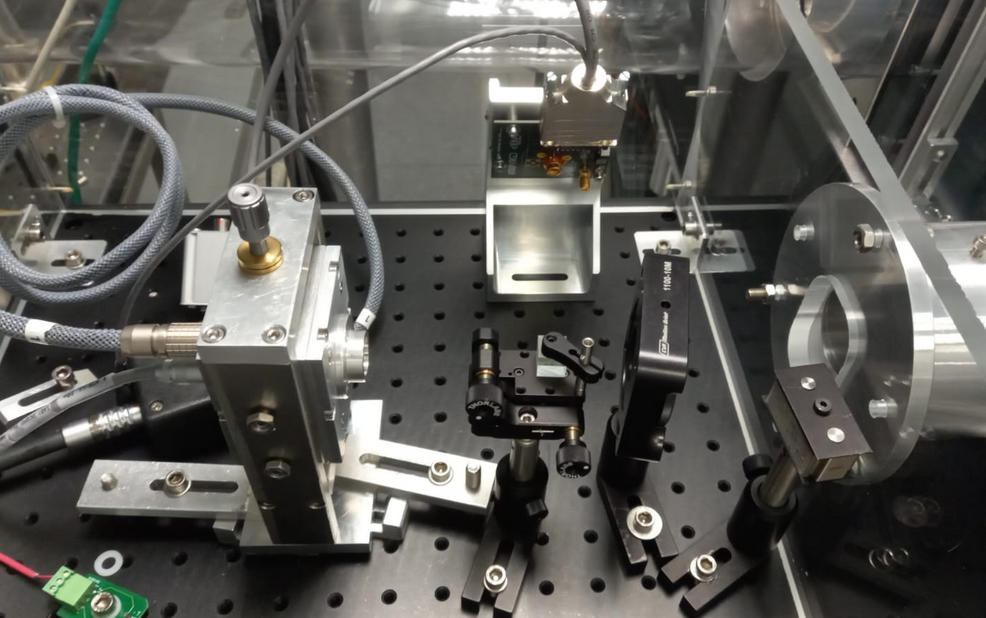
Yesterday, after the daily meeting, in order to understand the sign of the beam correction on the different injection QPDs, I went to the laser lab to vertically translate the IBJM quadrant (Figure 1).

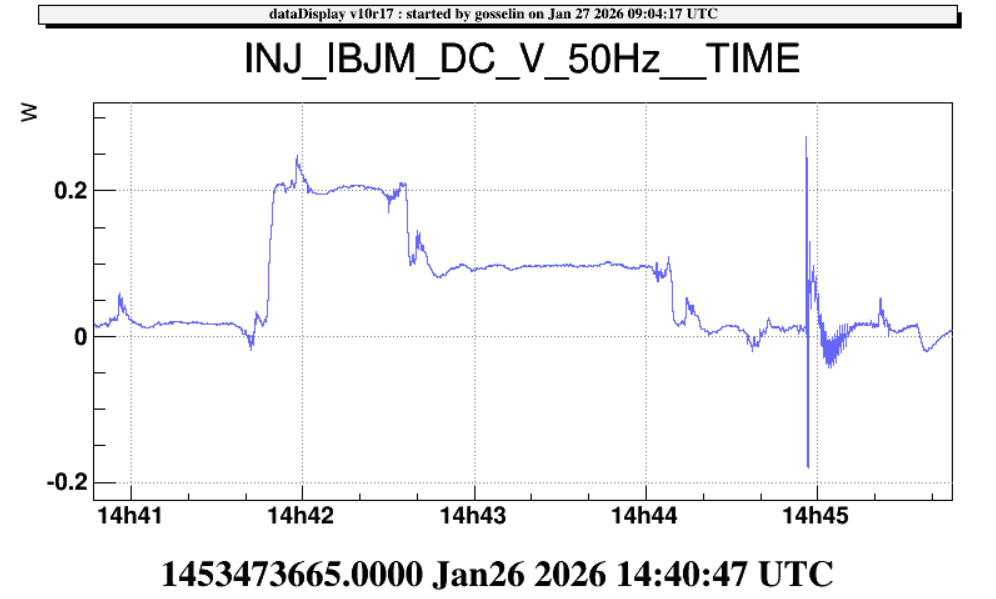
I first moved the QPD downward by one step, then applied two steps to bring the beam back to the center (Figure 2)

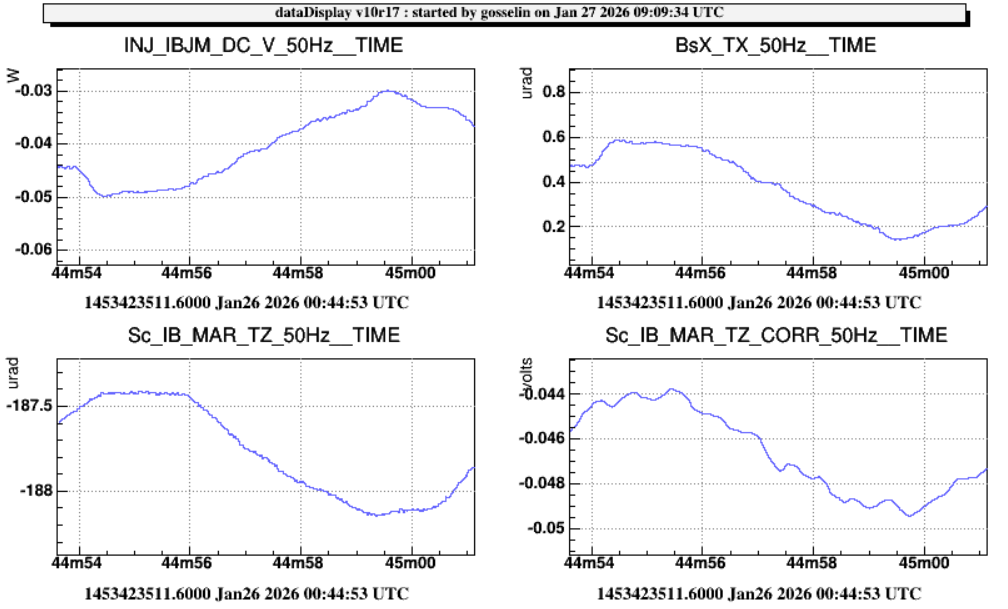
By pushing the QPD downward, we effectively simulate a higher beam position. In this configuration, the IBJM signal increases, while the BPC_TX signal decreases; the same behavior is observed for the Sc_IB_MAR_TZ and Sc_IB_MAR_TZ_CORR signals (Figure 3)

Yesterday, during the MMT tuning, our goal was to move the meniscus lens closer to the center of SIB1. This corresponds to an upward beam pointing at the output of SIB1, and therefore also an increse of BPC_TX. Based on the sign convention identified above, this should result in a decrease of the Sc_IB_MAR_TZ signal. However, since the loop is closed, this corresponds to an increase of the correction signal.

Paolo did a calibration of the Sc_IB_MAR_TZ_CORR signal for displacements of the masses along the z-axis and found a value of 2.25 × 10⁻² N·m/V.

The meniscus lens and its mounts have a mass of approximately 5 kg (about 50 N). Therefore, for a displacement of the meniscus lens of 1 mm toward the center of SIB1, we expect an increase of about 2.2 V in the correction signal.

Images attached to this comment
gosselin, melo, spinicelli, pinto - 20:27 Wednesday 28 January 2026 (68599) Print this report

After the issues encountered in the morning, the ITF was kept locked for one hour during lunch. We then started the shift by re-measuring the mismatch to check its consistency with the values measured at the end of Monday’s shift. On Monday, the mismatch was 3.7% on West and 5.2% on North, whereas today we measured 5.4% on West and 4.5% on North. The results are therefore not fully consistent.

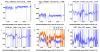
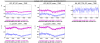
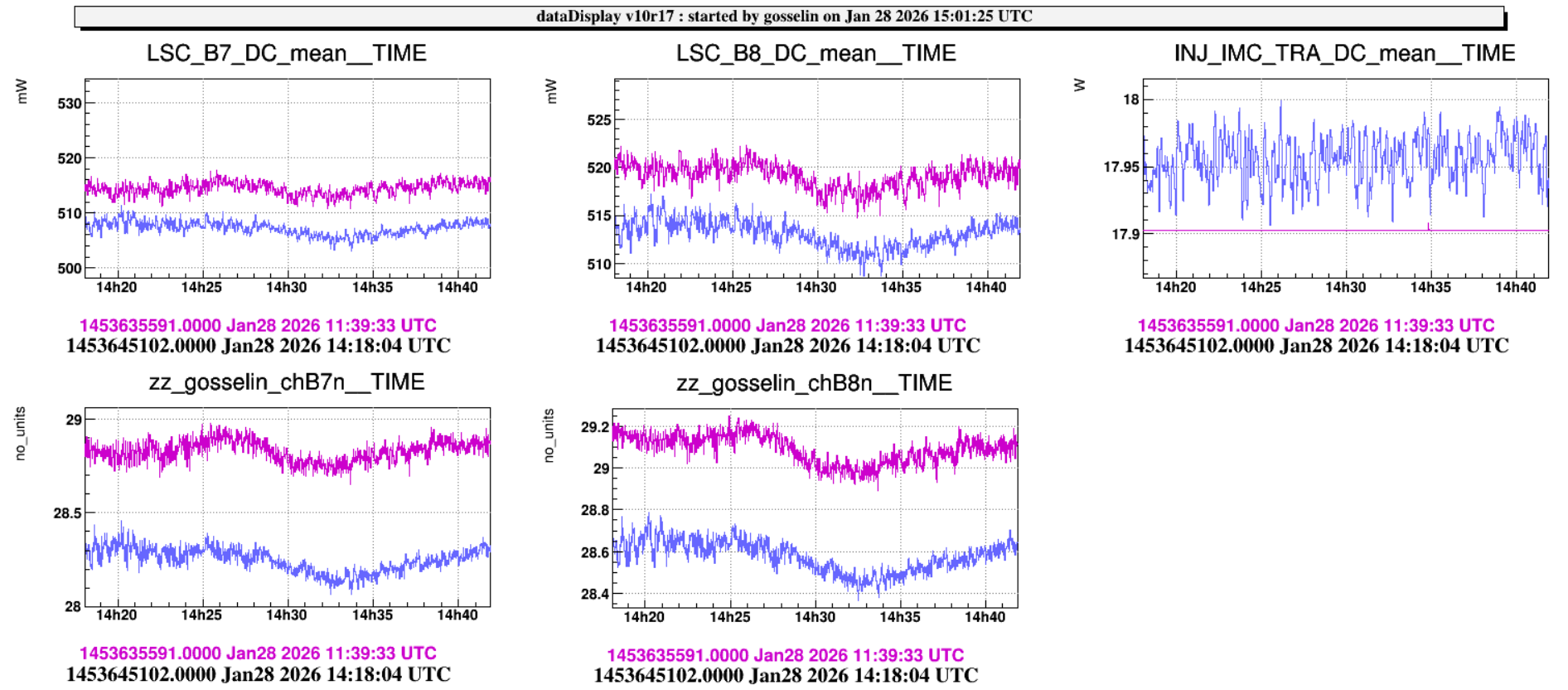
We proceeded in the same direction as on Monday: 97.5k steps backward, moving the meniscus lens 2.5 mm away from its initial position (Monday morning). This corresponds to 5.5 V on Sc_IB_MAR_TZ_CORR. The mismatch measured using the kick technique gave 4.8% on West and 7.5% on North. A visible reduction of power in arms B7 and B8 was also observed (plot 1), at the level of about of ~2% when normalized by IMC_TRA.

We then decided to move in the opposite direction from the inital position (forward) and set the TZ correction to −2.25 V, which should correspond to a 1 mm displacement from the initial position toward PR. It took three attempts to maintain the lock at CARM null; the third lock was achieved by increasing the Diffp Tx by hand.

The mismatch measured with the kick technique was then 6.3% on West and 7.3% on North. A significantly lower power in B7 and B8 was again observed.

Meanwhile, we were contacted by TCS (Diana), who wanted to perform checks on the CH. She verified the values and applied corrections of +2% on North and +4% on West. We then repeated the mode-matching measurement with the kick technique, obtaining 6% on West and 7% on North.

At the end of the shift, we returned the meniscus lens to its Monday morning position, corresponding to −0.05 V on TZ_CORR.

Below is a summary table of all the measurements performed over these days.

We noticed at the end of the shift that the code to evaluate the mismatch for the west was not so robust. We will re evaluate them tomorrow. 

To be noted also that the last mismatch measurement was done on the 03/11/25 and was 2.6 % for the West and 3 % for the North (#68087)

steps from inital position TZ_corr (V) estimated meniscus lens from initial position (mm) W MM % N MM % comment
65k -2.25 -1 6 7.5 after CH tuning
65k -2.25 -1 6.3 7.3  
0 -0.05 0 4.1 4  
- 65k  2.2 1 3.7 5.2 26/01 5pm
- 65k 2.2 1 5.4 4.5 28/01 3pm
- 162.5k 5.5 2.5 4.8 7.5  


Images attached to this comment
gosselin - 12:00 Monday 09 February 2026 (68646) Print this report

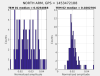
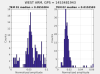
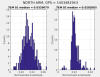
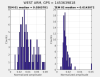
The mismatch values we were getting with the MATLAB code we usually use to measure the mismatch from the kick were quite off.
The code had several small sources of uncertainty which, when combined, were giving a pretty wrong value with a large uncertainty. In particular, the results were very sensitive to a global offset that was manually applied to shift the whole dataset to zero.

I’ve cleaned up the code to make it more robust, especially the offset subtraction. The offset is now computed and subtracted locally (i.e. per FSR) instead of using a single global offset set by hand.

The updated code is here:
/users/optics/Commissioning/251029_MatchingArms/Mismatch_measurement.m

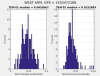
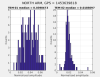
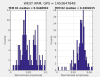
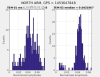
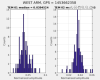
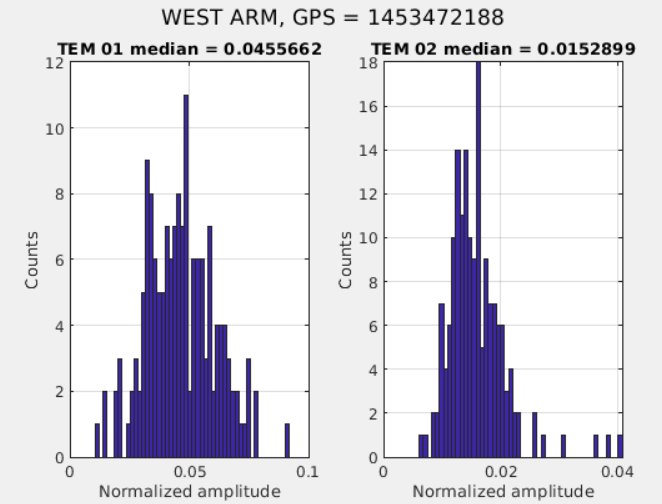
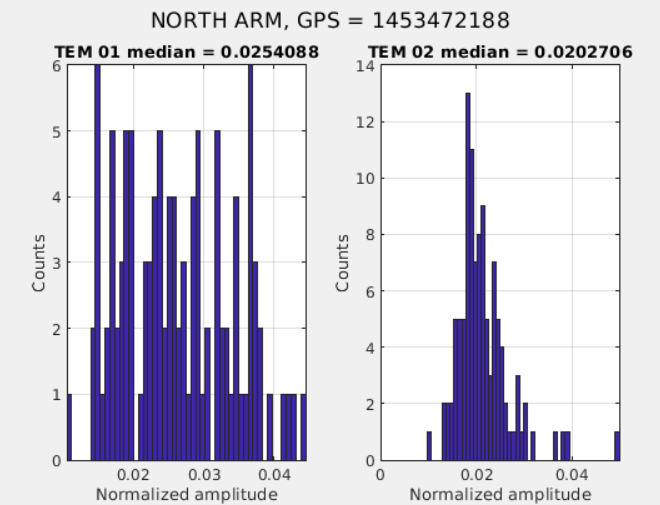
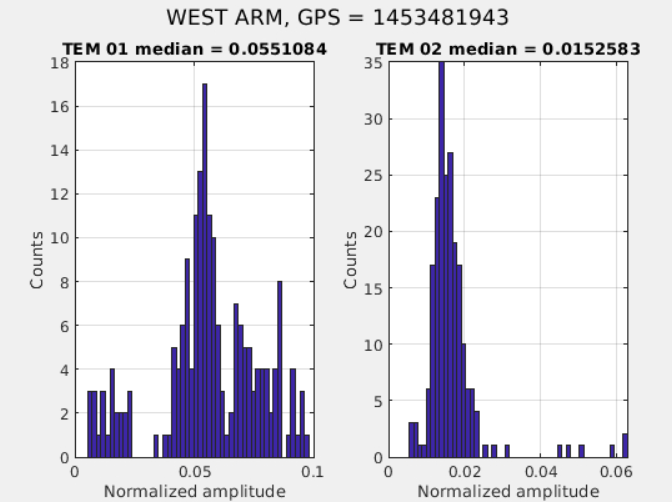
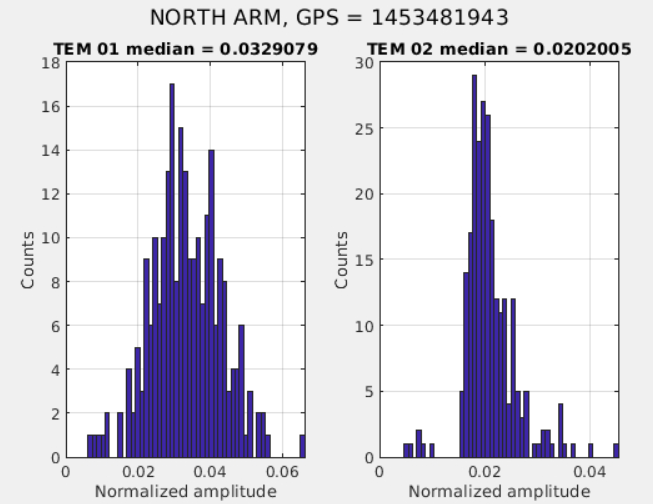
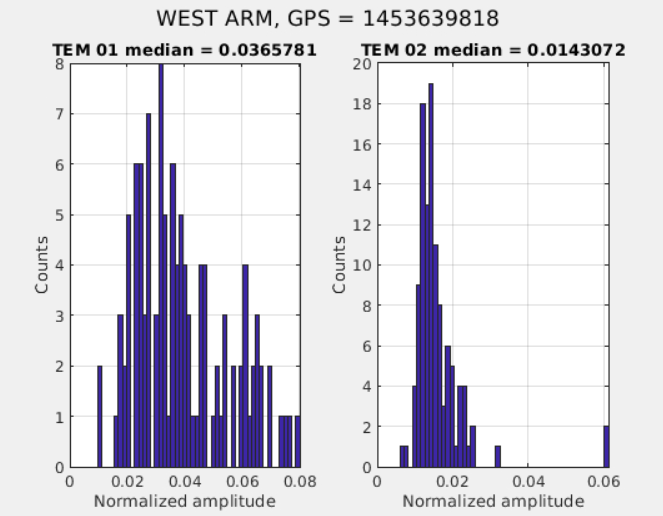
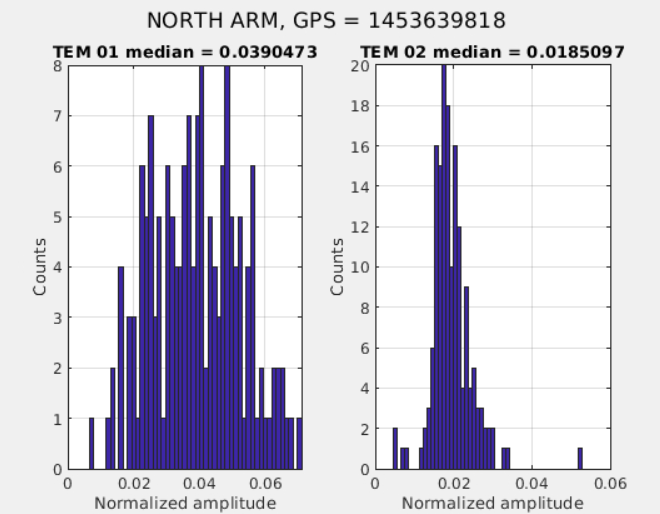
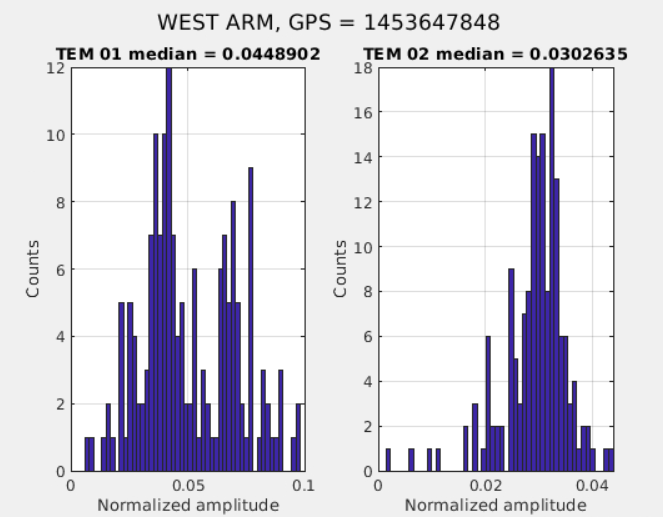
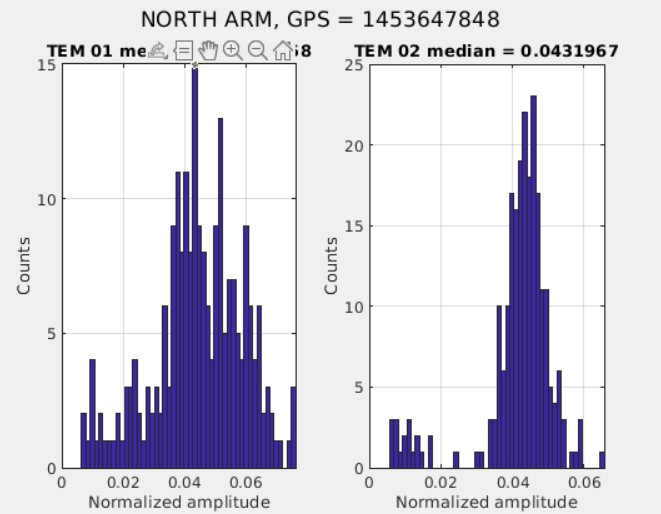
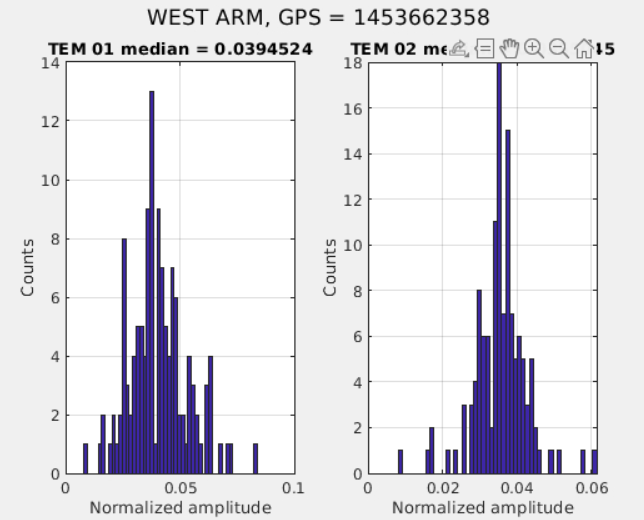
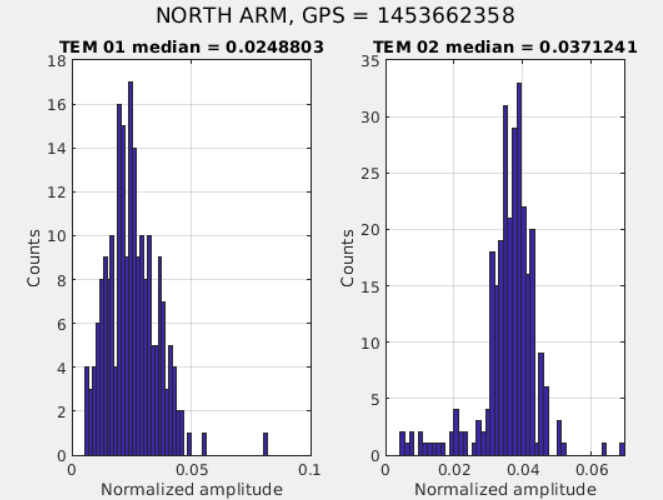
With this version, the results look much more consistent and the spread of the measured mismatch is clearly smaller. Updated values are shown in the table below, and the corresponding histograms are attached.

steps from inital position TZ_corr (V) estimated meniscus lens from initial position (mm) W MM % N MM % comment
65k -2.25 -1 3.5 3.7 after CH tuning
65k -2.25 -1 NA NA  
0 -0.05 0 1.5 2.0  
- 65k  2.2 1 1.5 2.0 26/01 5pm
- 65k 2.2 1 1.4 1.8 28/01 3pm
- 162.5k 5.5 2.5 3.0 4.3  


At the end of the shift, since the results were not fully conclusive, we decided to move the lens back to its initial position. However giving the new values of mismatch it would be worth exploring the meniscus lens positions between 0 and 1.

Images attached to this comment
Search Help
×

Warning

Error

The present report has been modified outside this window. Please check for its integrity in the main page.

Refreshing this page will move this report into drafts.

×