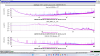
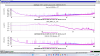
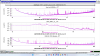
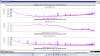
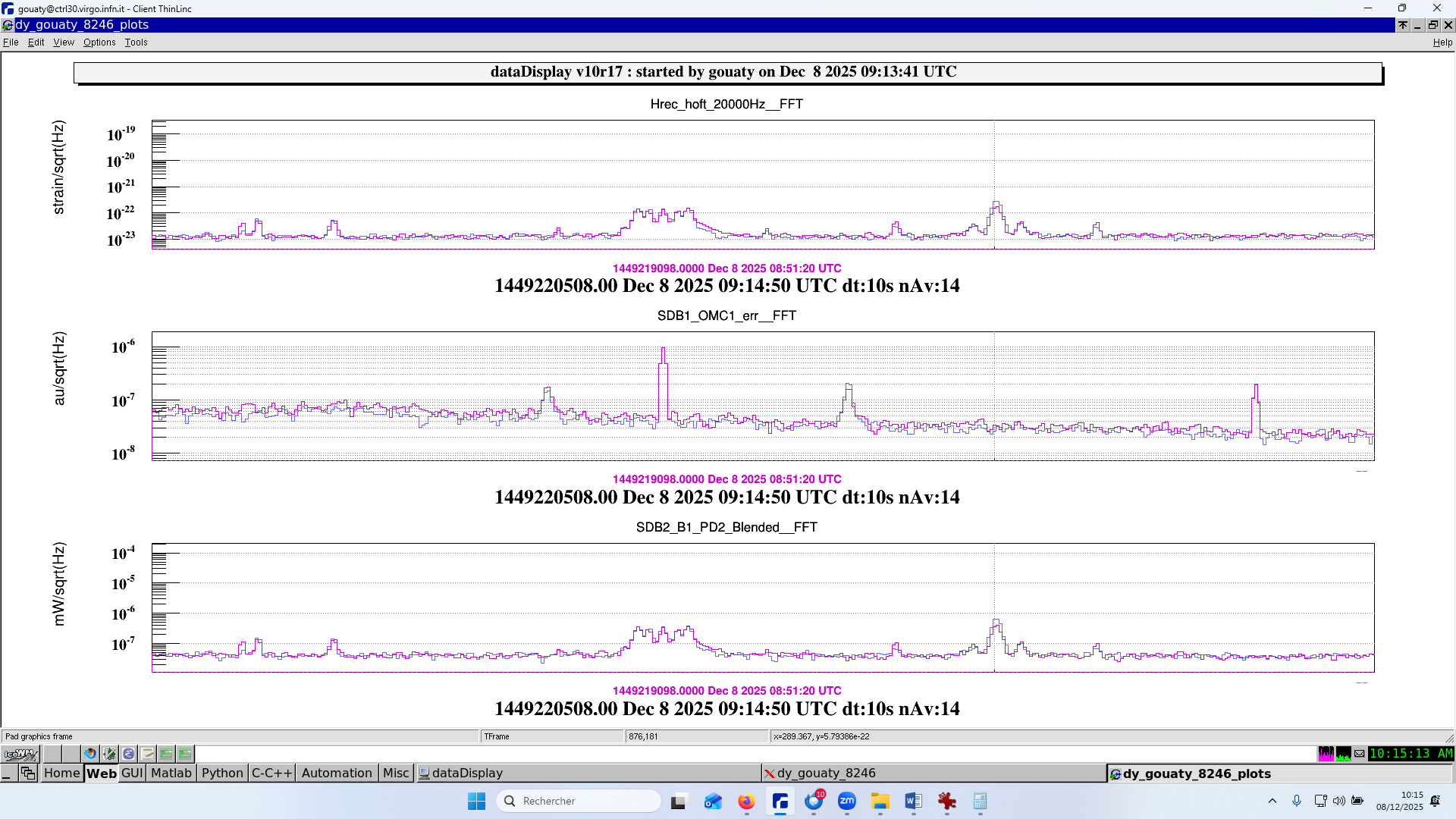
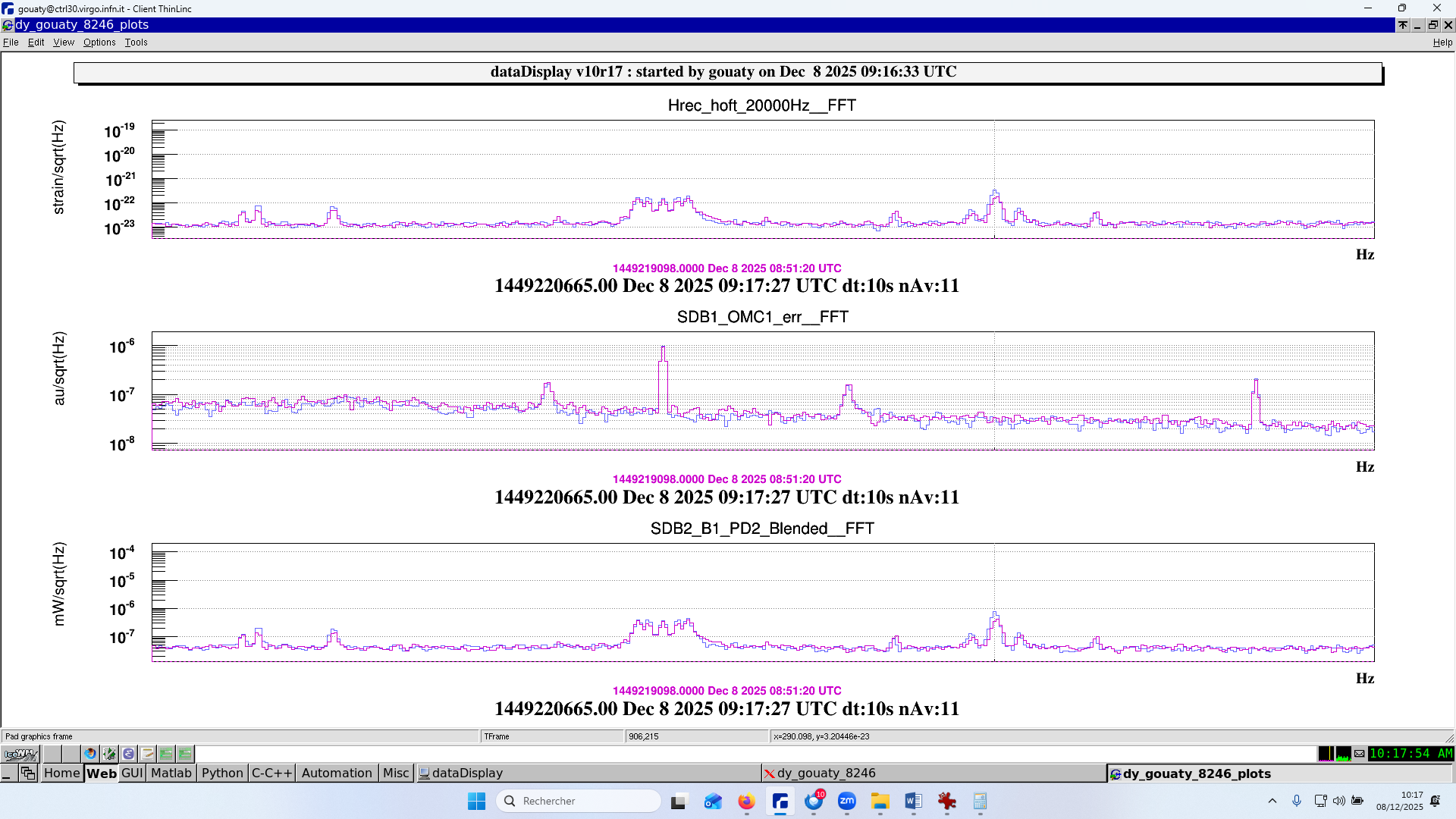
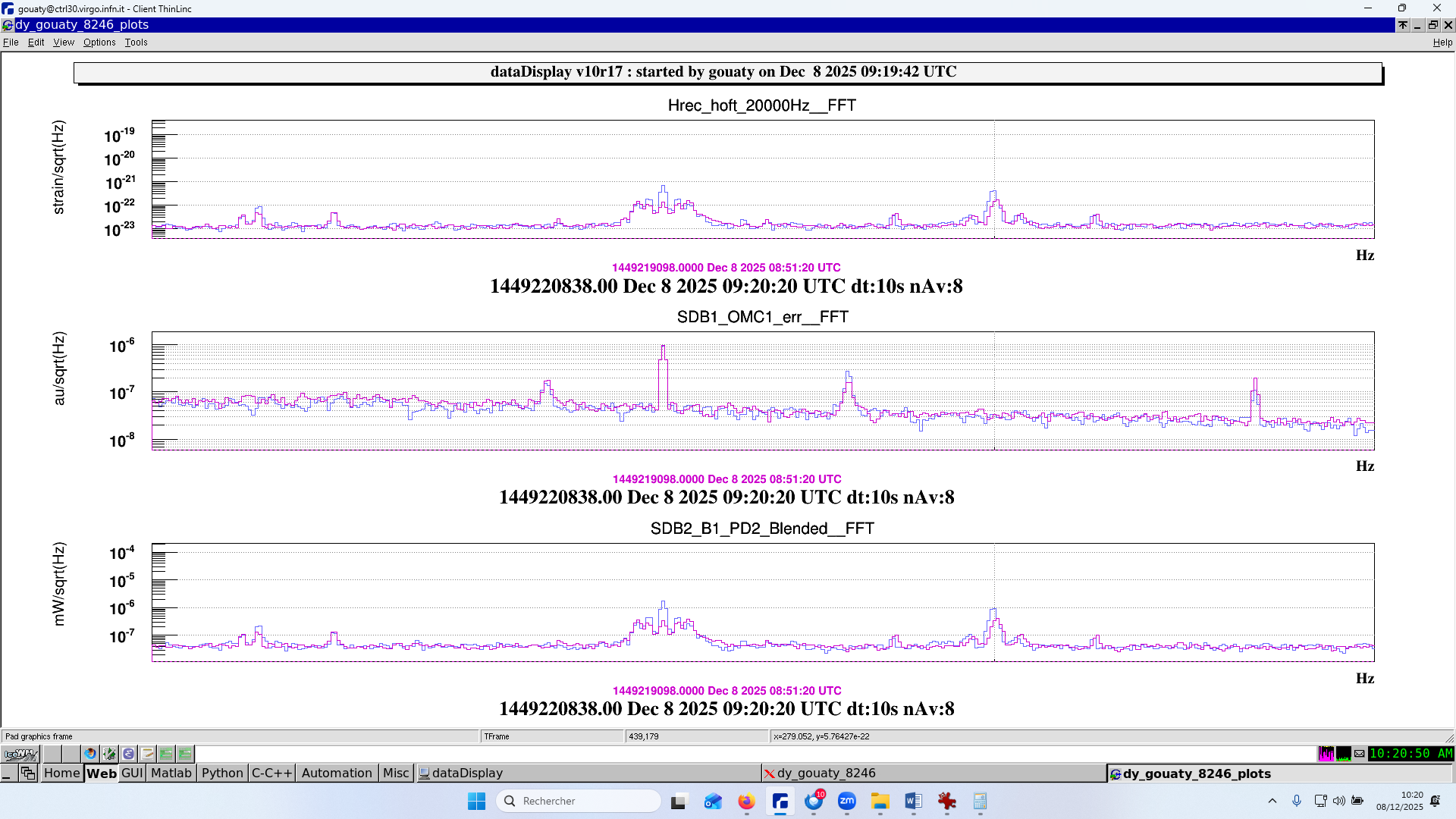
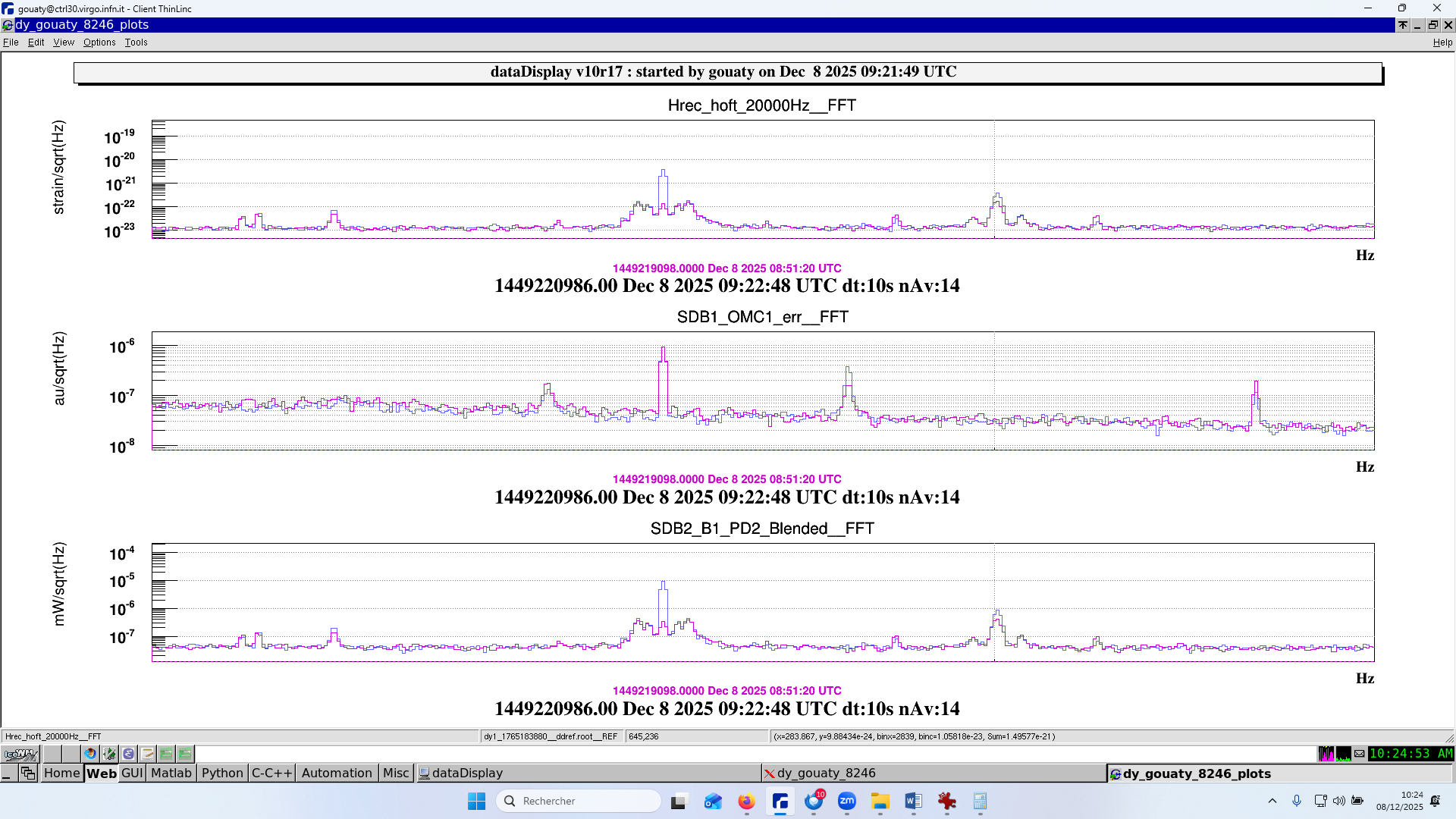
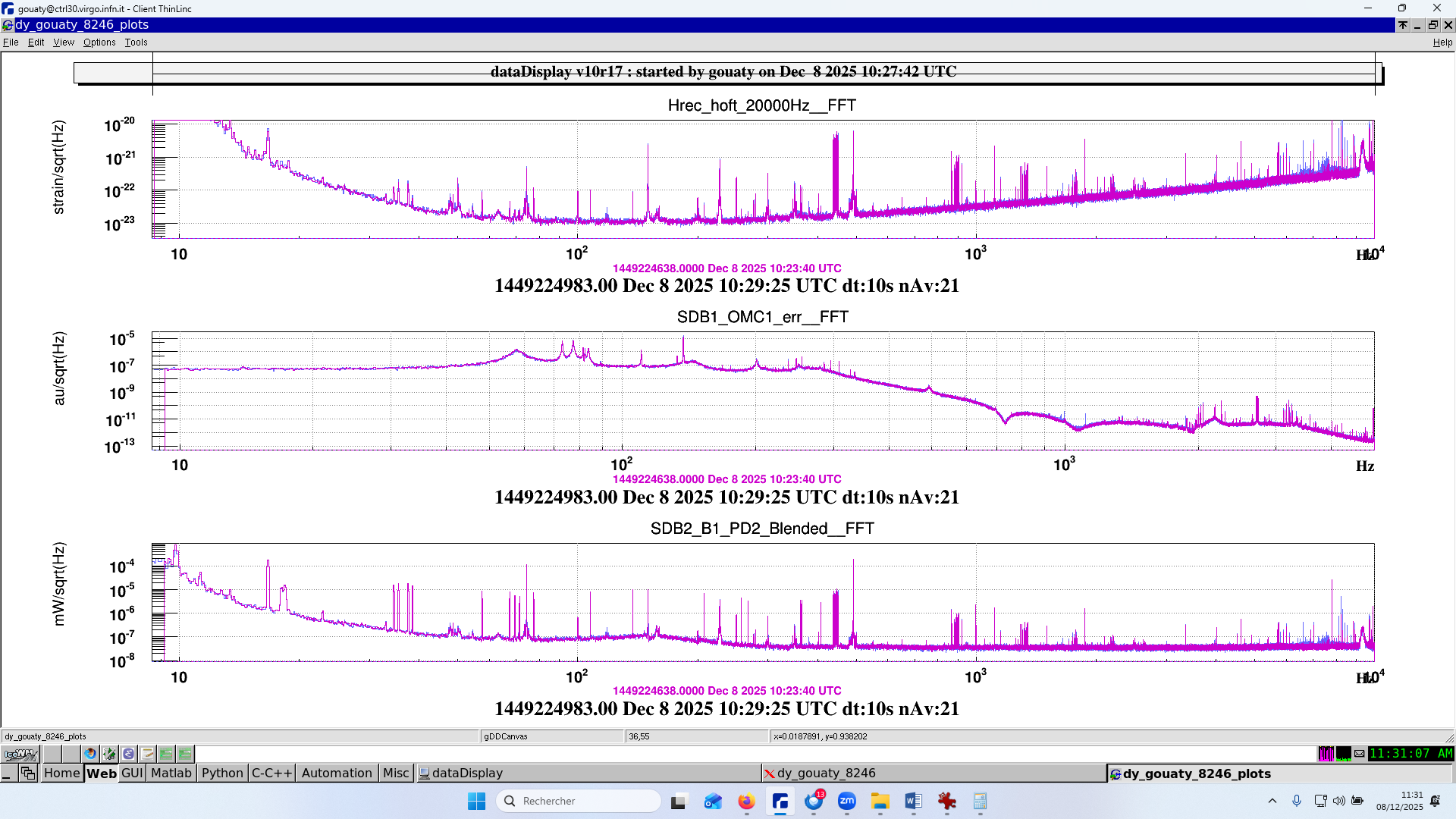
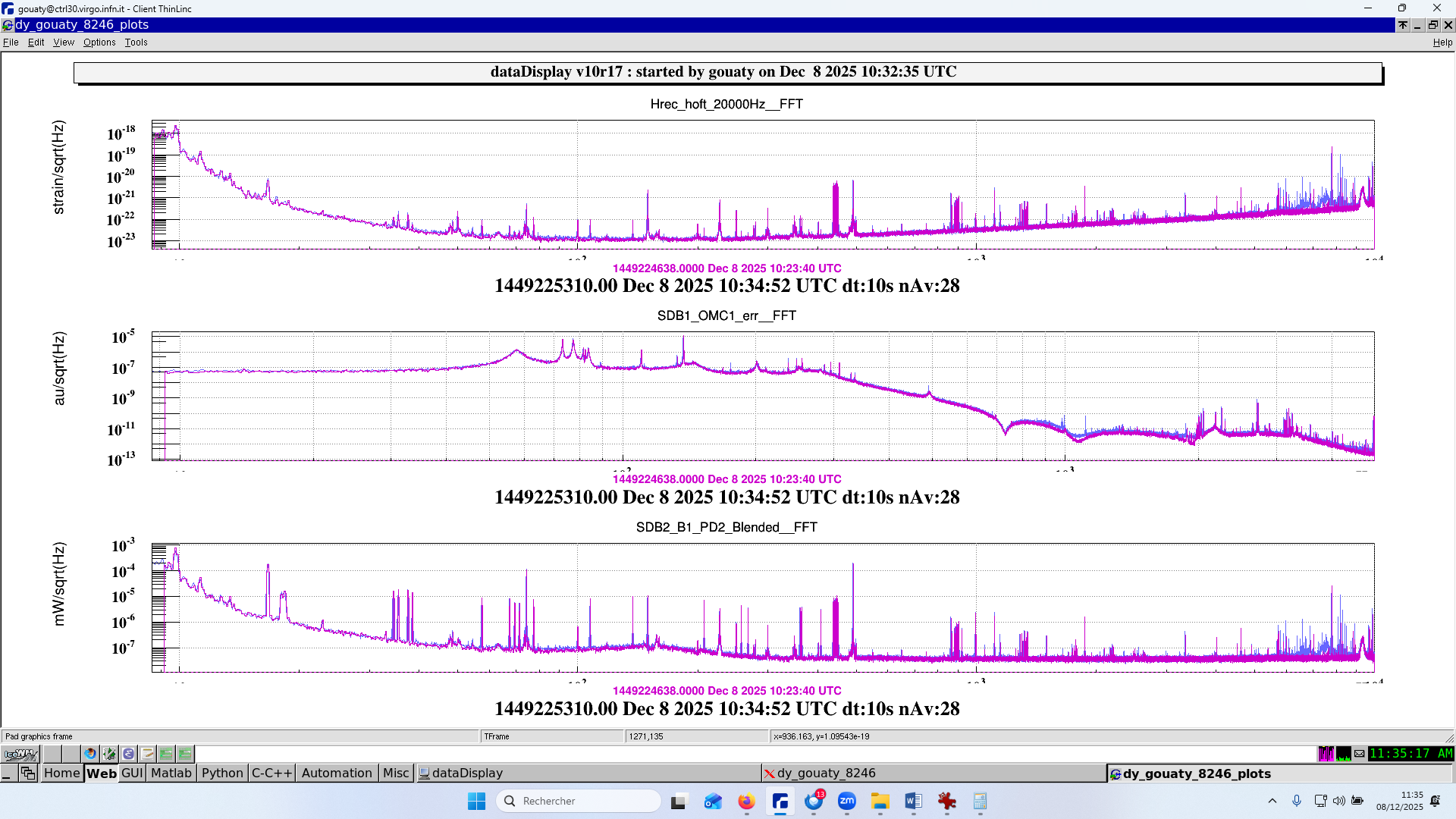
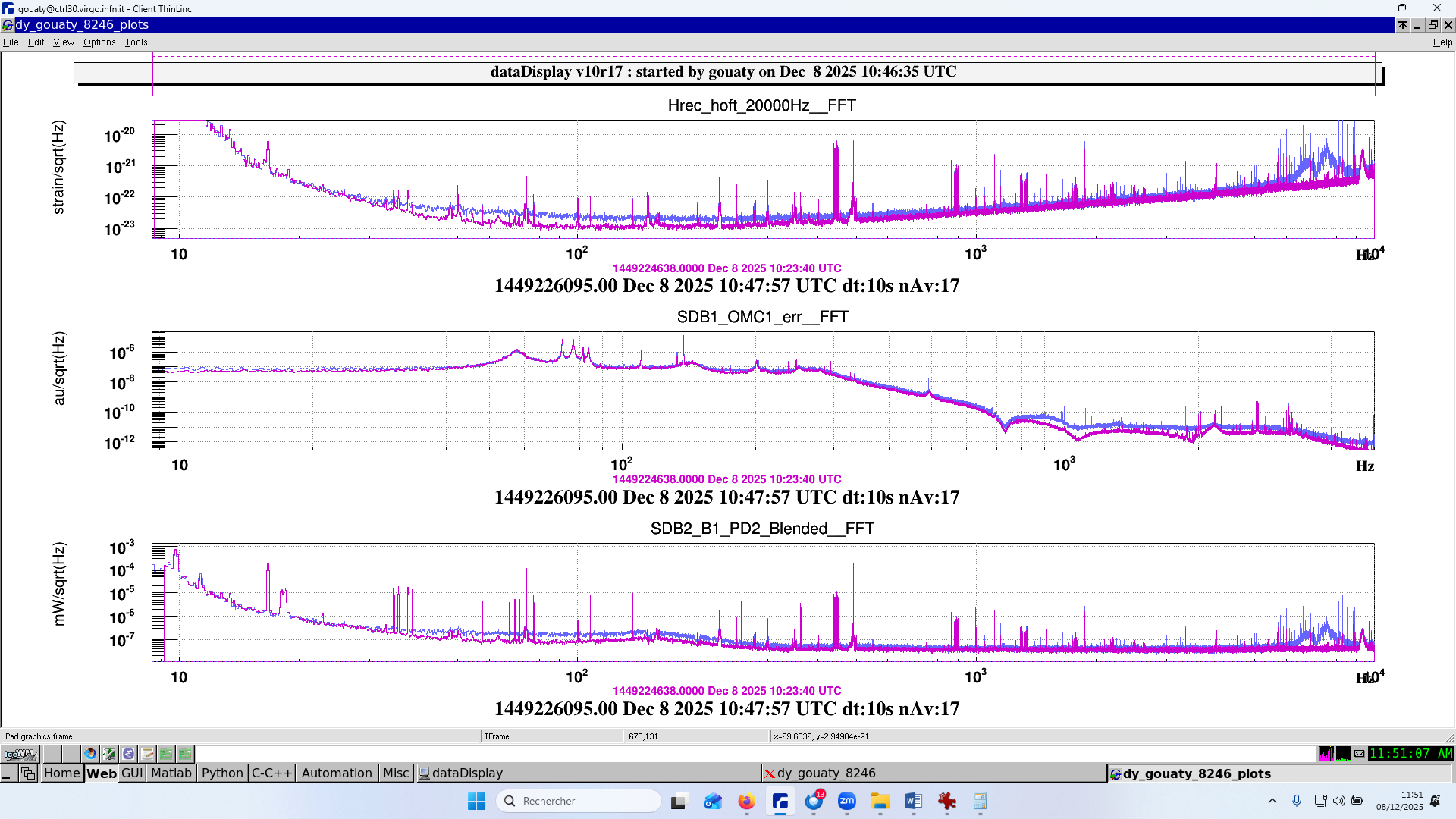
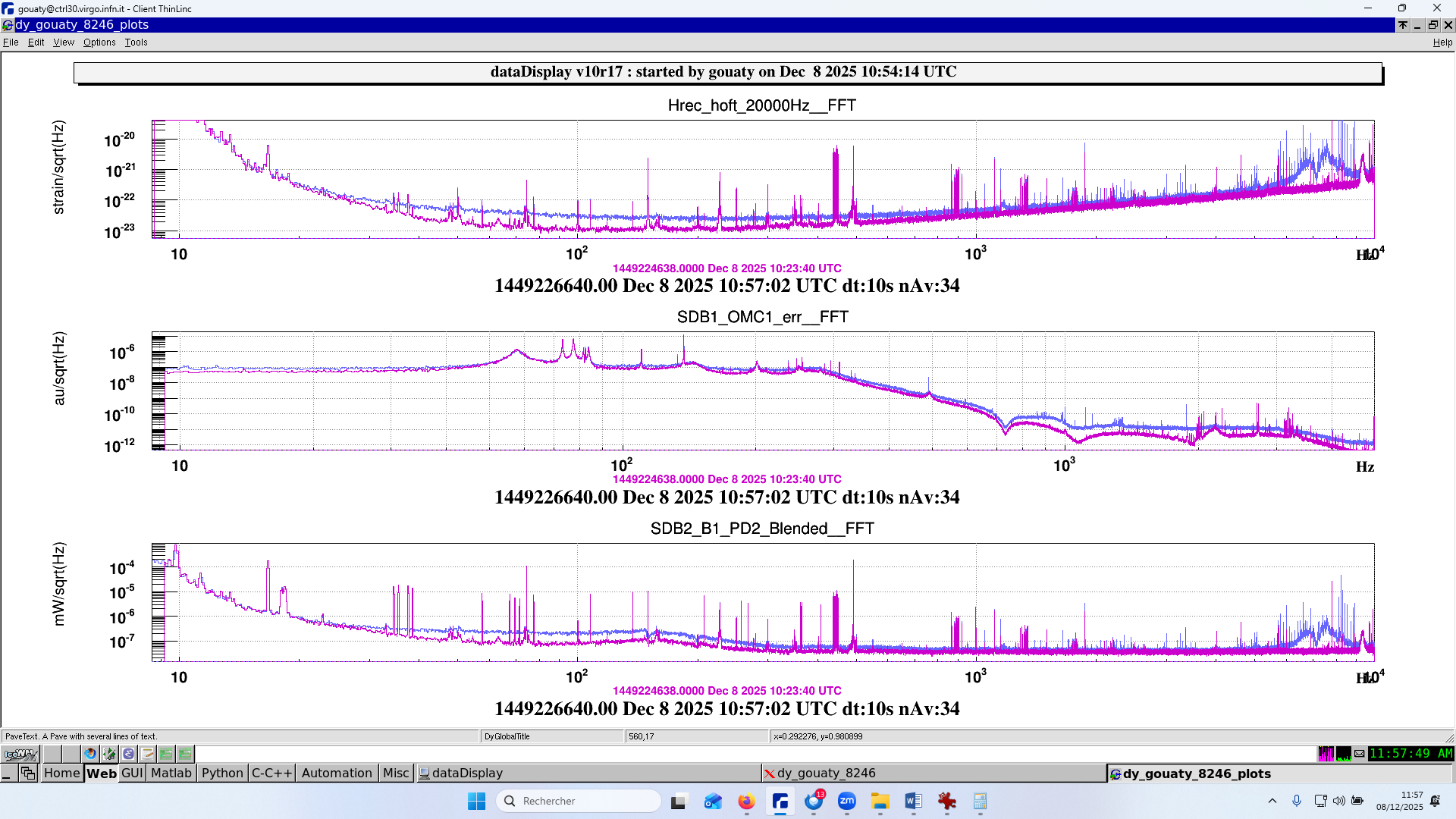
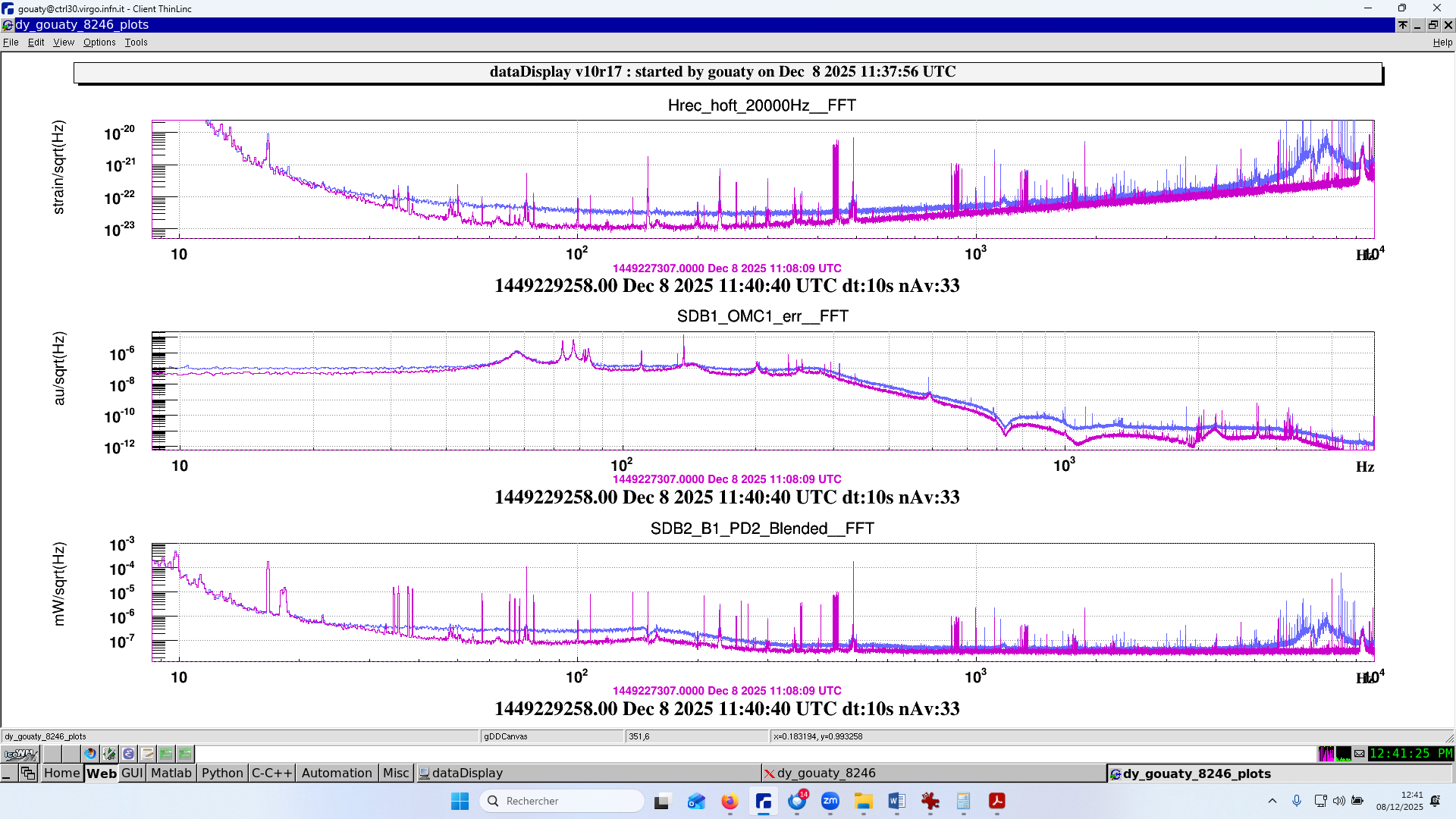
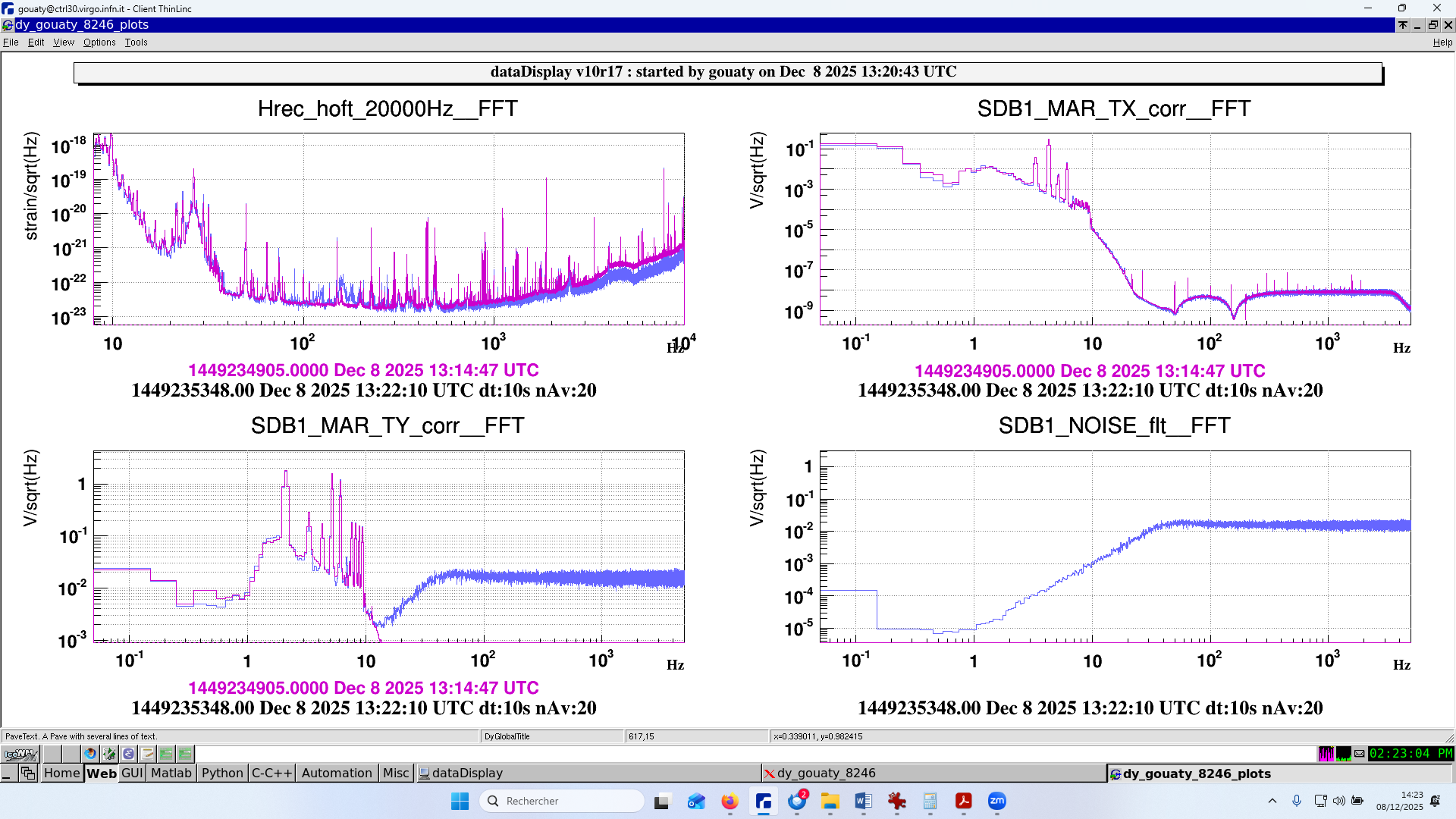
The main part of the shift was dedicated to the OMC length noise measurement. It went without problems all the morning. Then we attempted to measure the coupling of angular noise injections on the SDB1 bench marionetta, given different conditions of SDB1 alignment. However this part was interrupted by a strong earthquake.
1/ OMC length noise measurement
This morning we found the ITF in science mode (Low Noise 3).
Collecting reference data from 7h25 utc (10 min).
1.1/ calibration of the OMC error signal
Initially the OMC calibration line is set at 119.3 Hz.
OMC1 calibration with line amplitude of 0.1e-3 start: 1449214715 - stop: 1449215245
OMC1 calibration with line amplitude of 0.2 e-3 start: 1449215401 - OMC1 calibration stop: 1449215701
OMC1 calibration with amplitude of 0.4e-3 start: 1449215881 - OMC1 calibration stop: 1449216147
OMC1 calibration with amplitude of 0.1e-2 start: 1449216299 - OMC1 calibration stop: 1449216599
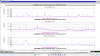
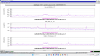
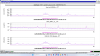
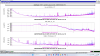
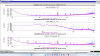
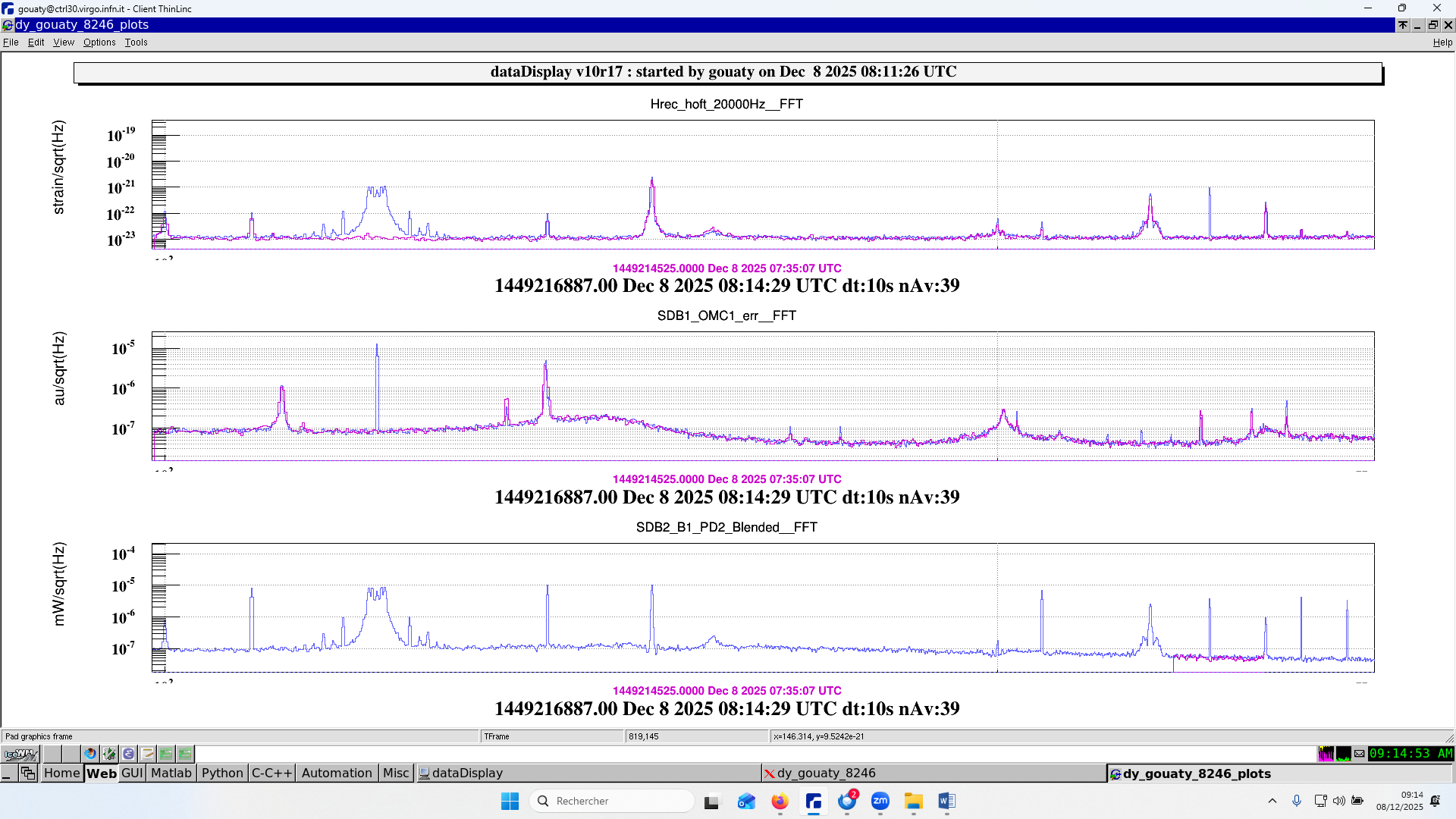
OMC1 calibration with amplitude of 0.25e-2 start: 1449216654 - OMC1 calibration stop: 1449216954 (see Fig.1)
As we noticed that the line excited on SDB2_B1_PD2_Blended is quite broadband, we change the OMC calibration line to 181.7 Hz to check if it improves the situation.
OMC1 calibration with amplitude of 0.1e-2 start: 1449217374 - OMC1 calibration stop: 1449217674
We notice that the 2f of the 181.7Hz falls too close from other resonances. Thus we change again the line frequency to 289.3 Hz.
OMC1 calibration with amplitude of 0.1e-2 start: 1449218036 but glitch in the data. We start over at 1449218206 - OMC1 calibration stop: 1449218506
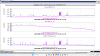
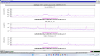
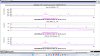
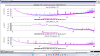
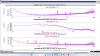
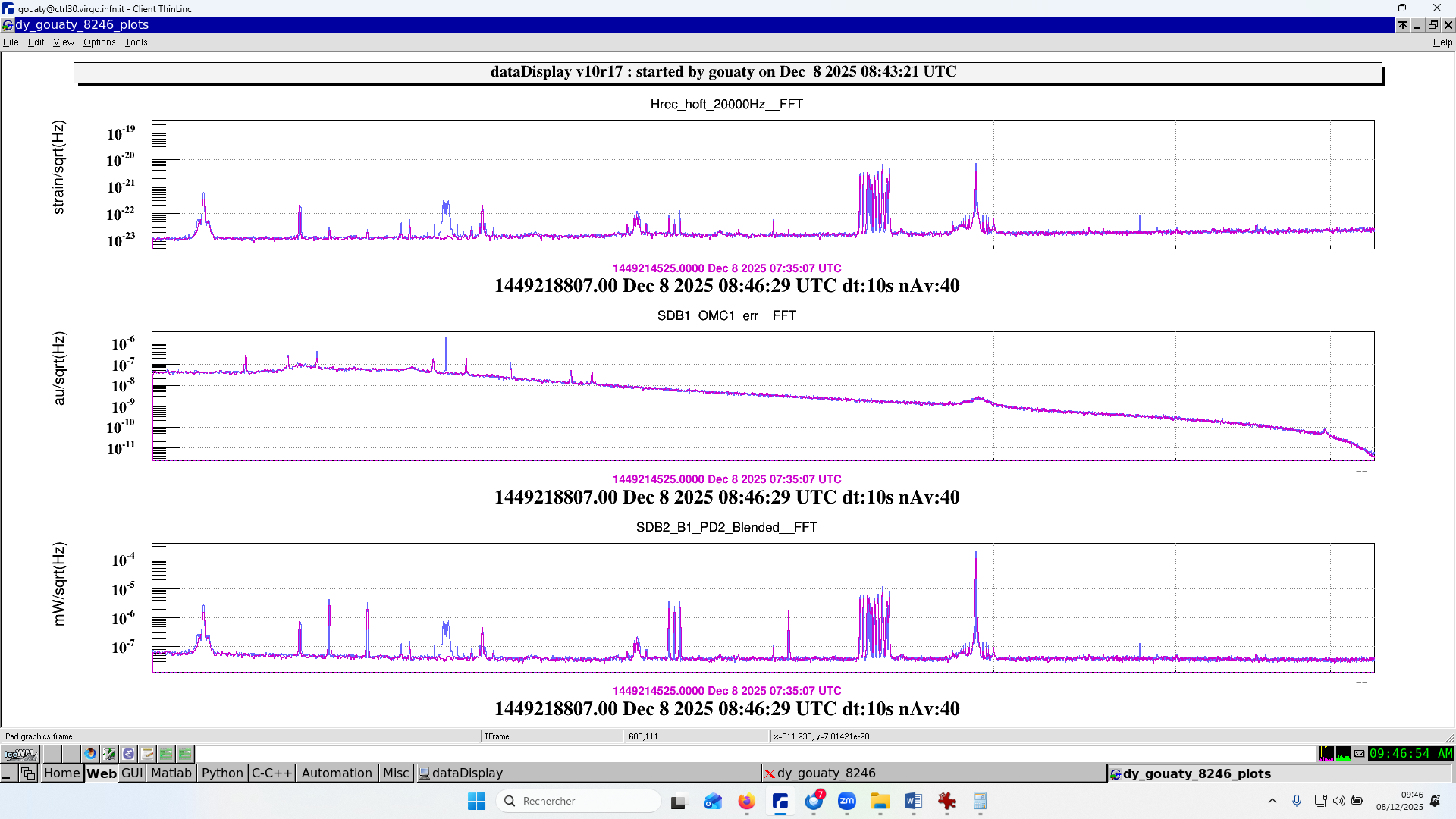
OMC1 calibration with amplitude reduced to 0.5e-3 start: 1449218541 - OMC1 calibration stop: 1449218808 (see Fig.2)
Even for the 289.3 Hz frequency, the line excited in the photodiode channel still appears broad-band.
1.2/ Check coupling of the calibrat ion line as a function of the offset
OMC1 calibration line with amplitude of 0.25e-3 at 289.3 Hz started at 1449218957
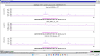
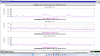
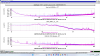
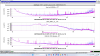
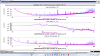
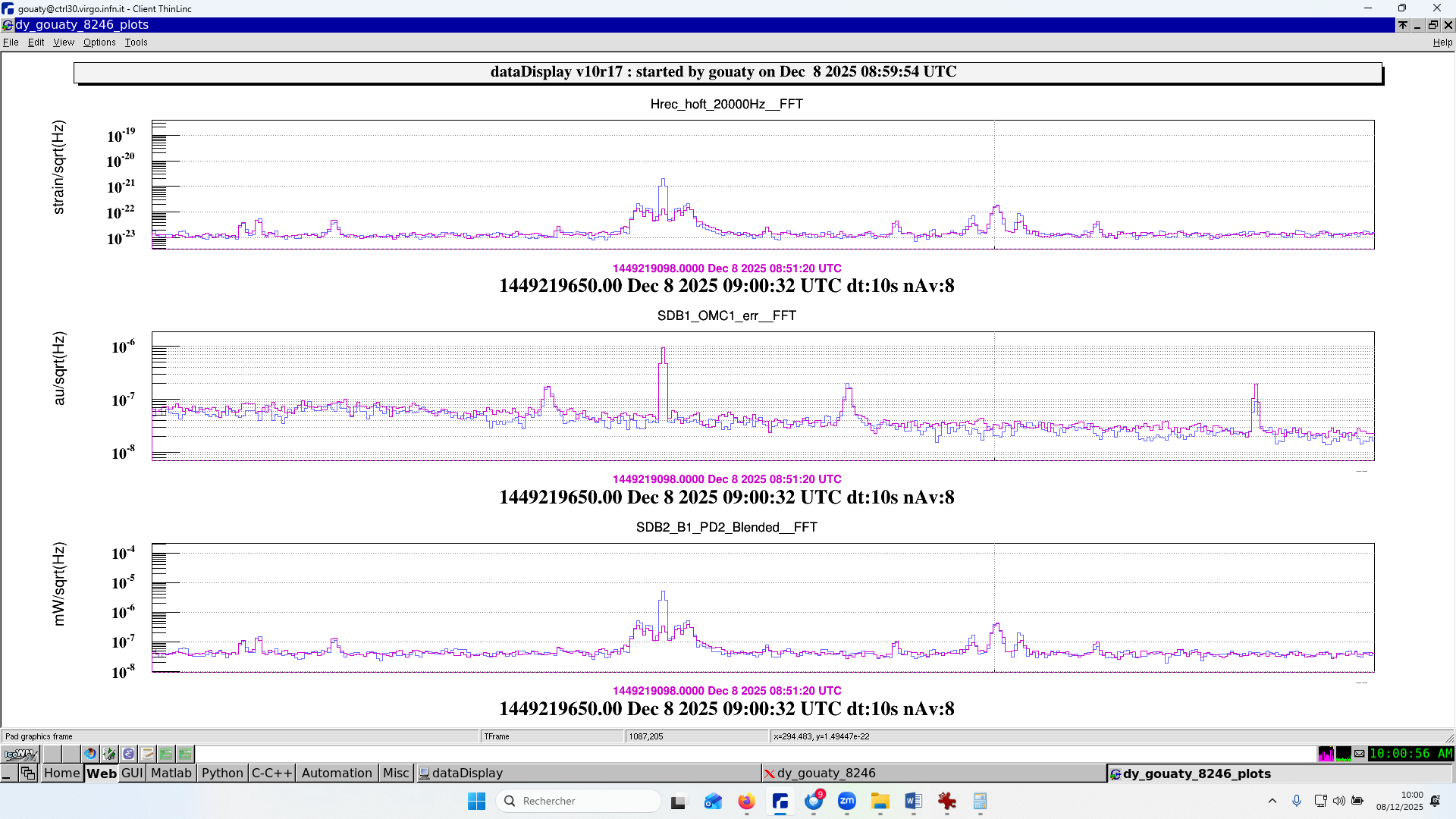
Put an offset of 0.5e-4 in the OMC1 error signal at 1449219240 (Fig.3)
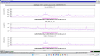
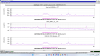
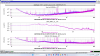
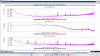
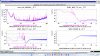
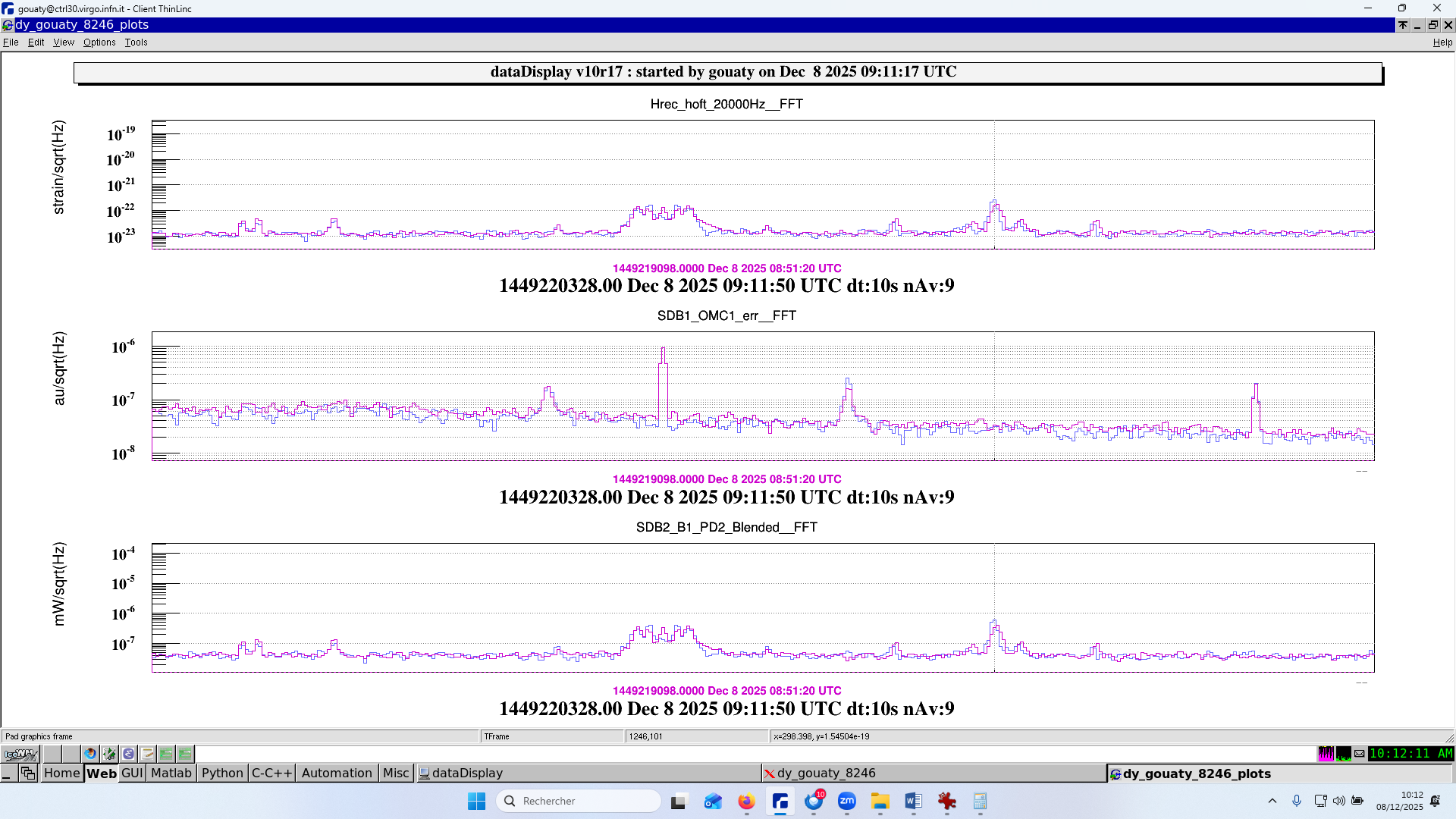
Put an offset of 0.25e-4 at 1449219570 (Fig.4)
Put an offset of 0.1e-4 at 1449219688 (Fig.5)
Put an offset of 0.03e-4 at 1449219877 (Fig.6)
Put an offset of 0.01e-4 at 1449220046 (Fig.7)
Put a negative offset of -0.01e-4 at 1449220256 (Fig.8)
negative offset of -0.02e-4 at 1449220394 (Fig.9)
negative offset of -0.03e-4 at 1449220589 (Fig.10)
negative offset of -0.1e-4 at 1449220762 (Fig.11)
negative offset of -0.5e-4 at 1449220905 - stop offset at 1449221054 (Fig.12)
OMC1 calibration stop: 1449221134
It seems that the hidden offset could be of the order of 1.0e-5 V, since the coupling is minimum for an injected offset around -1.0e-5 V.
1.3/ Injection of broadband noise through the OMC PZT
Take reference data from 1449221140 - 1449221565
Injection of broad band noise with amplitude 1e-5 V from 1449221581
Injection of broad band noise with amplitude 2e-5 V from 1449221708
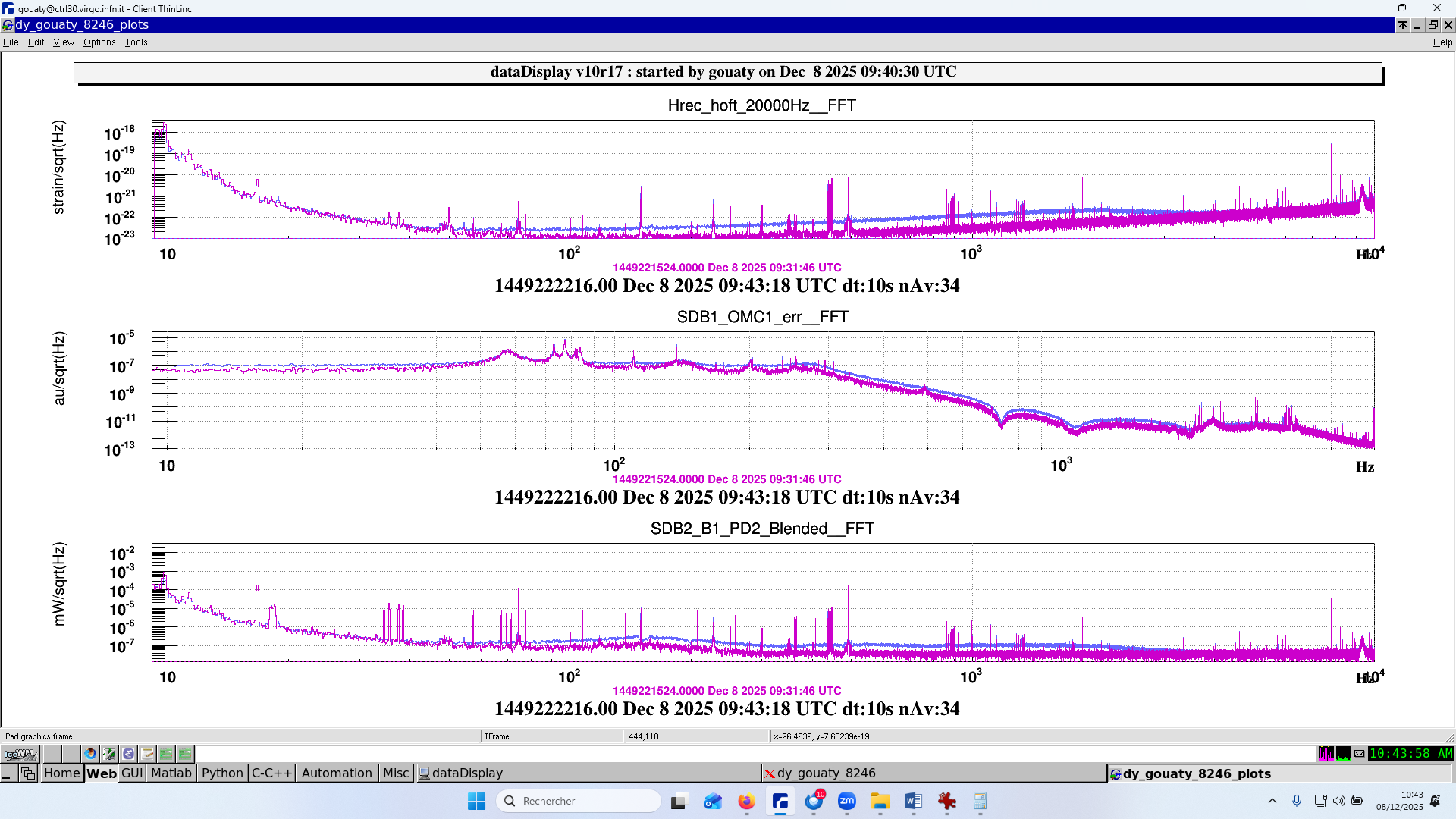
Injection of broad band noise with amplitude 4e-5 V from 1449221849, but we observed a glitch during the measurement. We start again from 1449222009 - 1449222360 (Fig.13)
We reduce the broad band noise to 1e-5V at 14492225806.
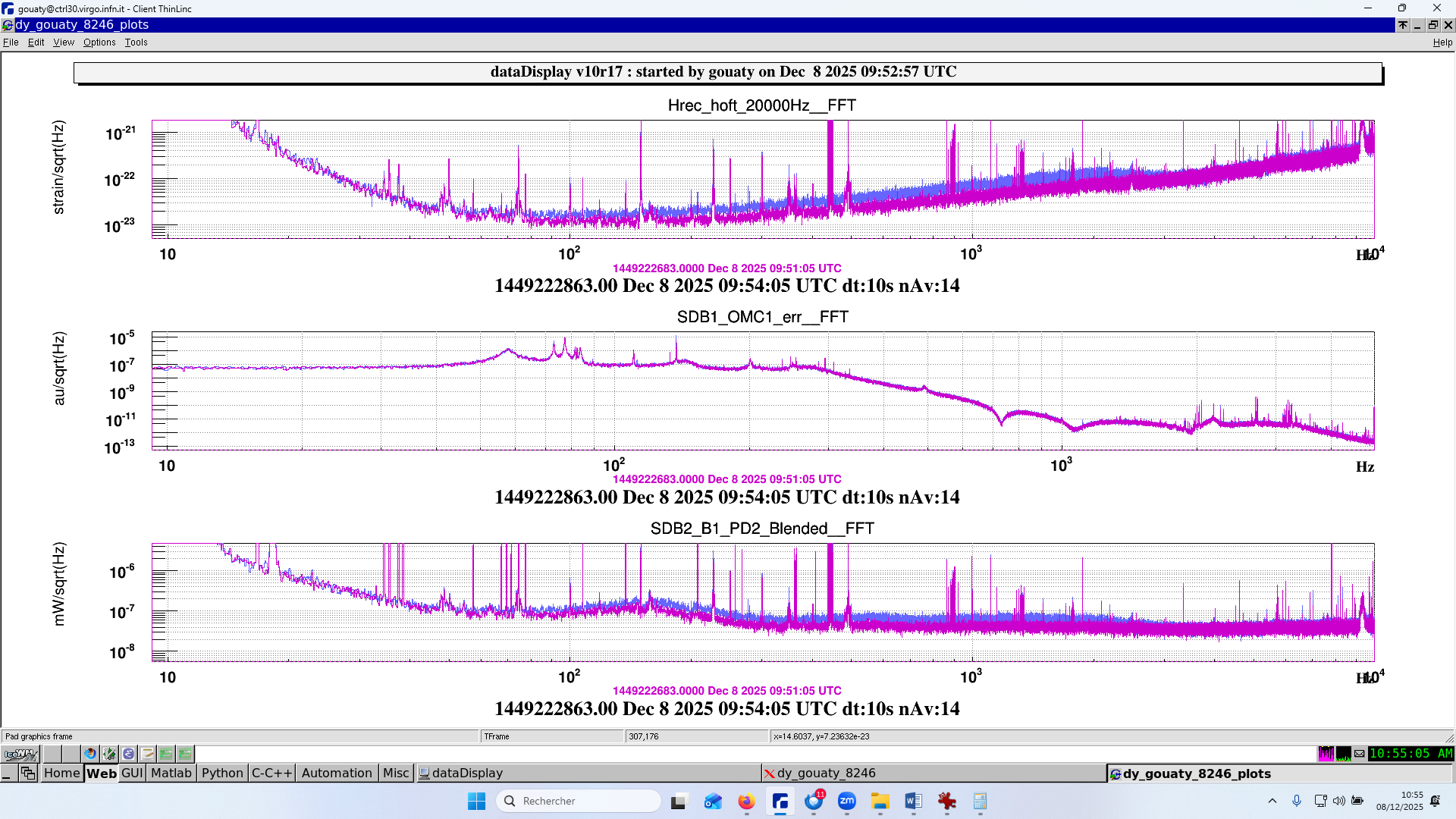
Then we inject an offset in the error signal at 1449222756 with an amplitude of 0.1e-4 V (FIG.14)
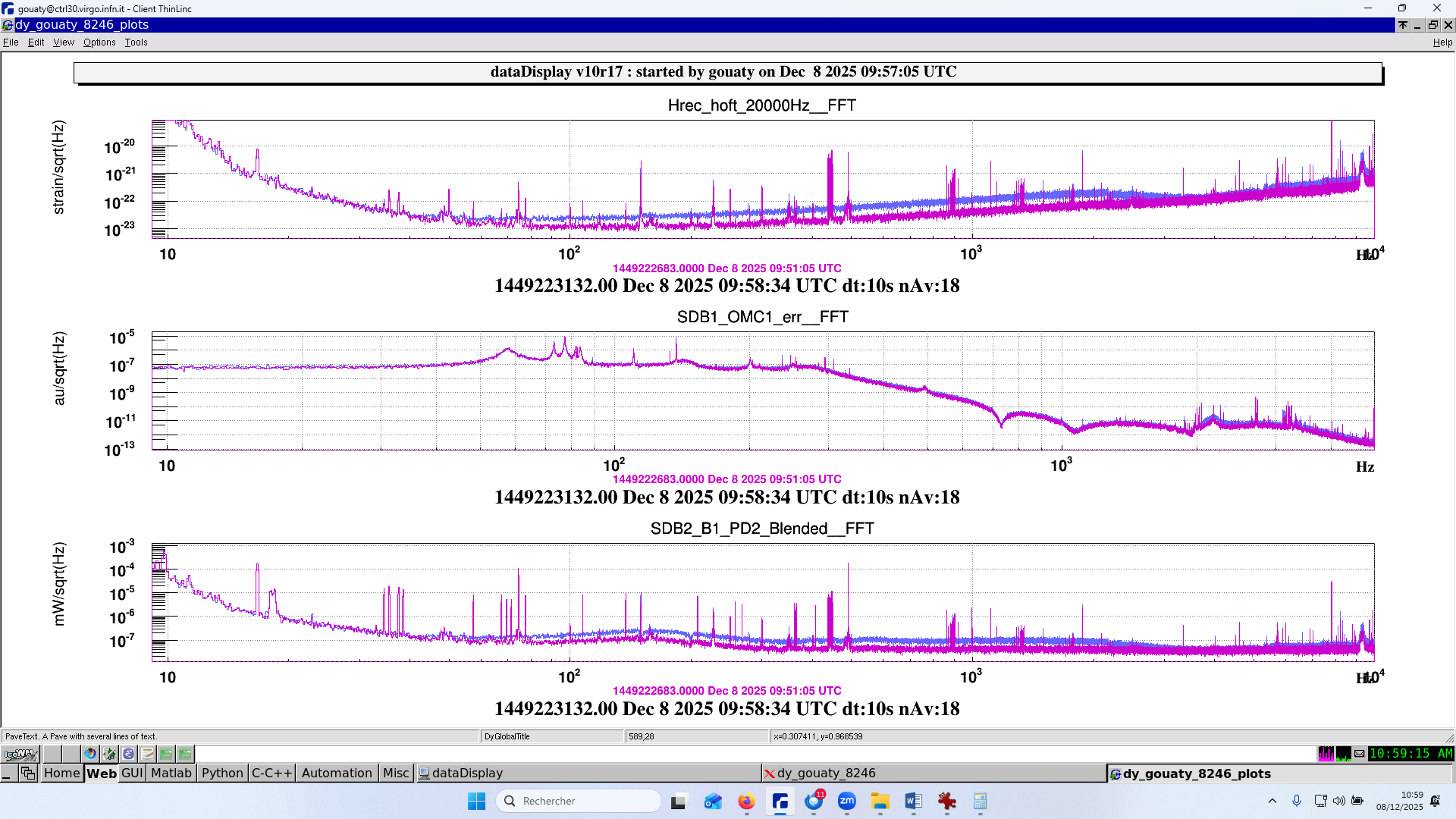
we inject an offset in the error signal at 1449223012 with an amplitude of 0.2e-4 V (FIG.15) - stop at 1449223275.
Then we inject a negative offset in the error signal at 1449223379 with an amplitude of -0.1e-4 V (FIG.16)
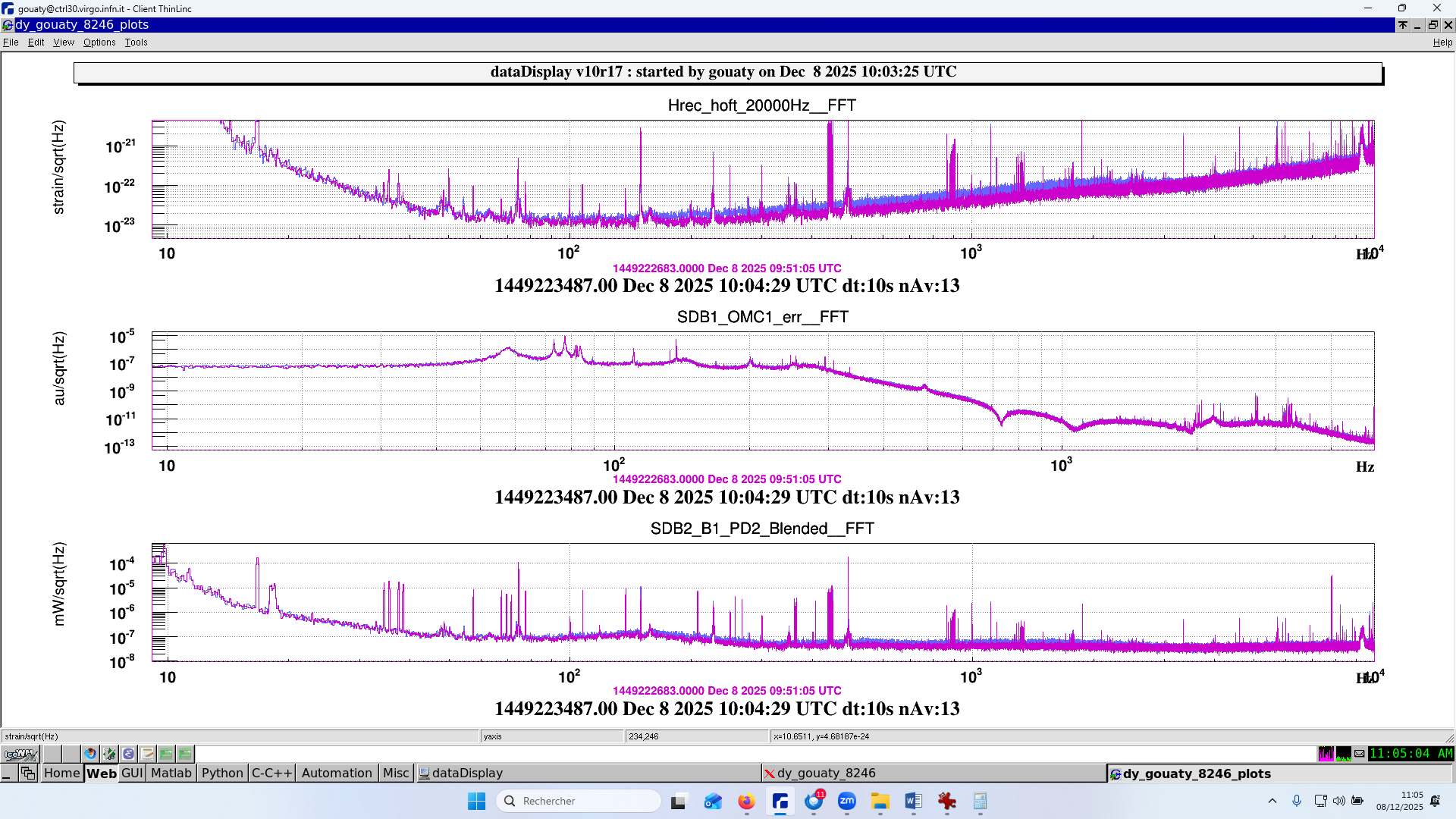
we inject a negative offset in the error signal at 1449223670 with an amplitude of -0.2e-4 V (FIG.17) We started again from 1449223885 because we observed another glitch in the data. Stop at 1449224280.
Offset set to 0 at 1449224315.
Noise injection stopped at 1449224369.
1.4/ Measurement of the OMC length noise with an artificial offset
Taking reference data from 1449224519 - 1449224822
We inject an offset in the OMC error signal without any noise injection. The goal is to measure the intrinsic OMC length noise.
Inject offset of amplitude 0.5e-4 at 1449224840, we started to observe some structures around 6 to 9 kHz. (FIG.18)
Inject offset of amplitude 1.0e-4 at 1449225147, the high frequency noise becomes clearly visible. (FIG.19)
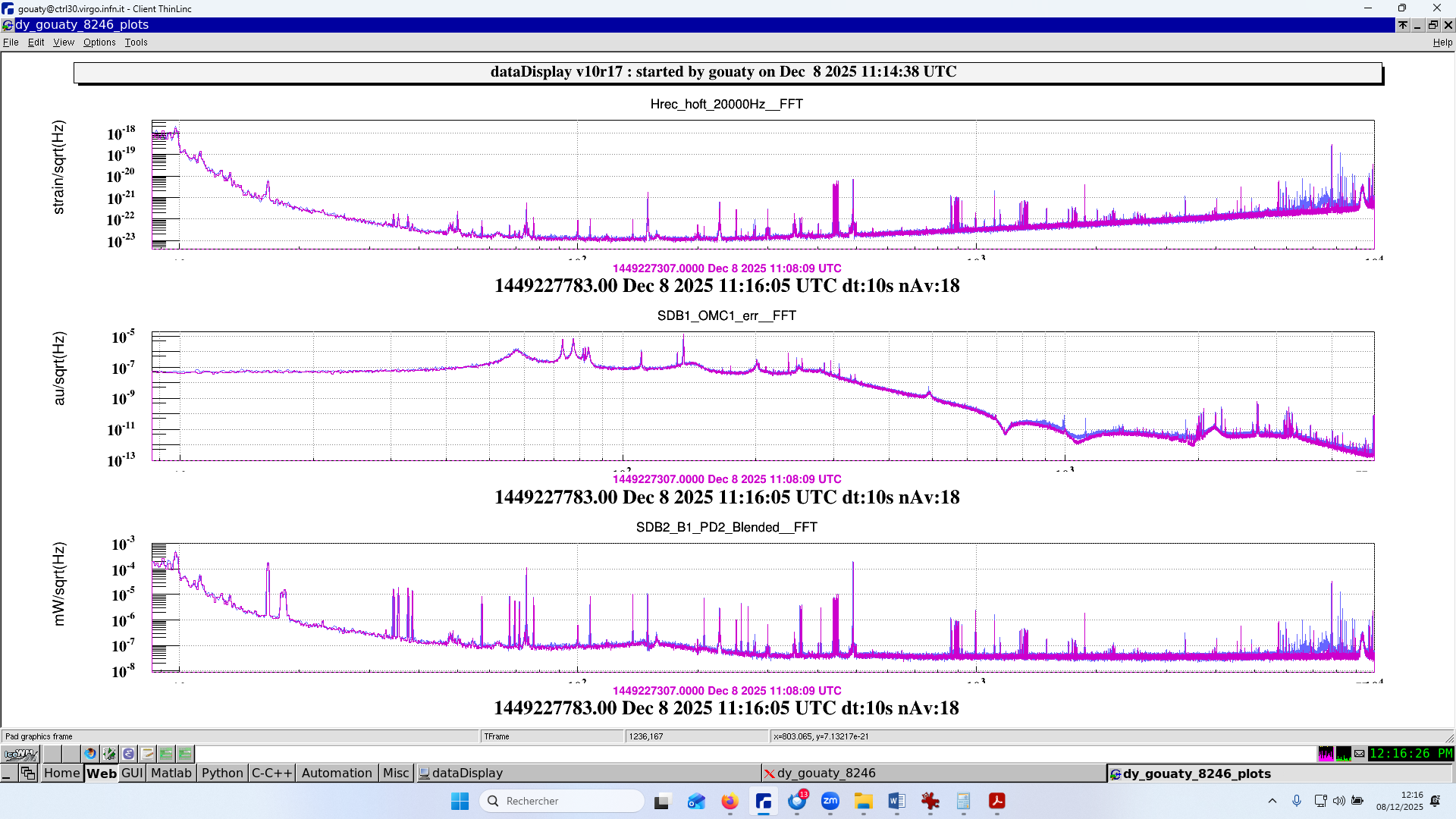
Inject offset of amplitude 2.0e-4 at 1449225380. We observe an impact from 40 to 300 Hz. Glitch observed at 1449225900. (FIG.20)
Inject offset of amplitude 3.0e-4 at 1449225980. (FIG.21)
Inject offset of amplitude 4.0e-4 at 1449226446 - 1449226946 (FIG.22)
We reduced the offset progressively (by steps of 1.0e-4) until we zero the offset.
Taking another reference at 1449227137-1449227637
Inject negative offset of amplitude -1.0e-4 at 1449227666. (FIG.23)
Inject negative offset of amplitude -2.0e-4 at 1449227848. We observe a glitch. Starting over from 1449227965 (FIG.24)
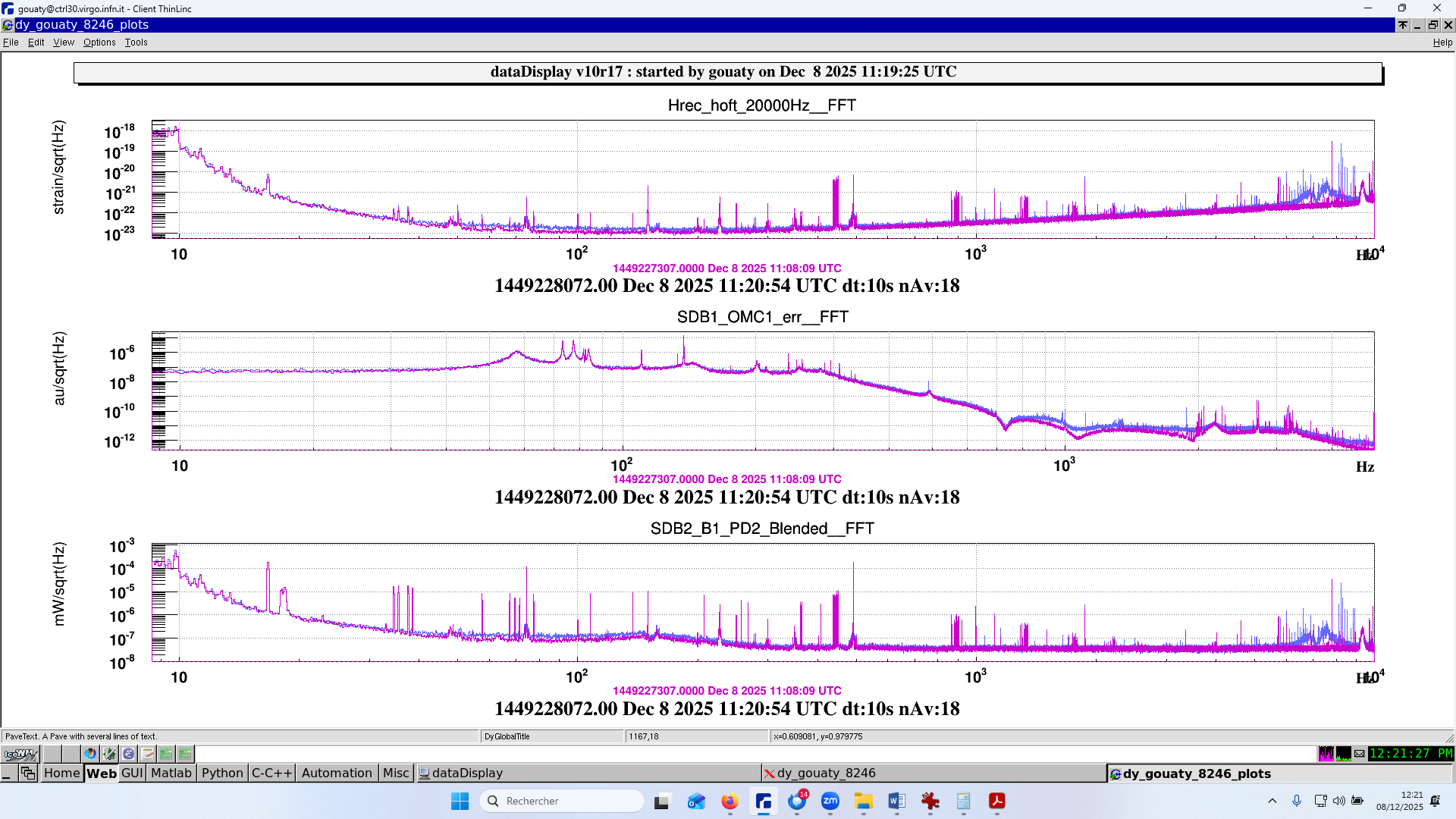
Inject negative offset of amplitude -3.0e-4 at 1449228196.(FIG.25)
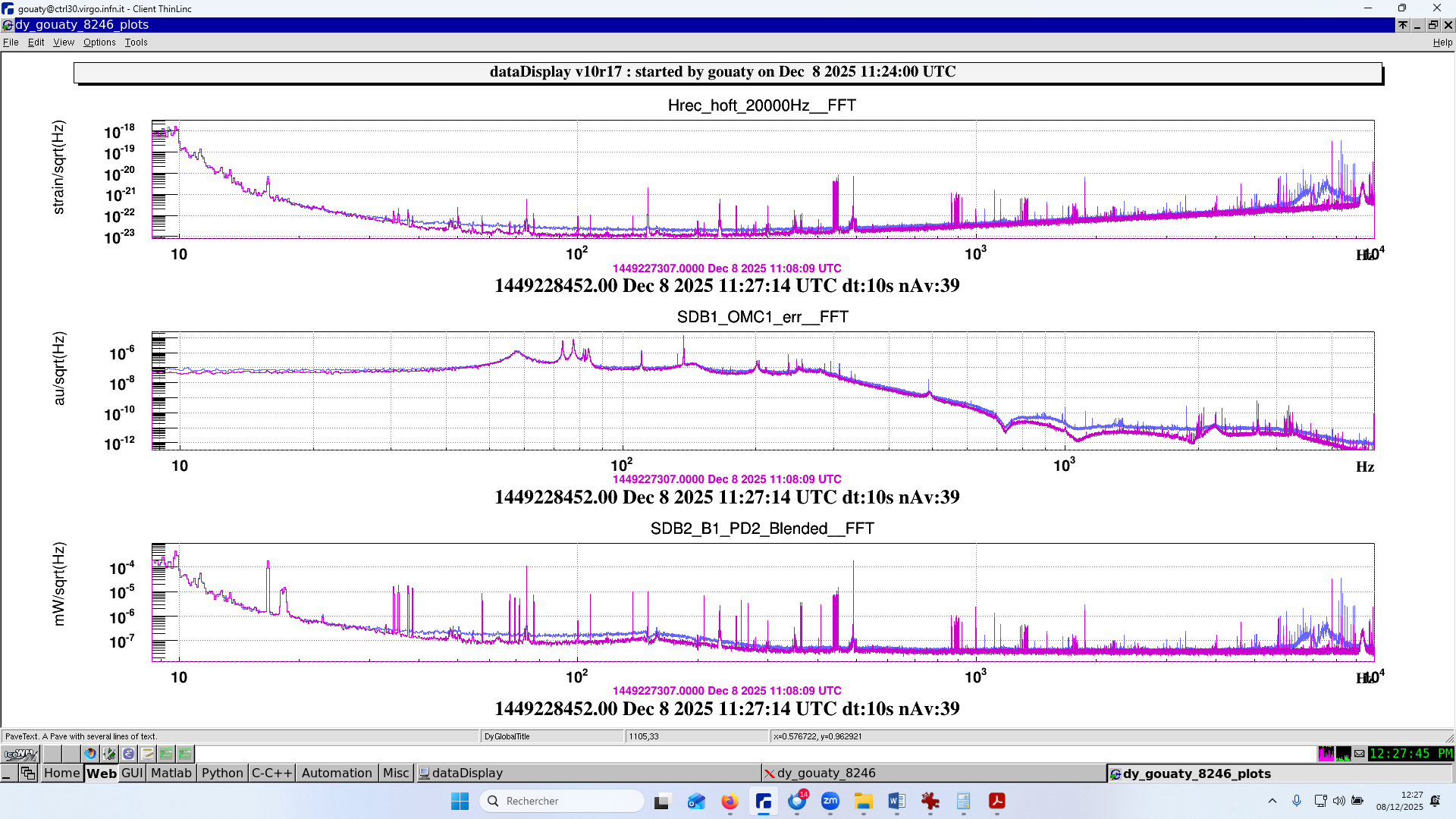
Inject negative offset of amplitude -4.0e-4 at 1449228535 - 1449229035. (FIG.26)
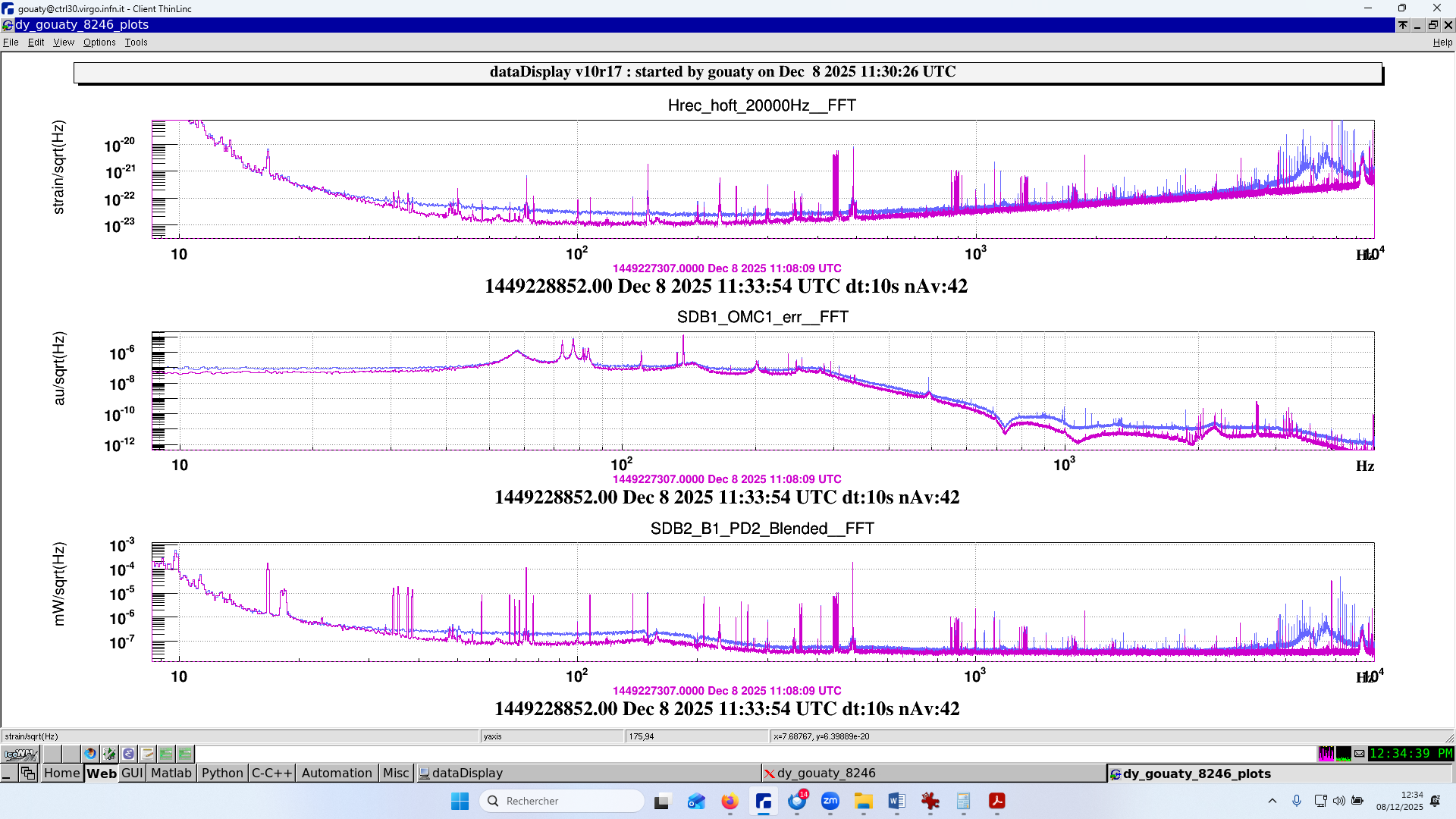
Inject negative offset of amplitude -5.0e-4 at 1449229070 - 1449229570 (FIG.27)
2/ Measurement of SDB1 bench angular noise coupling:
ITF relocked in Low Noise 2 at 12h52 utc.
Reference data from 13h00 to 13h15 utc.
2.1/ SDB1 bench aligned
Injection in TY:
Injecting noise with ampl = 1e-5, pole at 40 Hz, corresponding to 2e-2V/sqrt(Hz) above 40 Hz on SDB1_MAR_TY_corr at 13h18m52 UTC (5 min). (FIG.28)
Injecting noise with ampl = 2e-5, pole at 40 Hz, corresponding to 4e-2V/sqrt(Hz) above 40 Hz on SDB1_MAR_TY_corr at 13h24m29 UTC. Glitch at 13h26 utc. Take another 3 min of data after the glitch.
Injecting noise with ampl = 4e-5, pole at 40 Hz, corresponding to 8e-2V/sqrt(Hz) above 40 Hz on SDB1_MAR_TY_corr at 13h30m05 UTC (5 min).
Injection in TX:
Taking new reference data at 13h39 utc (6 min)
Injecting noise with ampl = 5e-7, pole at 80 Hz, corresponding to 3.5e-3V/sqrt(Hz) above 80 Hz on SDB1_MAR_TX_corr at 13h45m20 UTC (4 min)
2.2/ SDB1 bench misaligned in TY
Reference position of the bench in TY is : ~64 urad
We injected an offset of +3 urad in the TX drift control loop (B1_DARM_TY_offset). But we notice that the loop cancels the offset after a while. To tackle this issue we decide to put the loop gain at zero.
TY loop gain set to 0 at 14h15m44 UTC.
Bench position is now around 65.5 urad (new reference).
Add an offset of 3 urad in TY at 14h17m20 utc. The bench TY is now around 61 .5 urad.
Take senstivity without noise injection from 14h18 utc (4 min).
Injecting noise with ampl = 2e-5, pole at 40 Hz, corresponding to 4e-2V/sqrt(Hz) above 40 Hz on SDB1_MAR_TY_corr at 14h22m37 UTC (4 min).
Injecting noise with ampl = 4e-5, pole at 40 Hz, corresponding to 8e-2V/sqrt(Hz) above 40 Hz on SDB1_MAR_TY_corr at 14h27m06 UTC. The ITF unlocked less than a minute after the beginning of this noise injection. The culprit seems to be an earthquake.
Given the strong earthquake, we stopped the shift here.