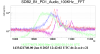
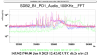
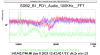
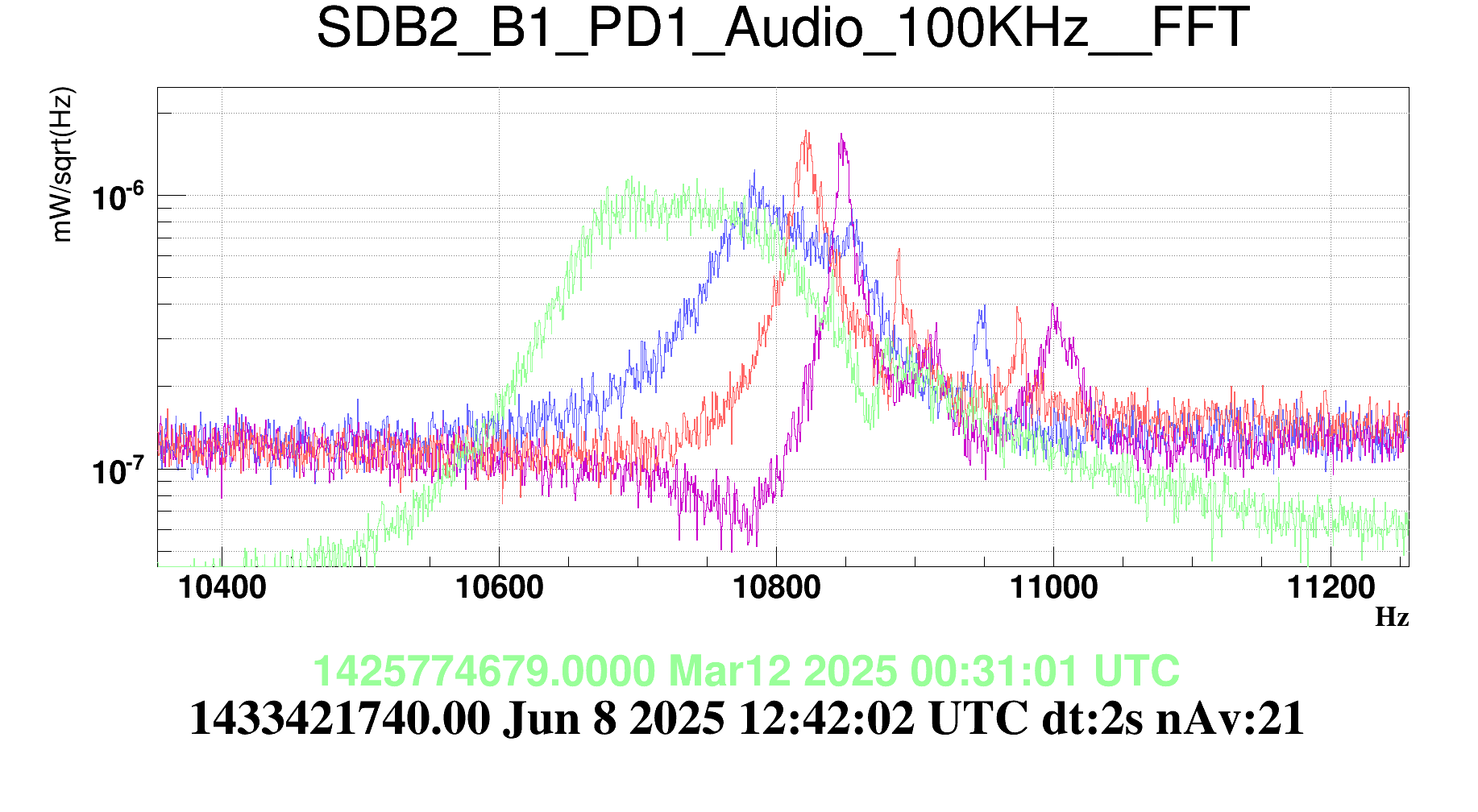
The different steps of WE ring heaters, combined with a bad common mode rejection, allow to see several of the HOM directly on B1, giving their frequency in the arm FSR.
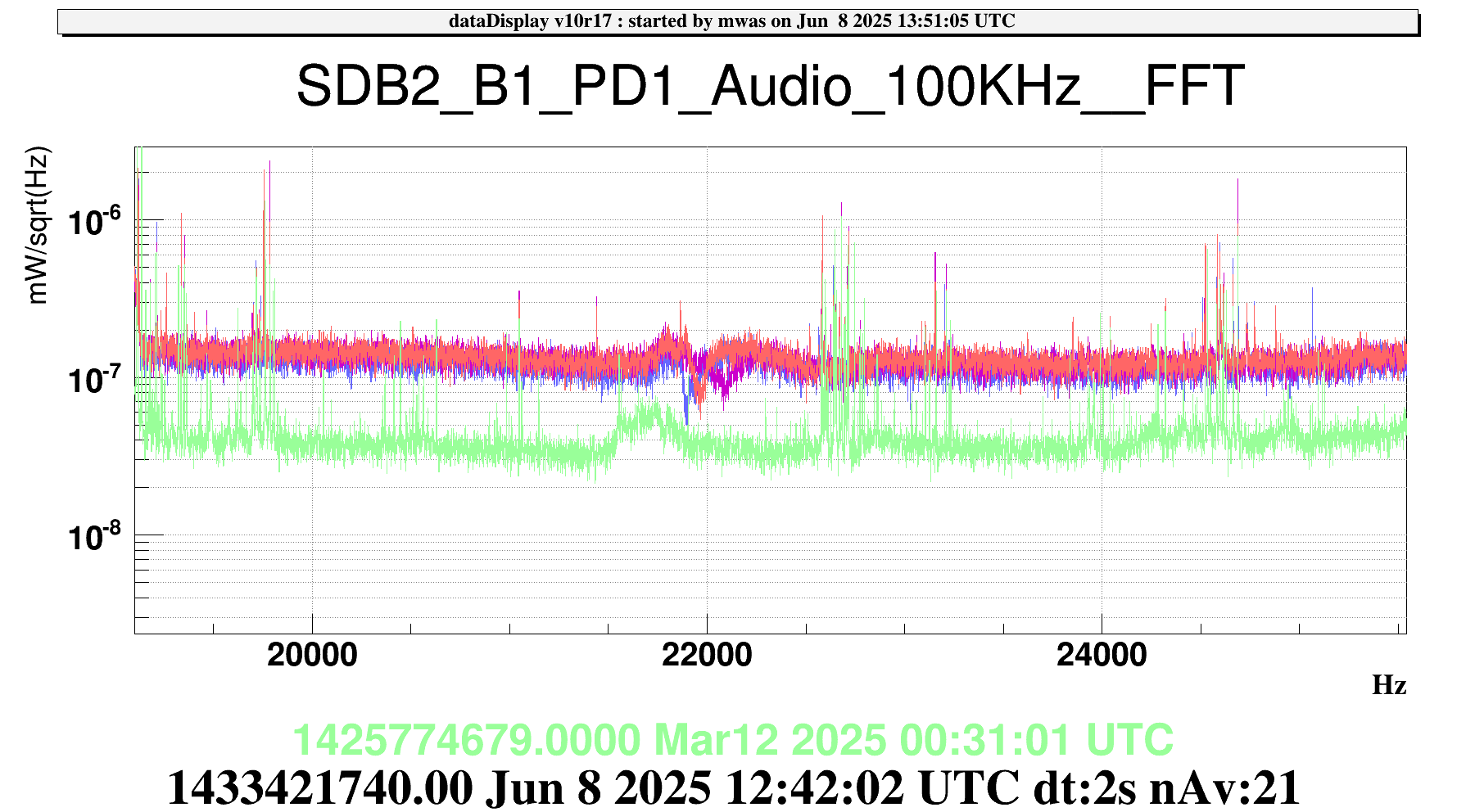
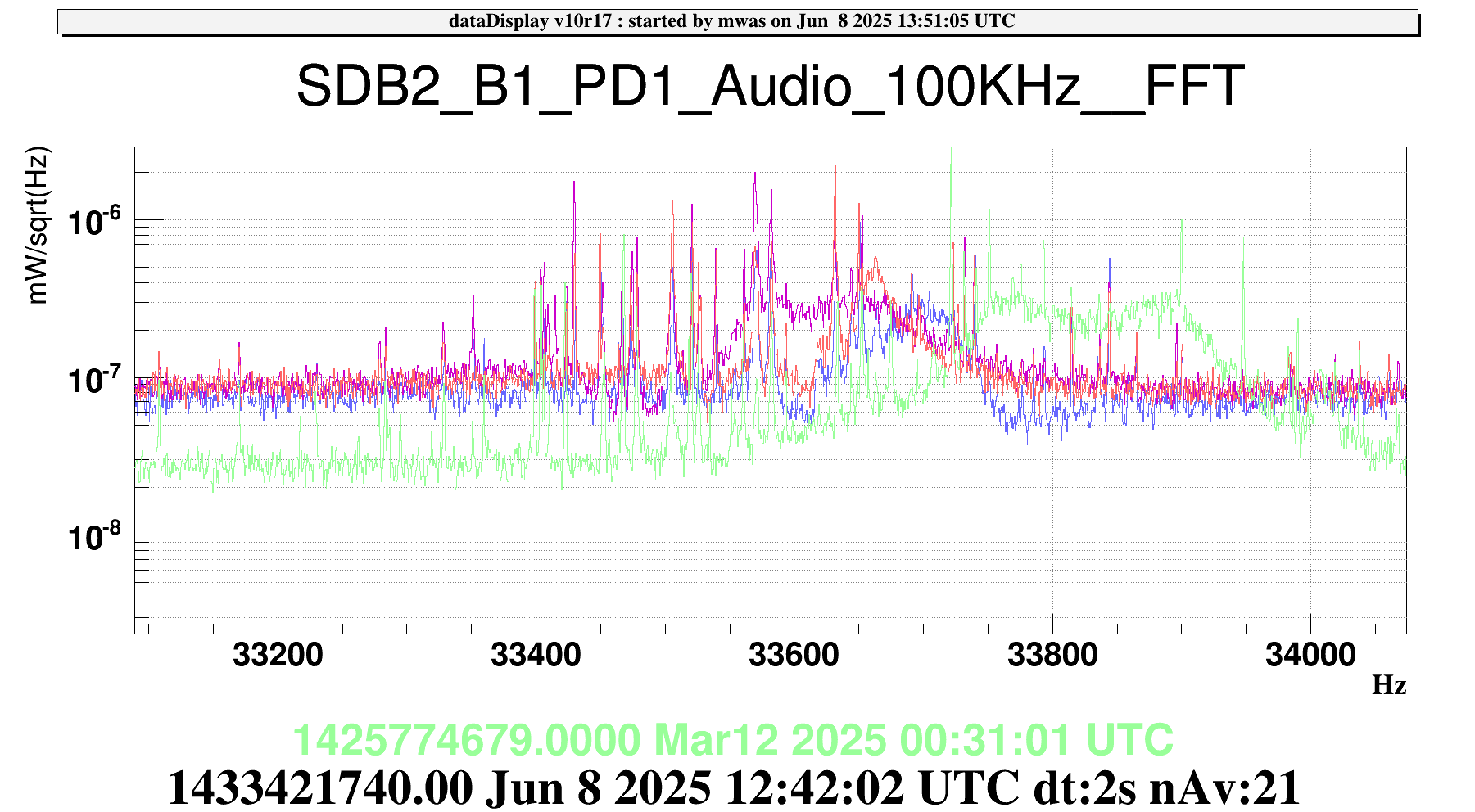
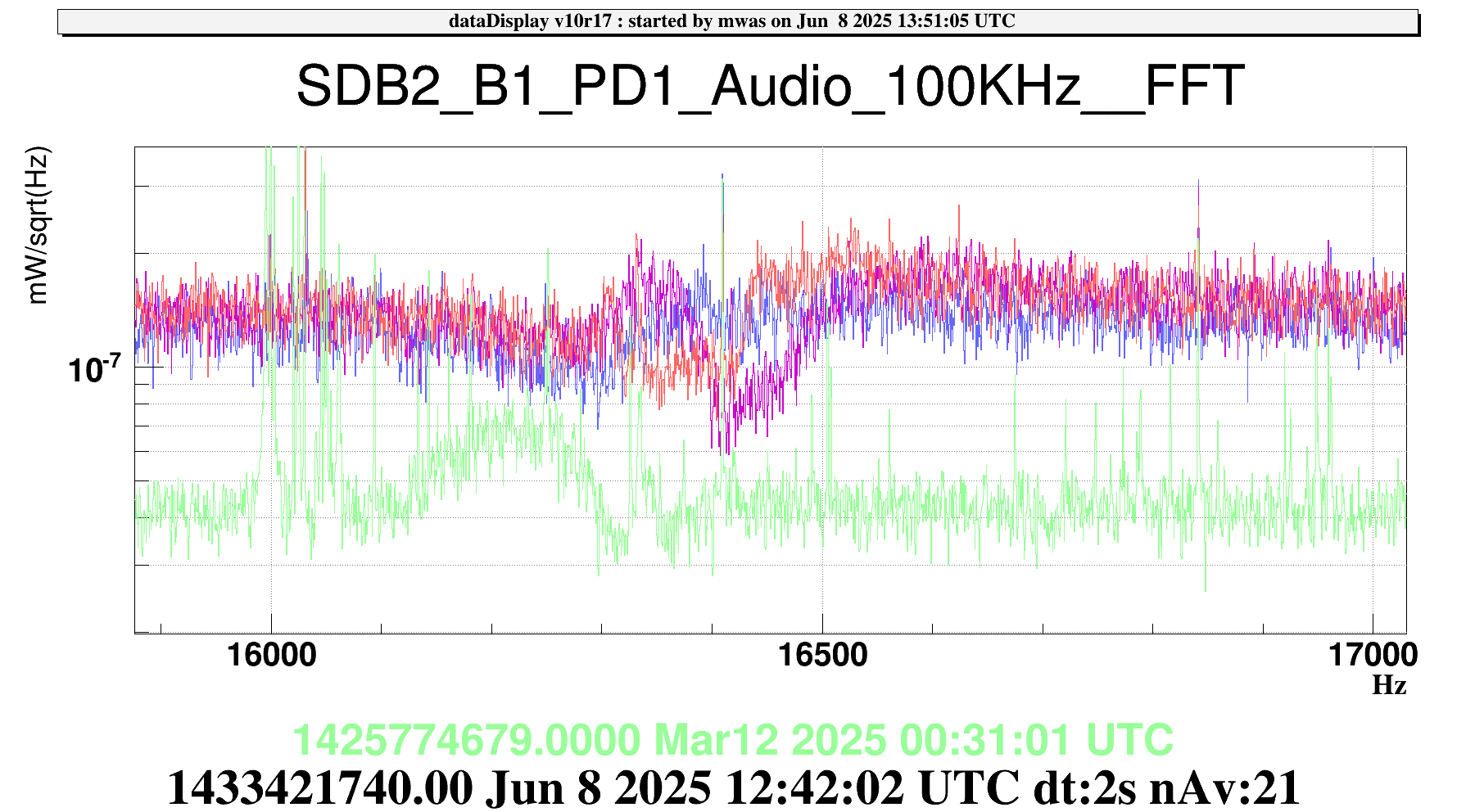
The color coding is the same for all figures. In green is a reference measurements from March, in purple is on Saturday before the RH step, in red is after the first step, and in blue after the second step.
Figure 1 shows the order 2 mode, where the frequency moves down, as expected from the radius of curvature decreasing. From a simple Gouy phase computation acos(sqrt((1-d/R_EM)*(1-d/R_IM)))/pi*49969Hz*2, for a 2m decrease in RoC the frequency of the order 2 mode should move by about 100Hz, and the two steps made about 100Hz.. It corresponds to an everaeg distance between HOMs of 5400Hz.
Figure 2 shows the order 4 mode, it also decreases in frequency, by about 200Hz, which is what one would expect based on the order 2 mode frequency change. The average distance between HOMs based on this mode is 5500Hz.
Figure 3 shows what I expect to be the order 6 mode. This one moves in the opposite direction, it is increasing, by 100Hz, while based on the order 2 mode it should increase by 300Hz. The average distance between HOMs based on this mode is 5600Hz.
Figure 4 shows the order 3 mode, it doesn't seem to be moving clearly in a given direction, just changing shape. The average HOM separation based on this mode is 5450Hz.
I couldn't find the other modes. I expect the odd modes are hard to see because the alignment is good. One would need to make an intentional misalignment to make them more visible, My guess is that a COMMp misalignment would be the most suitable.
The mode separation seems to increase as the HOM mode increases. I remember we have seen also in the arm cavity scans that the separation changes with mode order, I do not remember if it was also that the separation increases with mode order. Depending which average separation uses, then the order 9 mode can be either below or above the resonance, so it is possible that is actually resonant in the arms.
In addition, on figure 2 the 56MHz should be at 22.32kHz, given the arm FSR of 49'969Hz. Before the steps that was on the edge of the order 4 mode, after the RH steps, the order 4 mode have moved away to below 22kHz, which should be far enough to not be a concern.