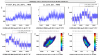
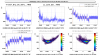
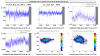
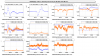
This morning the aim of the shift was to test the py algo for DIFFp and BS and investigate about the possiblity of using the 25MHz for the BS AA instead of the 50MHz.
At the beginning of the shift the ITF was in down and during the first lock attempt the green at NEB was locking on a TEM10, so we moved by +0.03 the tiltx to optimize the TEM00.
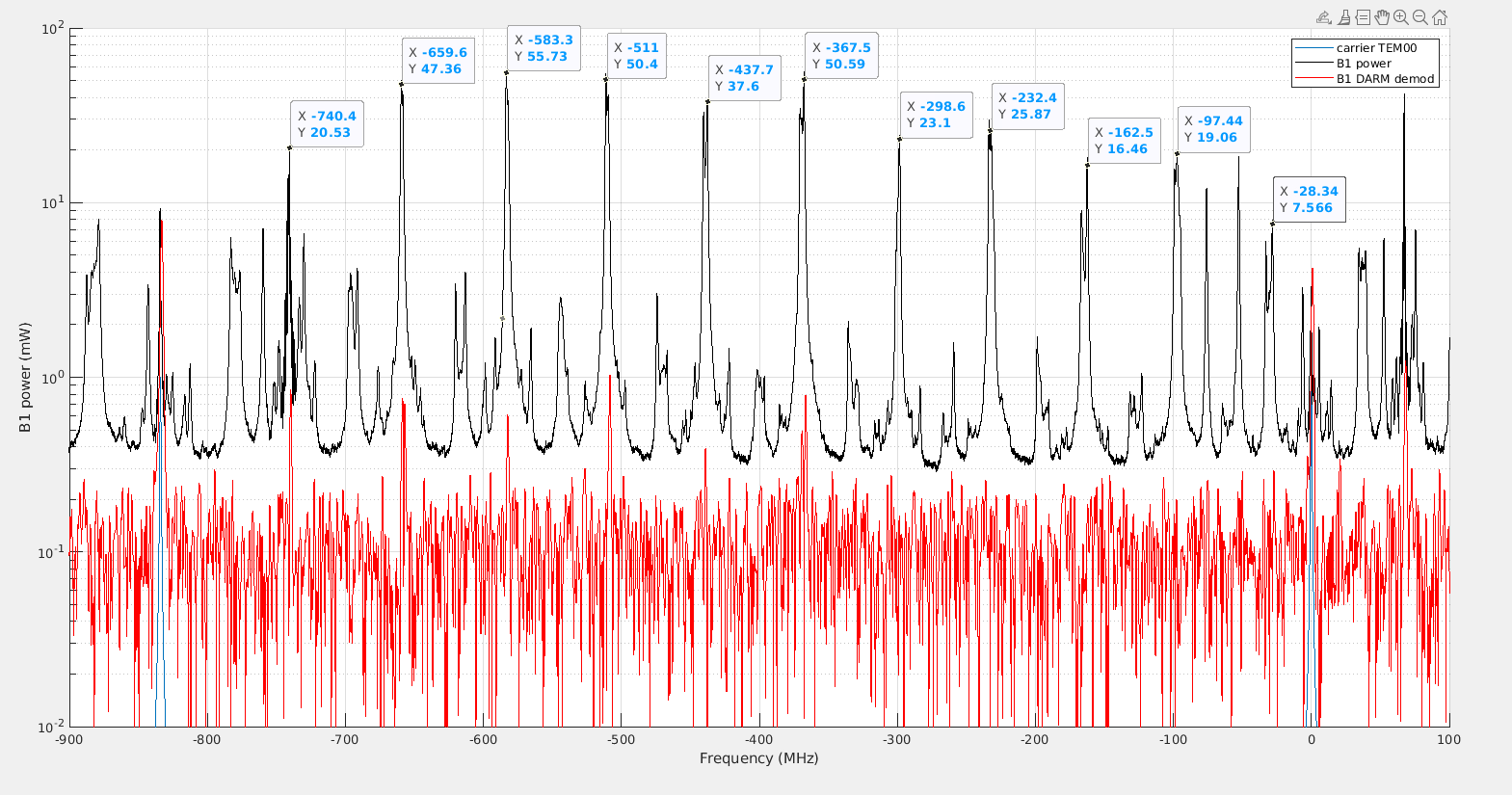
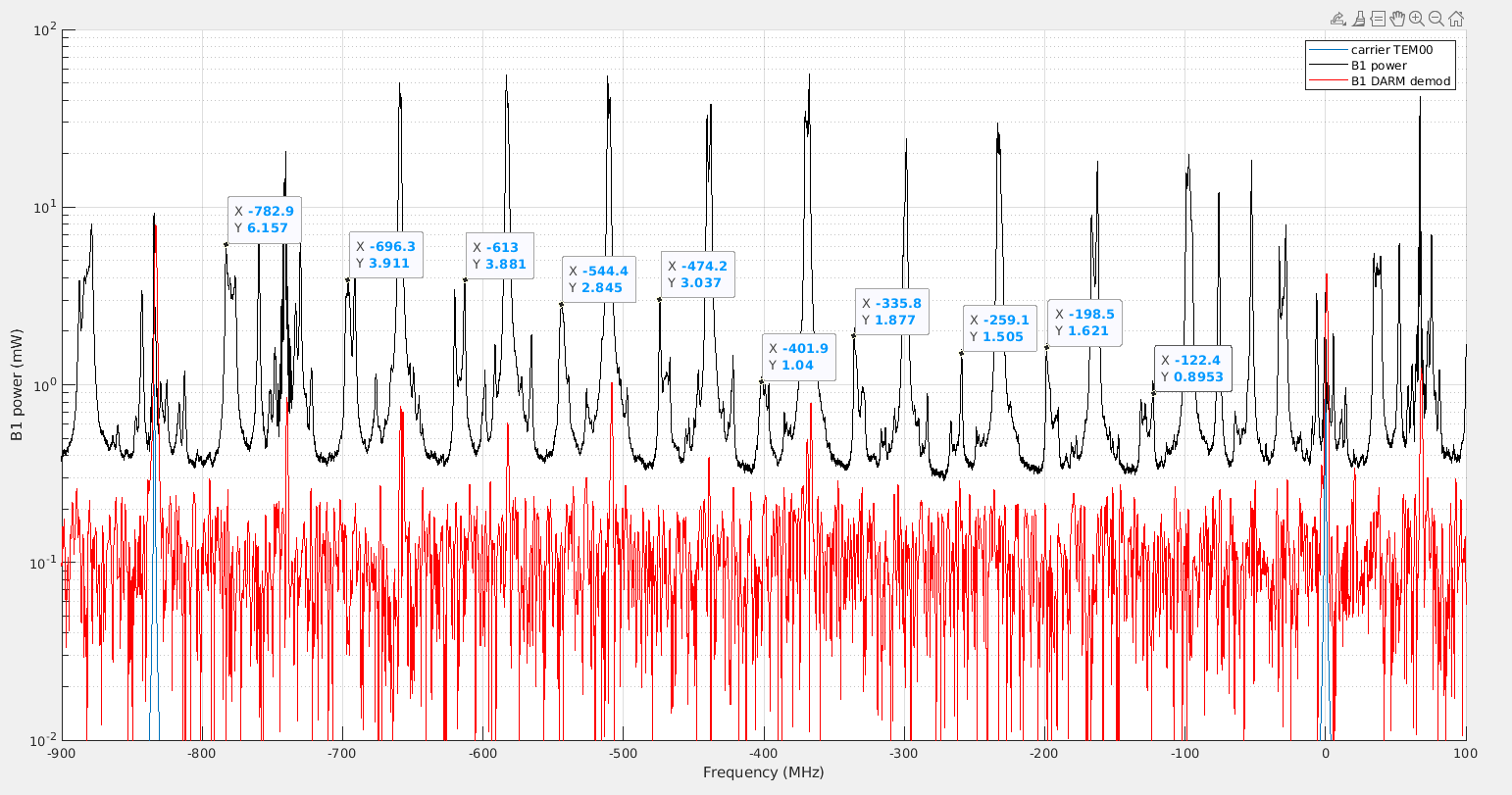
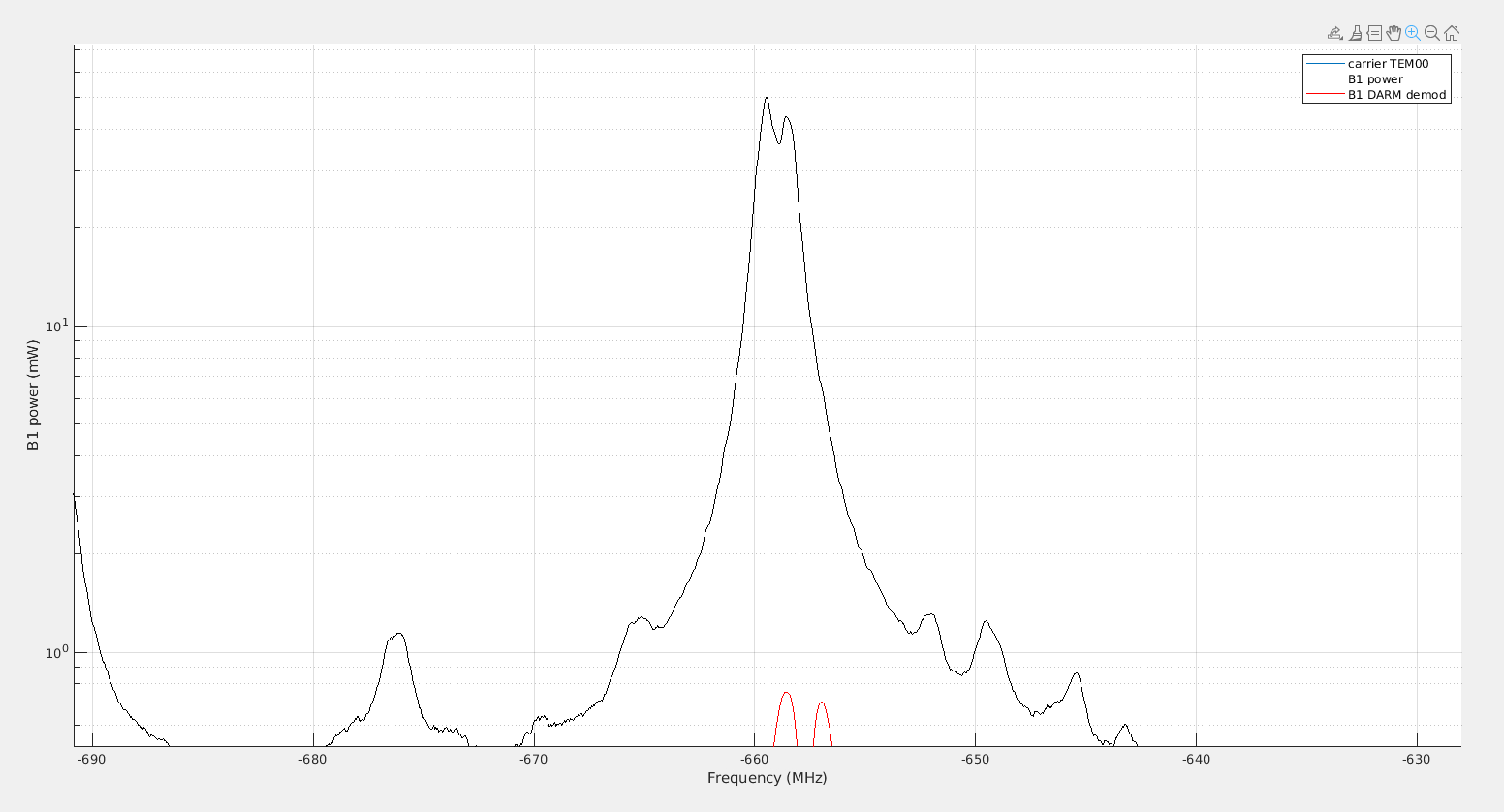
- Once at carm null 1f we made a scan of the OMC, requested by Romain from 09h48 UTC.
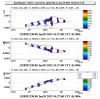
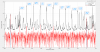
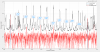
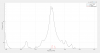
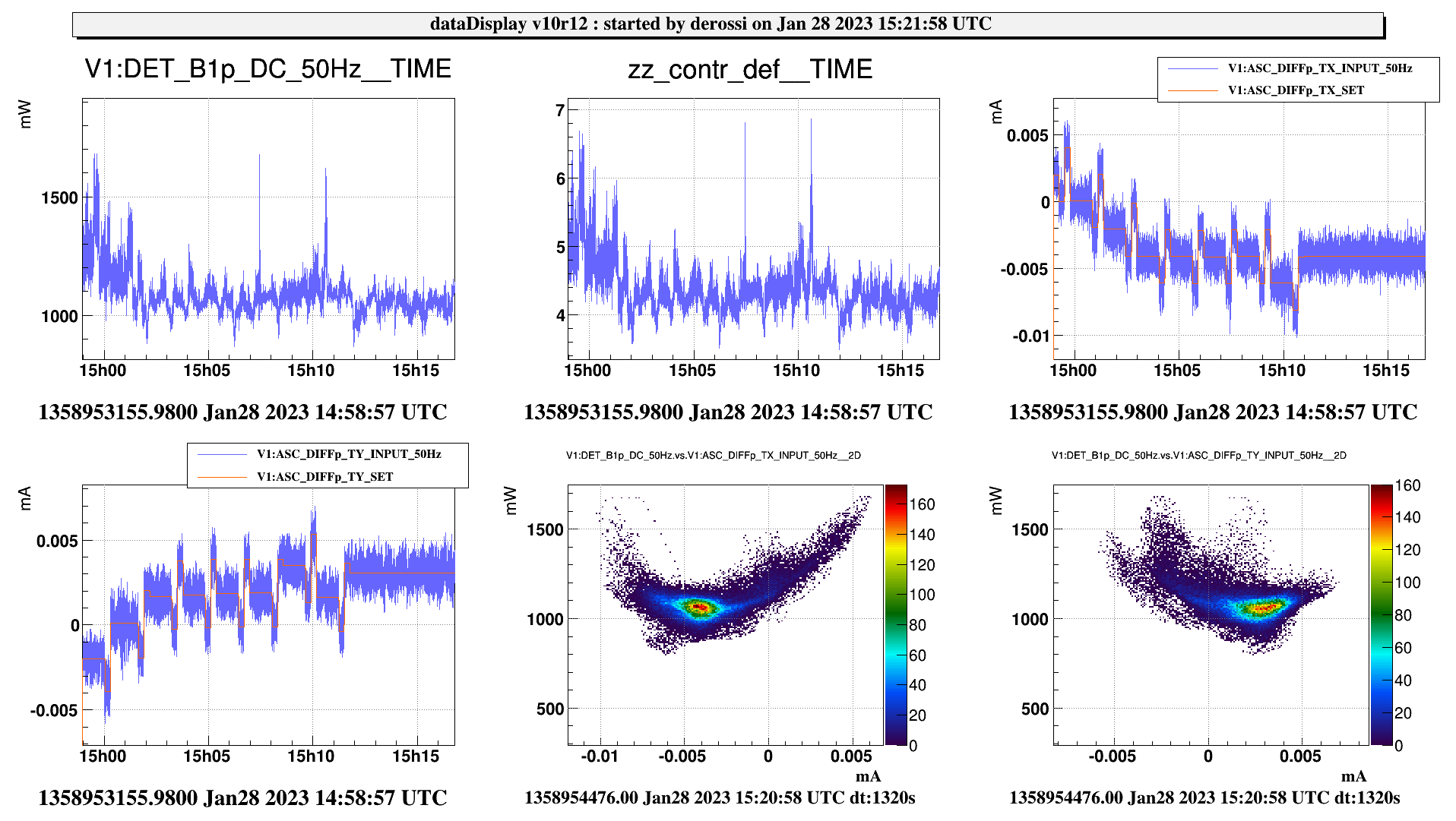
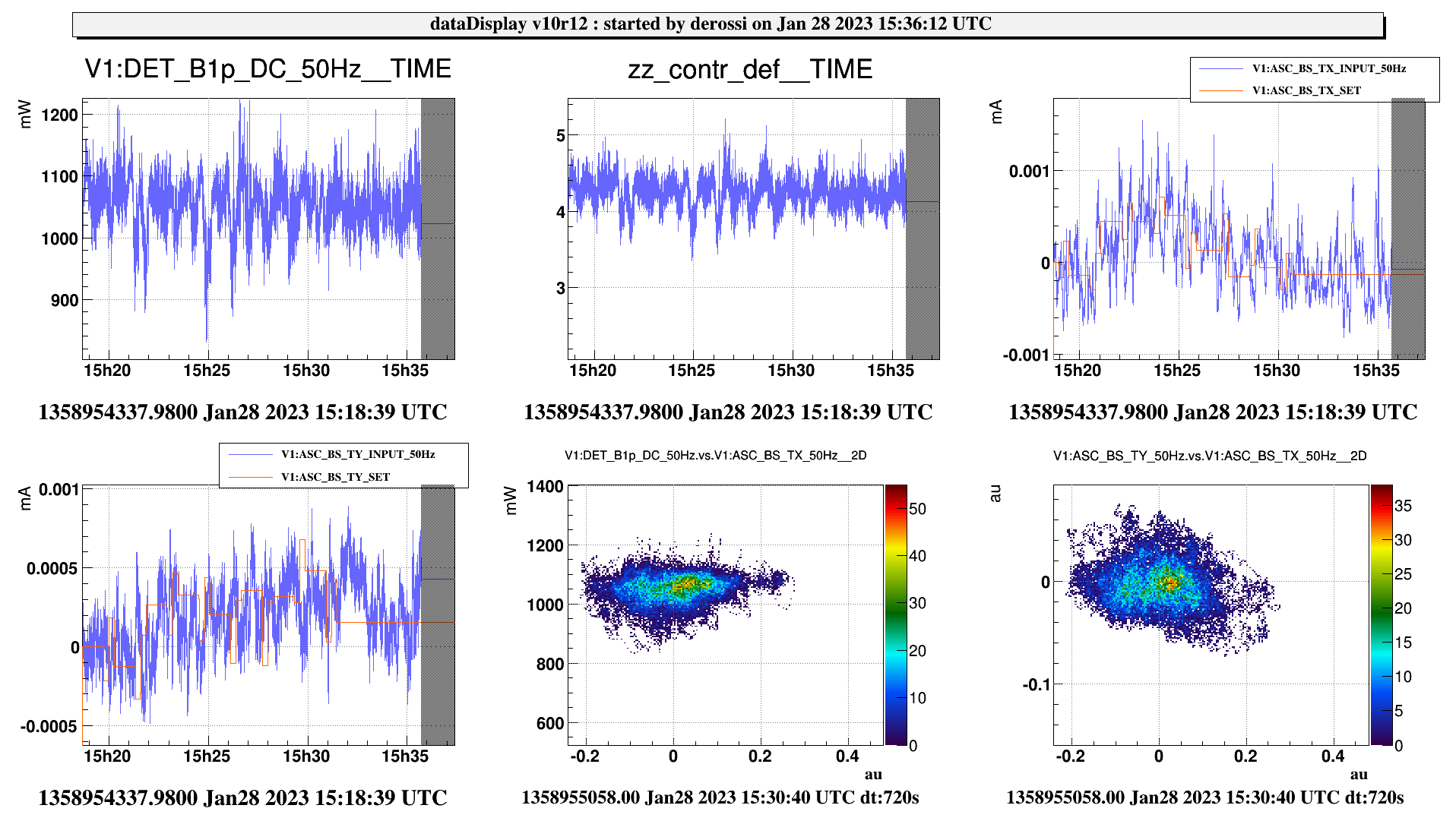
- We started with testing the servo for automatically control the DIFFp and BS offsets in /virgoDev/Auotmation/PyALP/PyAAtuning algoDIFFpBS.py. At the first attempt it was not working for the DIFFp, maximizing the contrast (B1p DC/112MHz mag) instead of minimizing it(plot 1). Then Piernicola debugged (by commenting lines 123-124 and making the set limits of actuation ten times smaller) and it is now working for the DIFFp (plot 2). For the BS it is less clear, to be further checked for longer periods and different steps, but at least it is not bringing it away (plot 3)
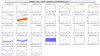
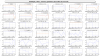
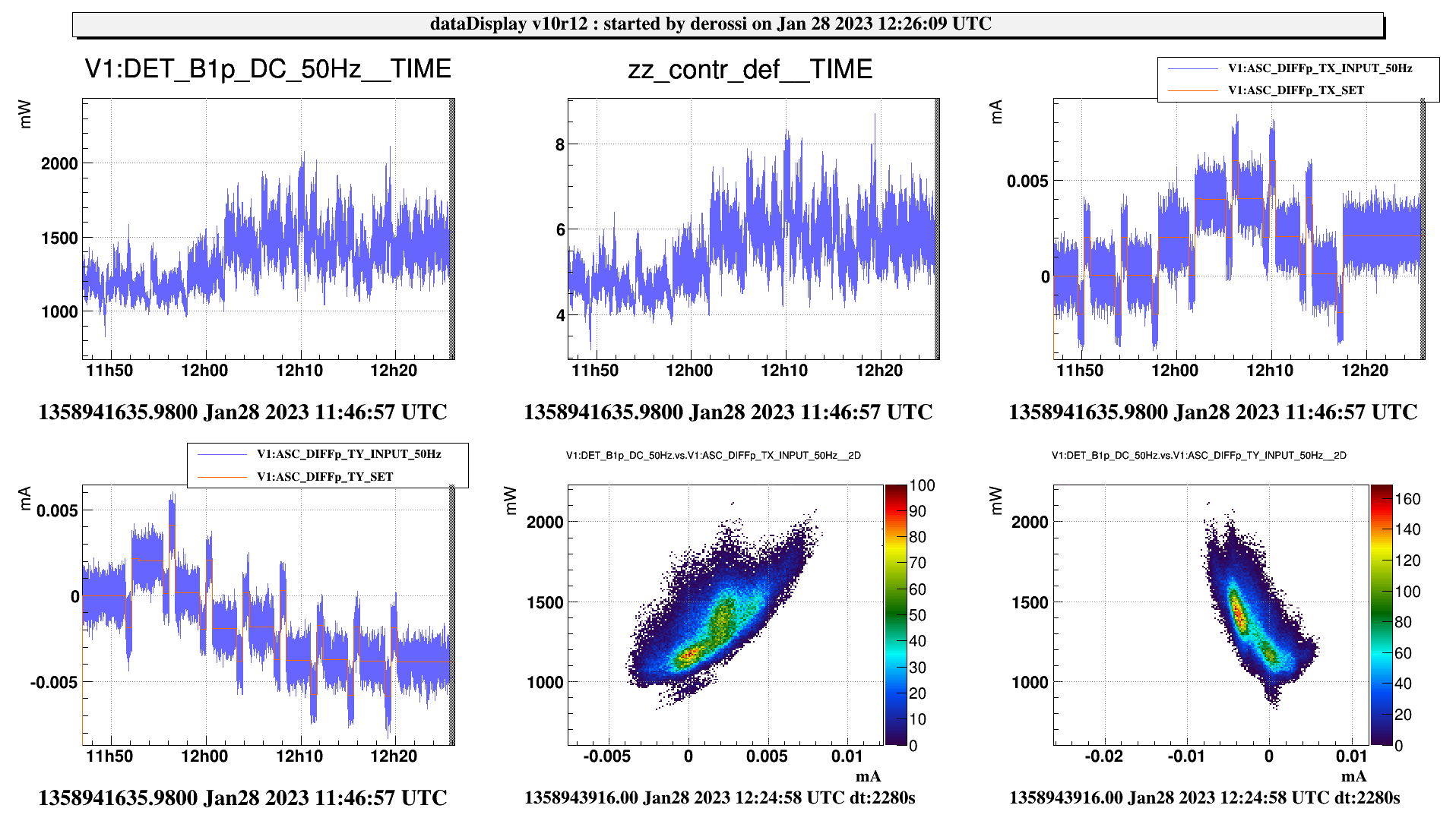
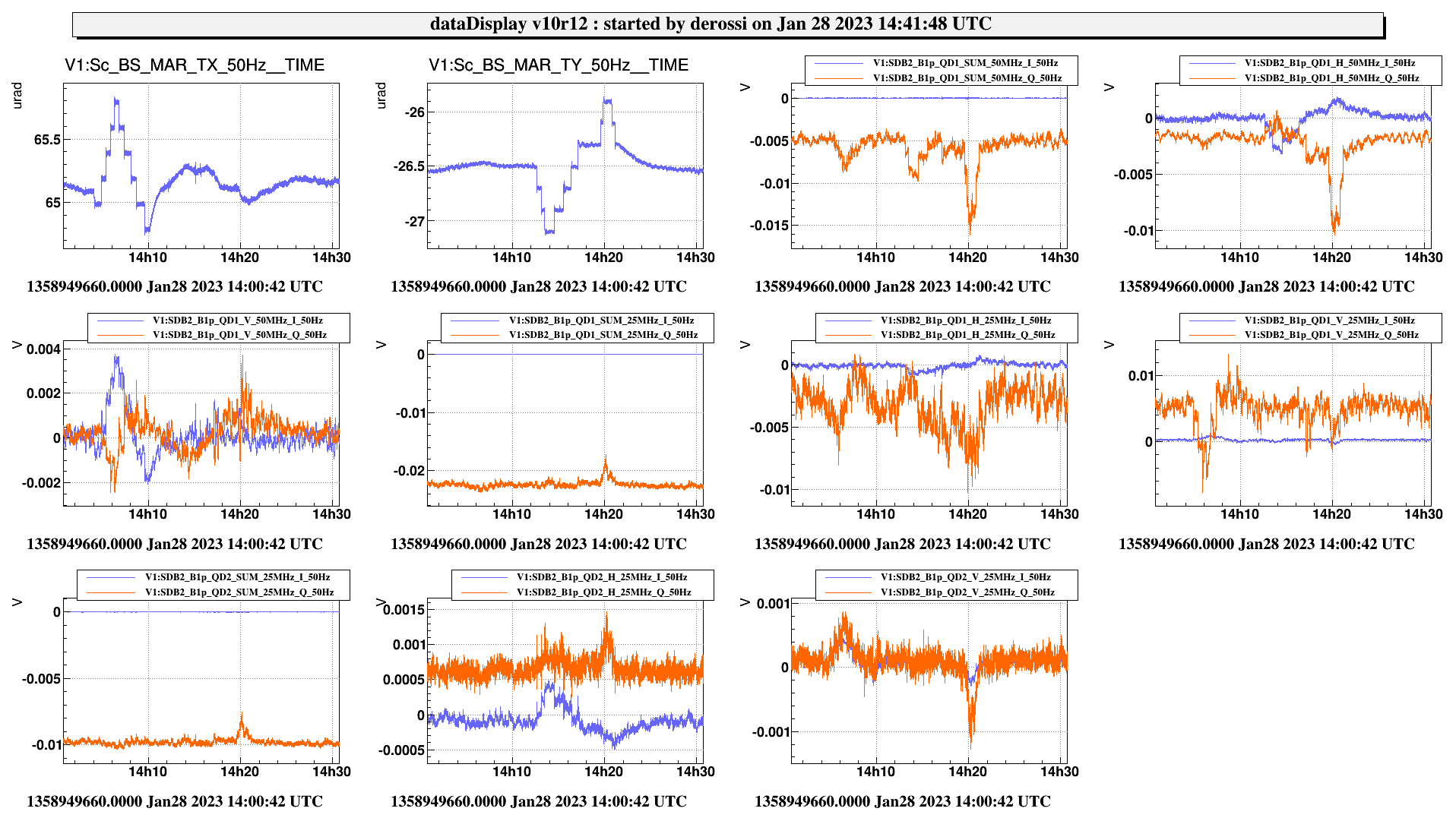
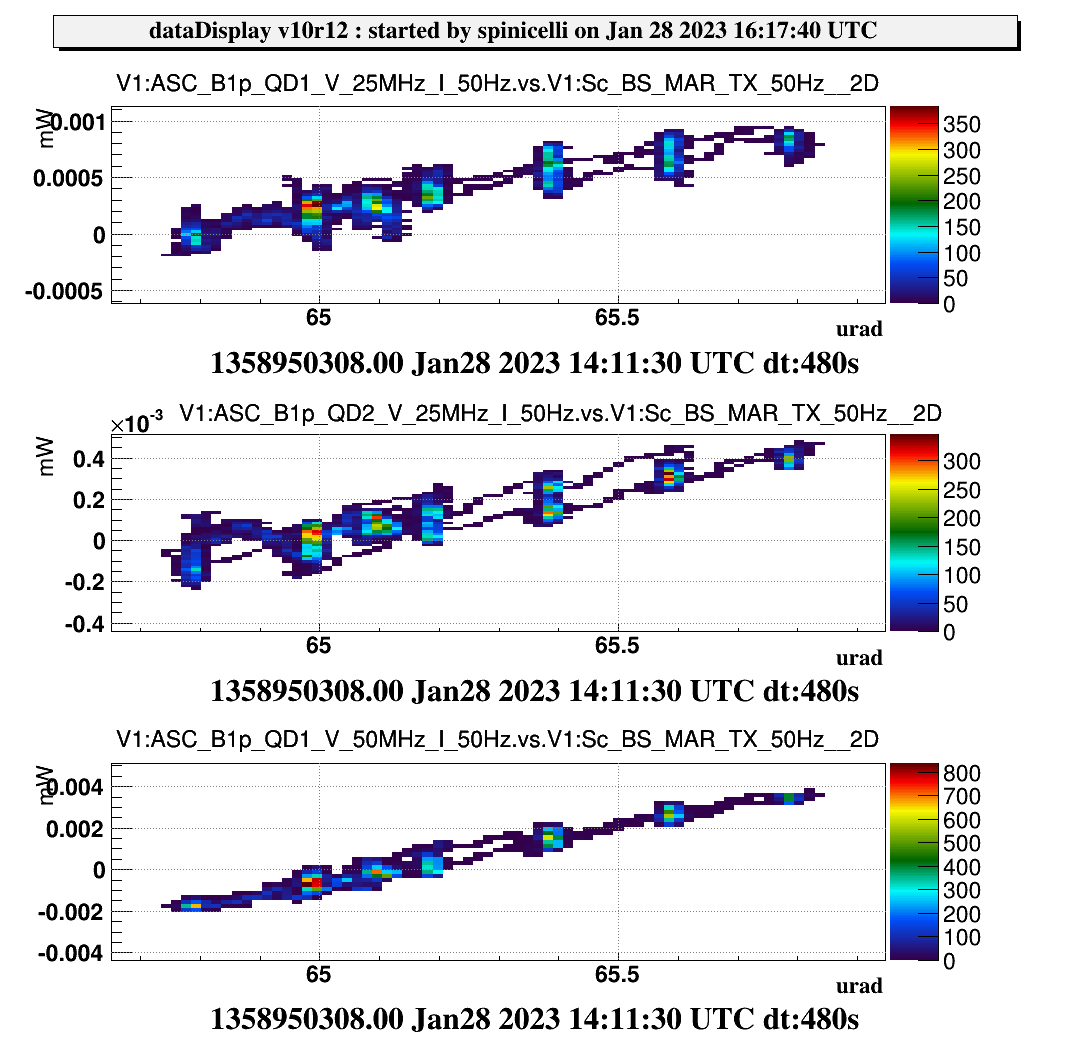
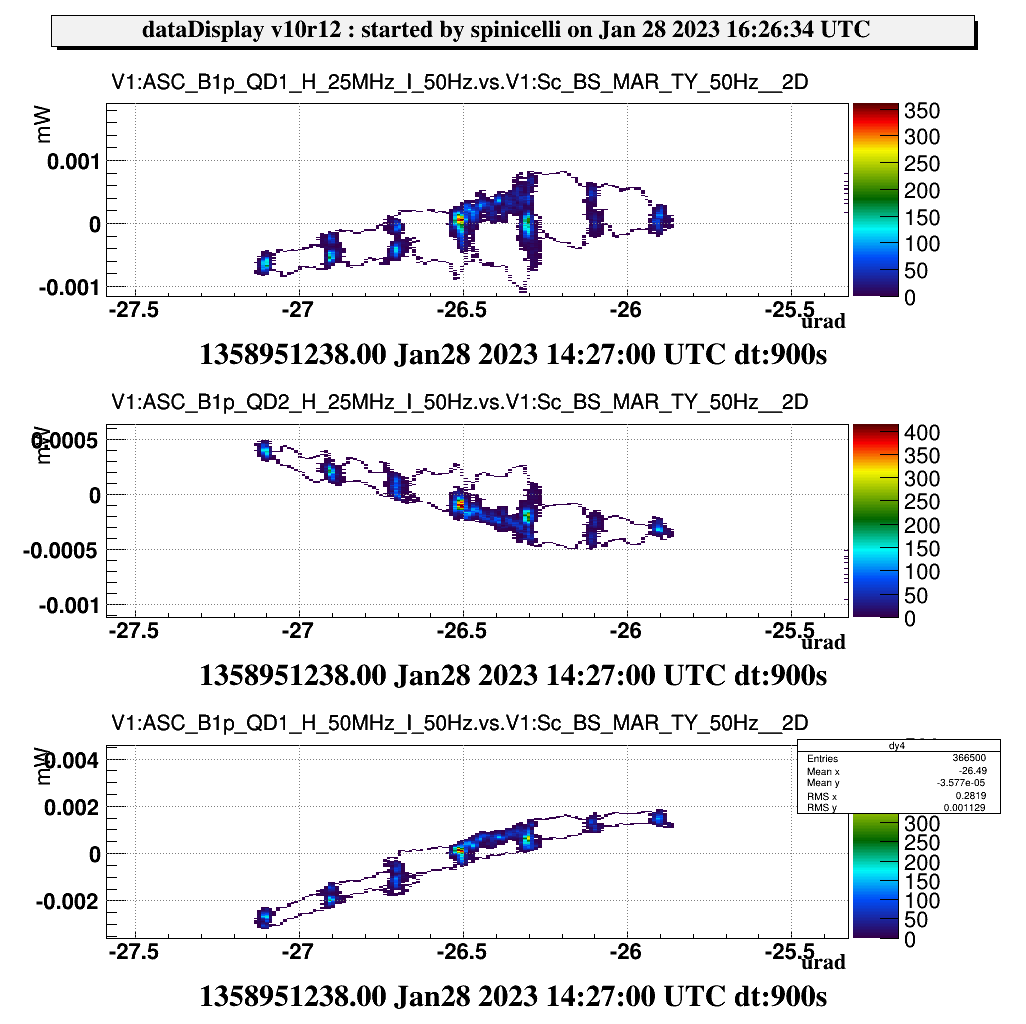
- We also investigated the possibility of using SDB2 B1p QD1/2 25MHz instead of 50MHz for the BS automatic alignment. We opened the BS loop TX and TY and moved the BS (plot 4). The TX is quite similar to the 50MHz in terms of SNR (plot 5) but not the TY (plot 6). In conclusion, the QD2 25MHz is a bit better but in any case it doesn't seem that the 25MHz would be better than the 50MHz
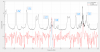
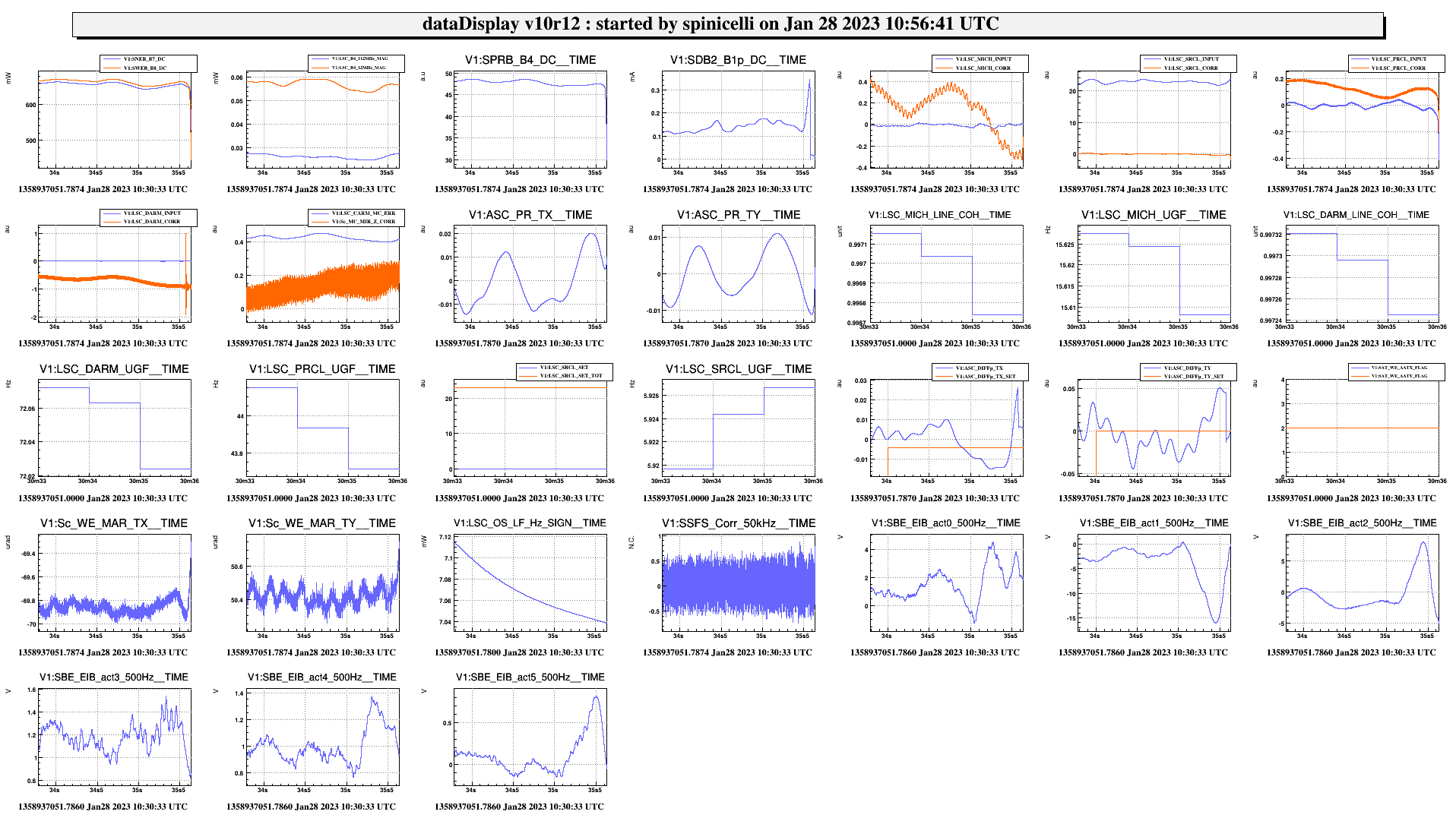
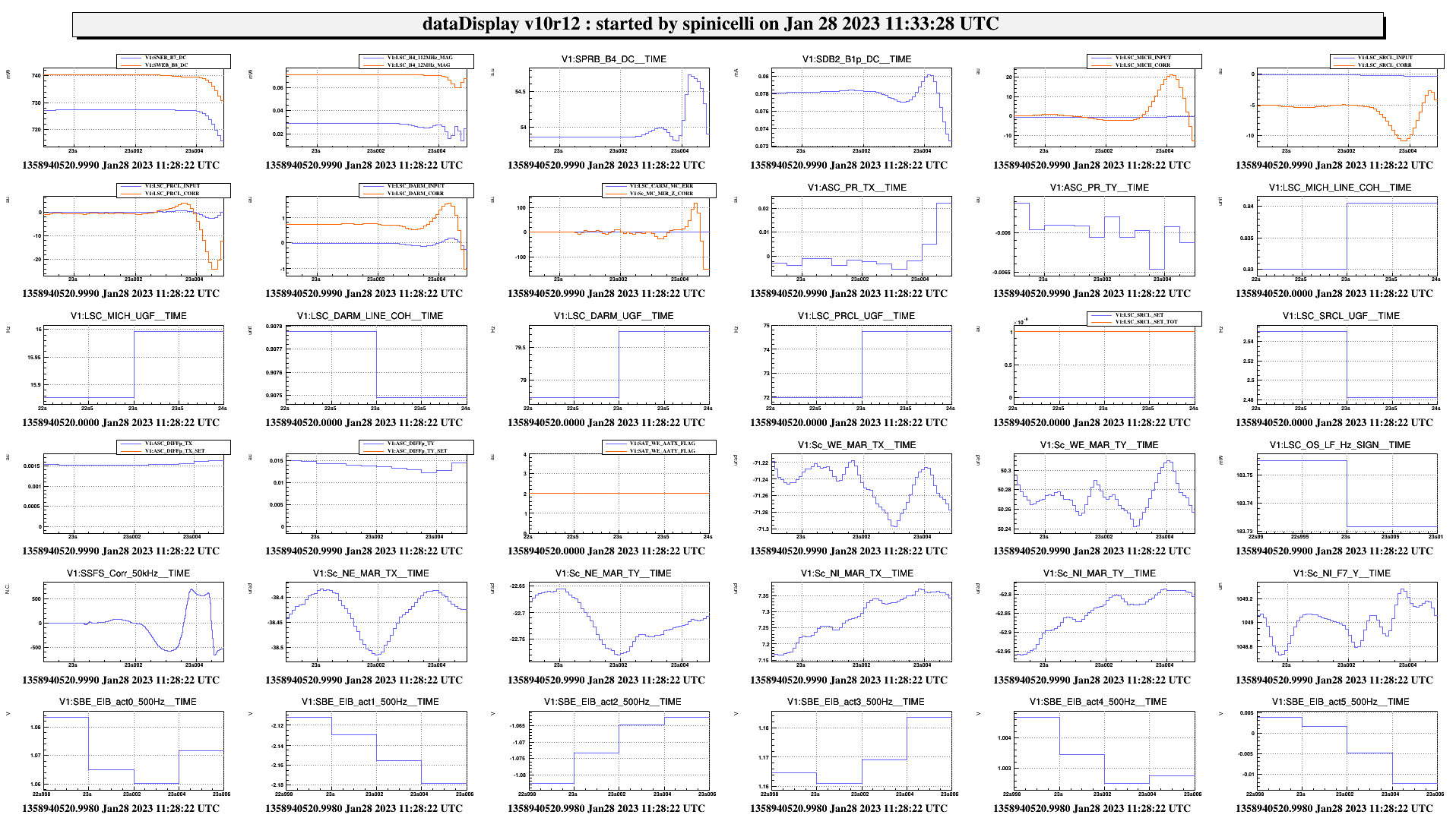
The ITF unlocked a couple of times, the first one at 10h35 was probably caused by a earthquake which made the EIB oscillating (plot 5). The second one was caused by a oscillation of the SSFS while going to carm null 1f (plot 6).
We leave the ITF locked in carm null 1f with the autorelock (10 attempts).